alumnidigest.com Alumni DigestWaterloo
0% Subscribe
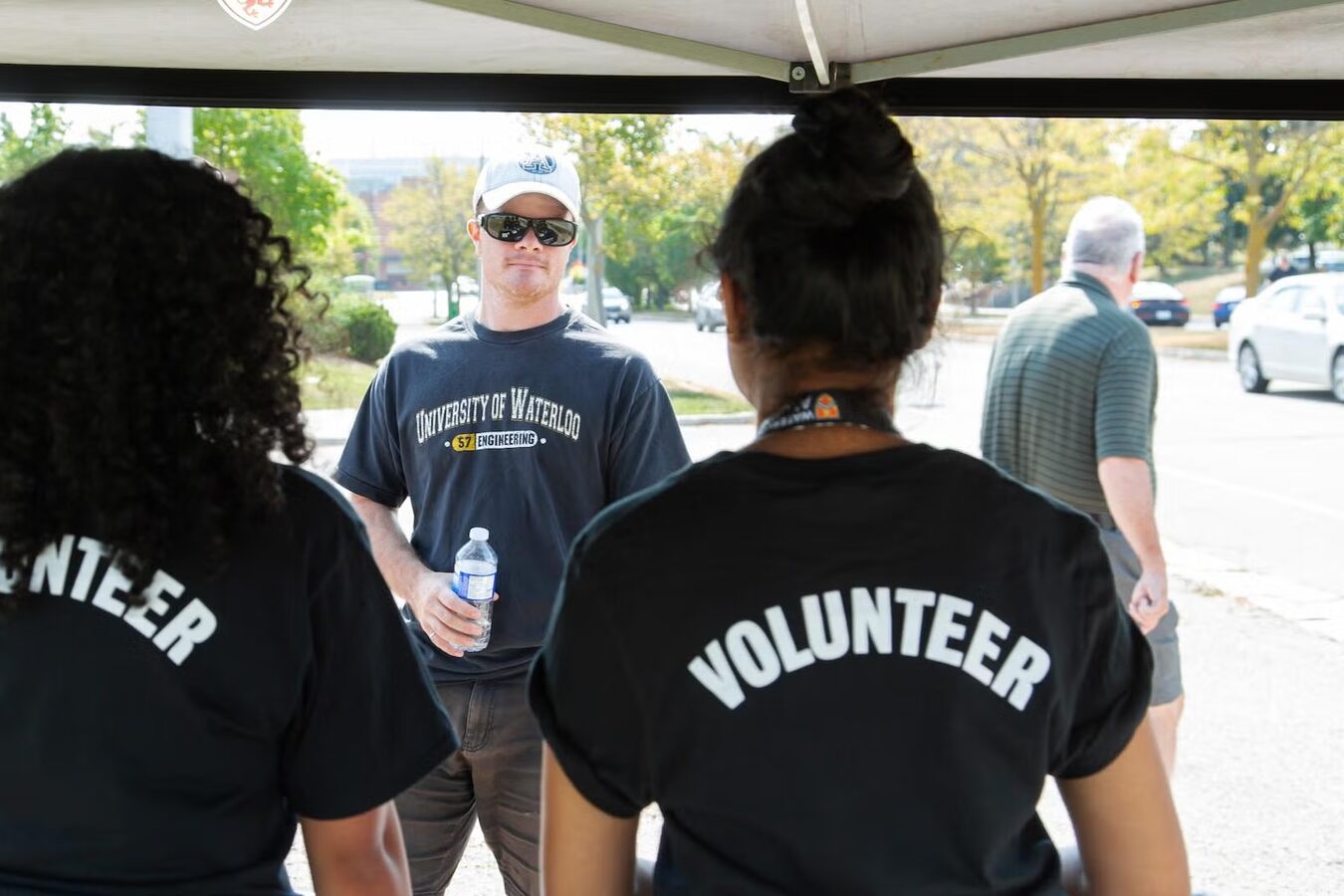
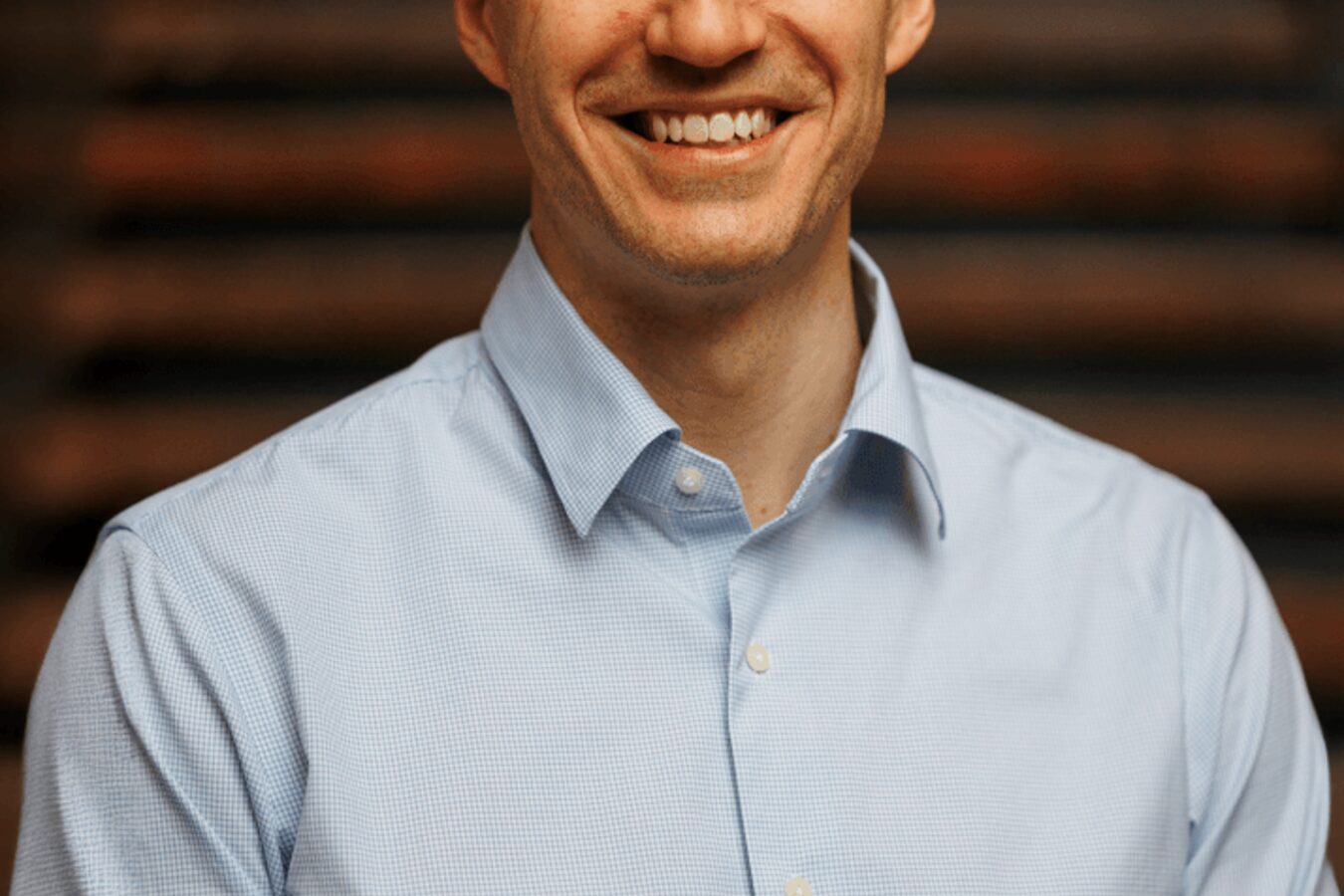
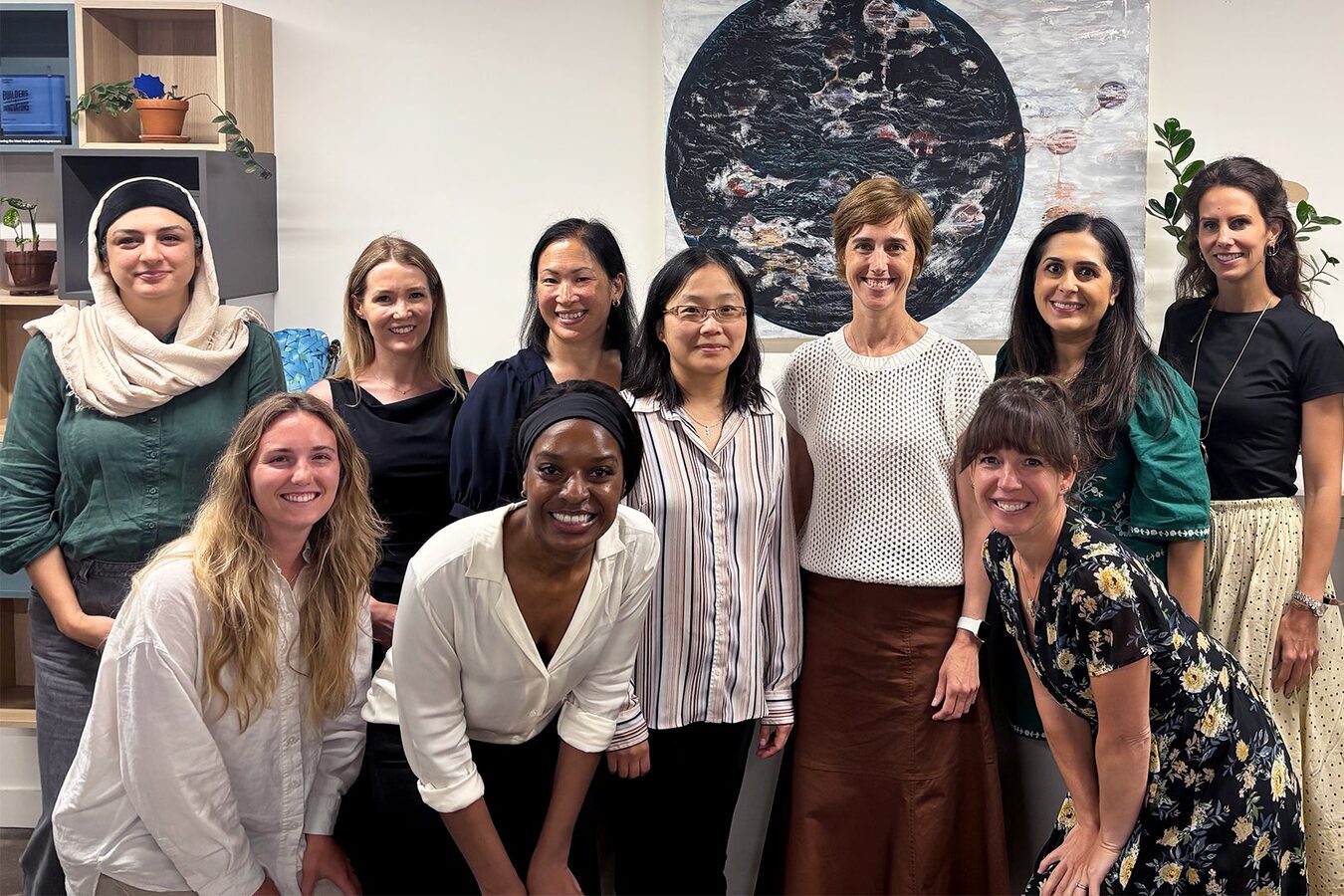
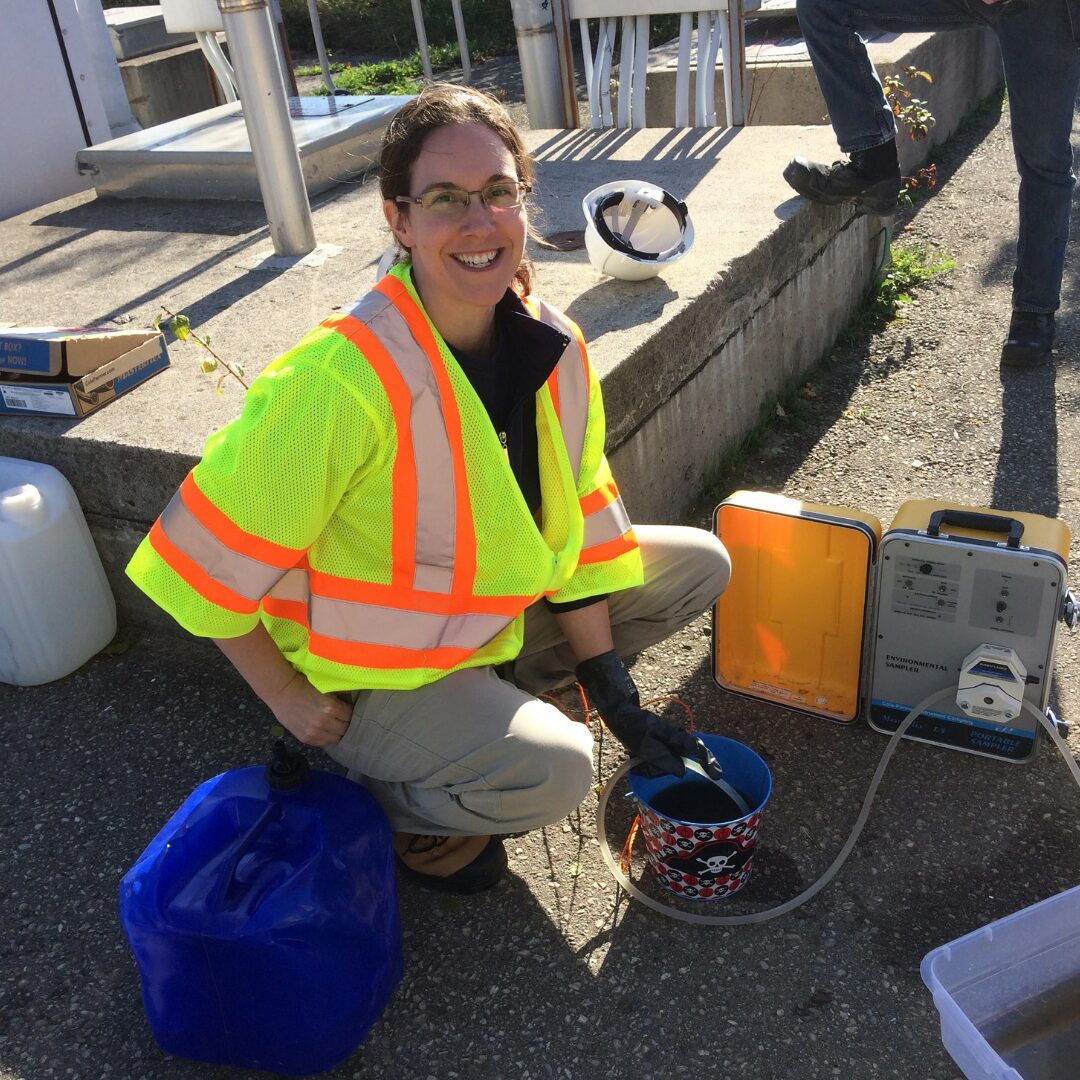
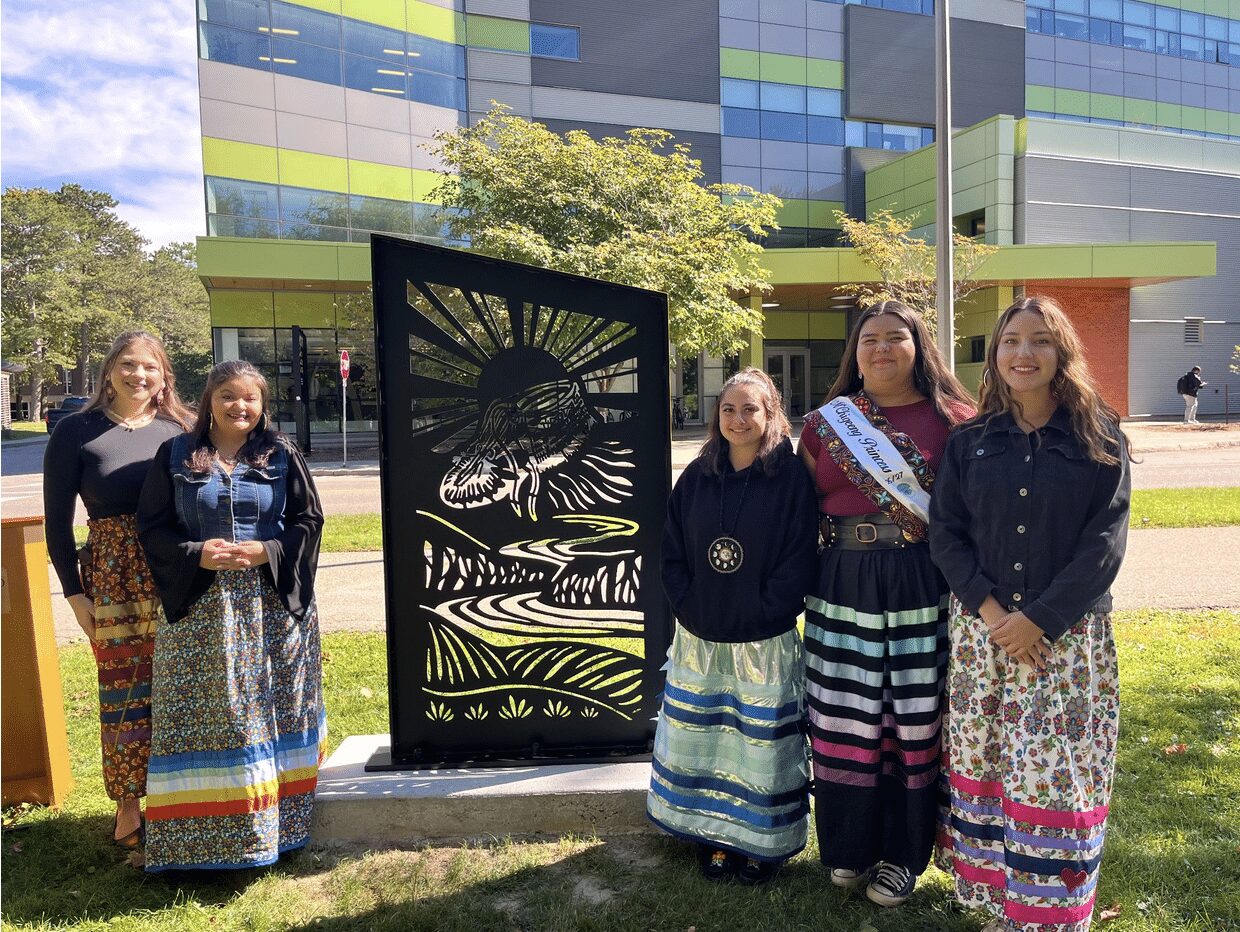
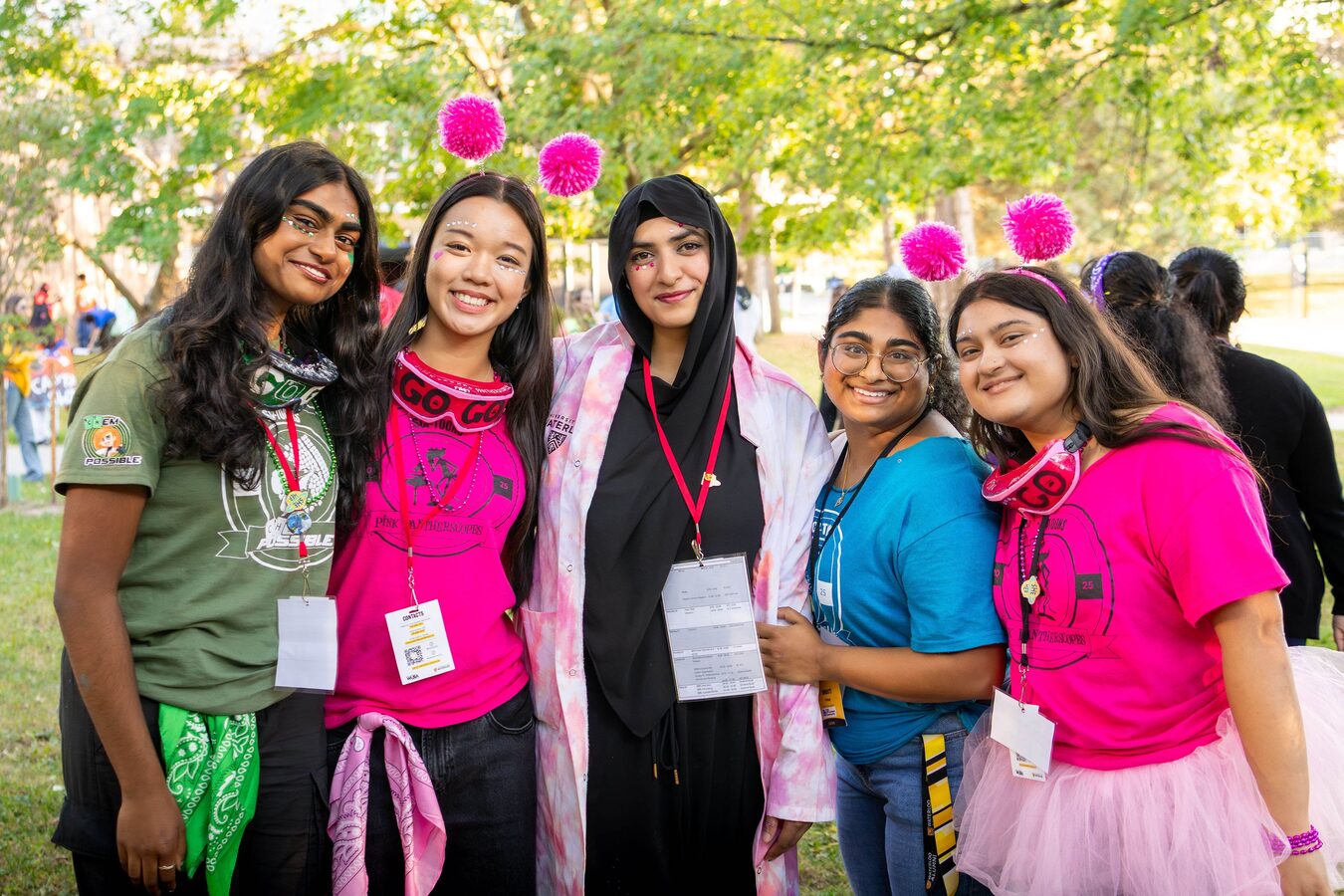
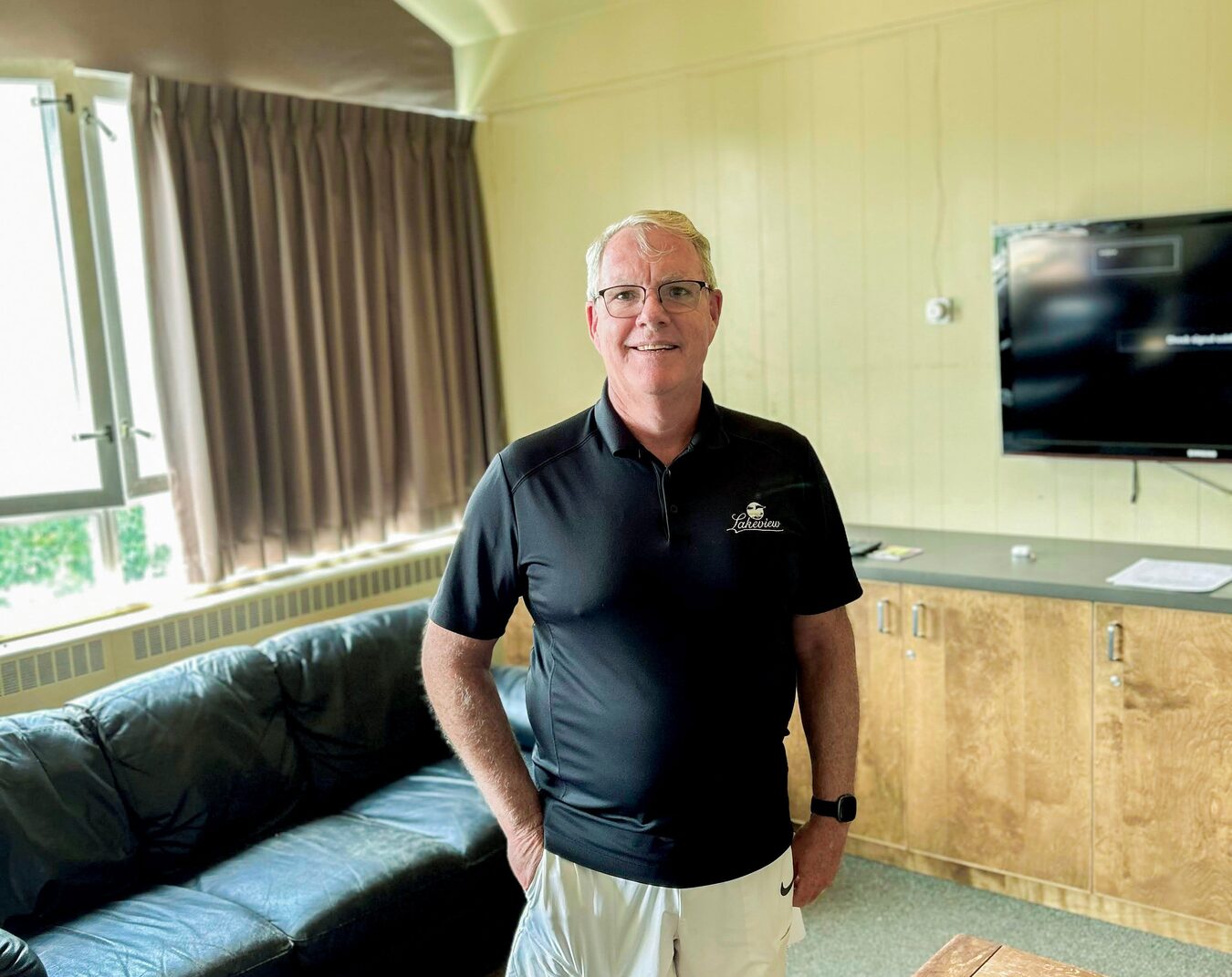
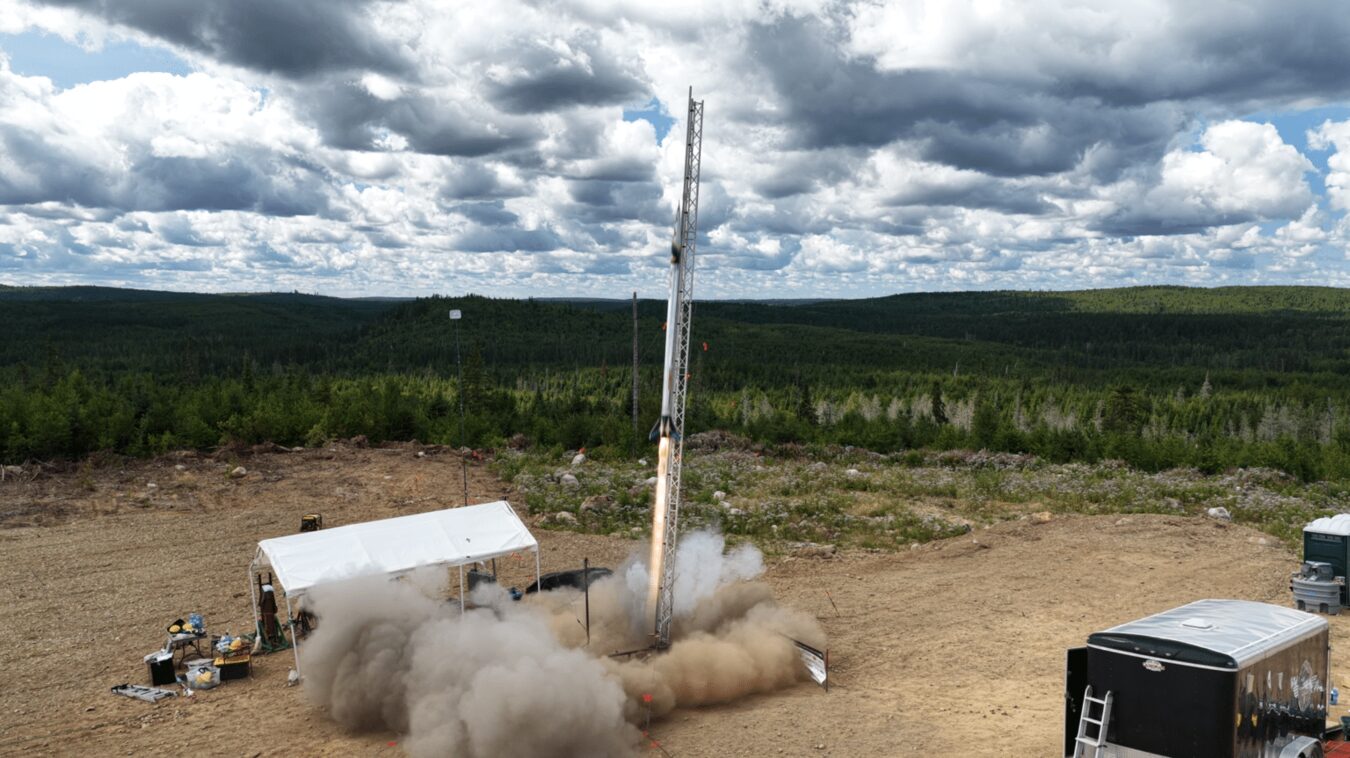
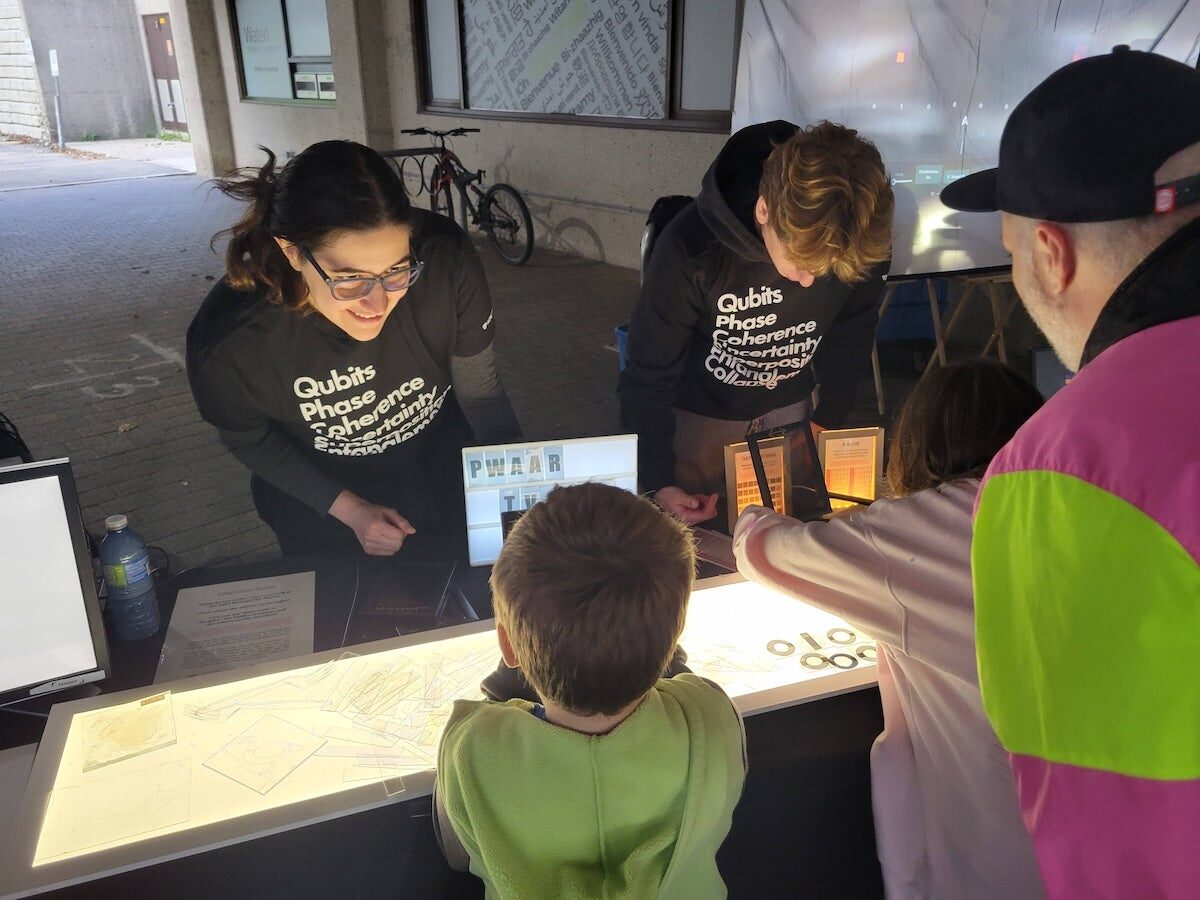
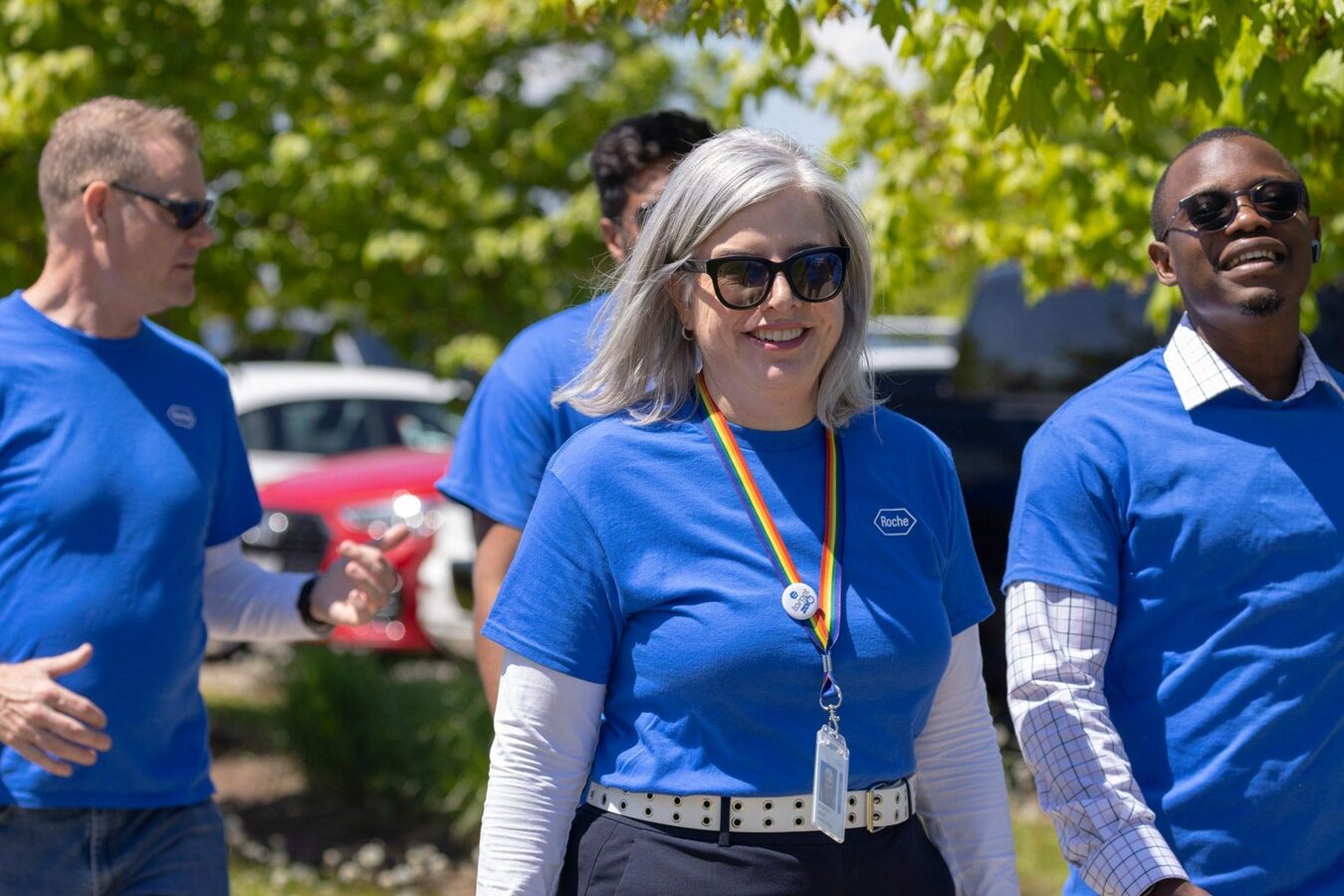
Brigitte Nolet and colleagues at an outdoor company event.

September 2026University of Waterloo109 stories

Alumni Digest

Across health, research, enterprise and public life, Waterloo alumni and students turn knowledge into work that changes what comes next.

109 stories from University of Waterloo, in 8 chapters: alumni & people, science & technology, climate & environment and more.

Brigitte Nolet and colleagues at an outdoor company event. Photo: Source: University of Waterloo; see original article for photo credits.

From the editors

An independent University of Waterloo alumni digest. Expanded source window: January 2024–September 19, 2026. Current reporting and historical context are labelled. Not an official university publication. Each brief keeps its source provenance in the editorial record. Scroll, search or open the contents rail.

How do ideas become useful? Move from CS and AI to co-op, research, founders, hackathons and the alumni actions that keep a university connected.

Plus: 10 source-linked data features, 7 essays, partner pages and a Sudoku break.

The Alumni Digest desk

In this issue · 8 chapters

Chapter 01

Alumni & People

Graduates, mentors and the paths they took after campus.

22 stories

The introduction after the pitch

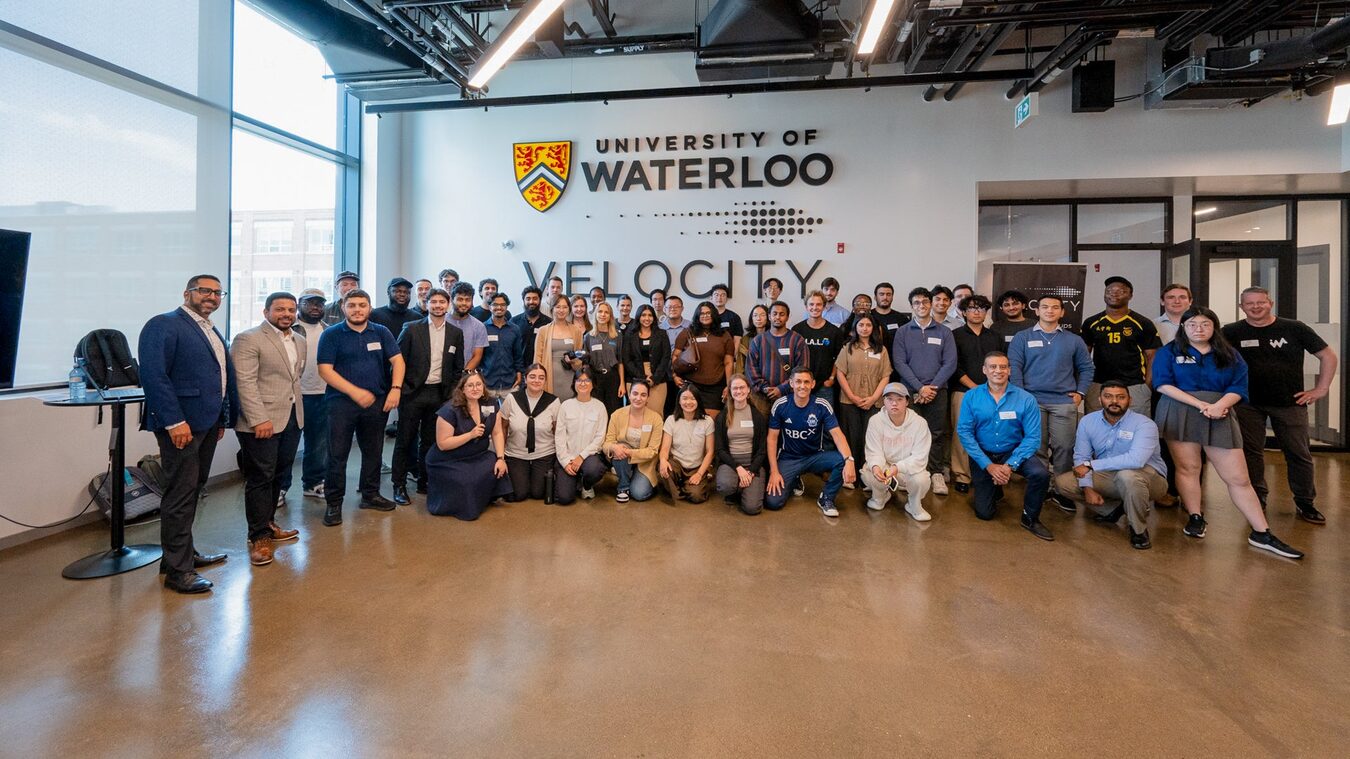
At Velocity, alumni help the next generation reach people they could not reach alone.
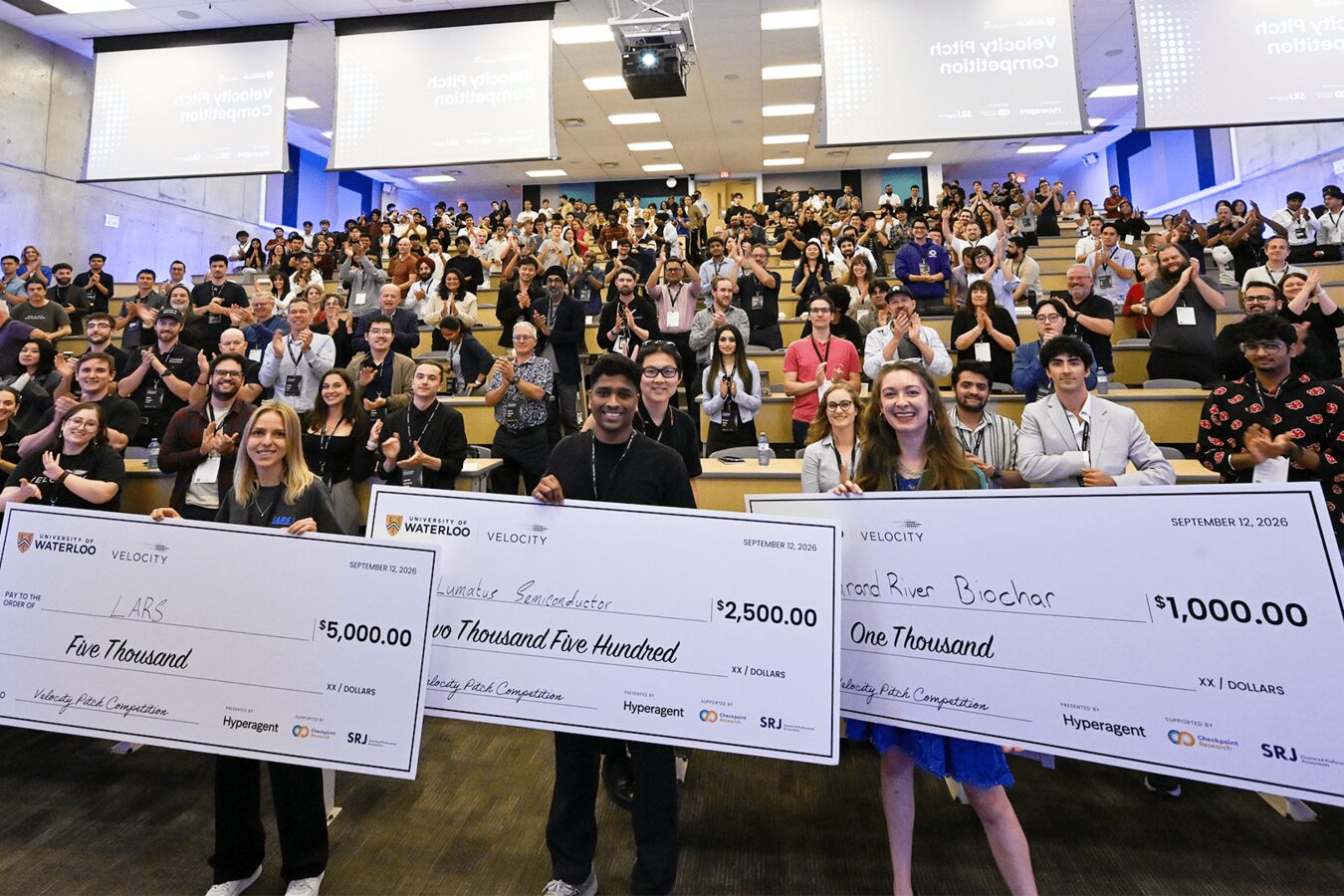
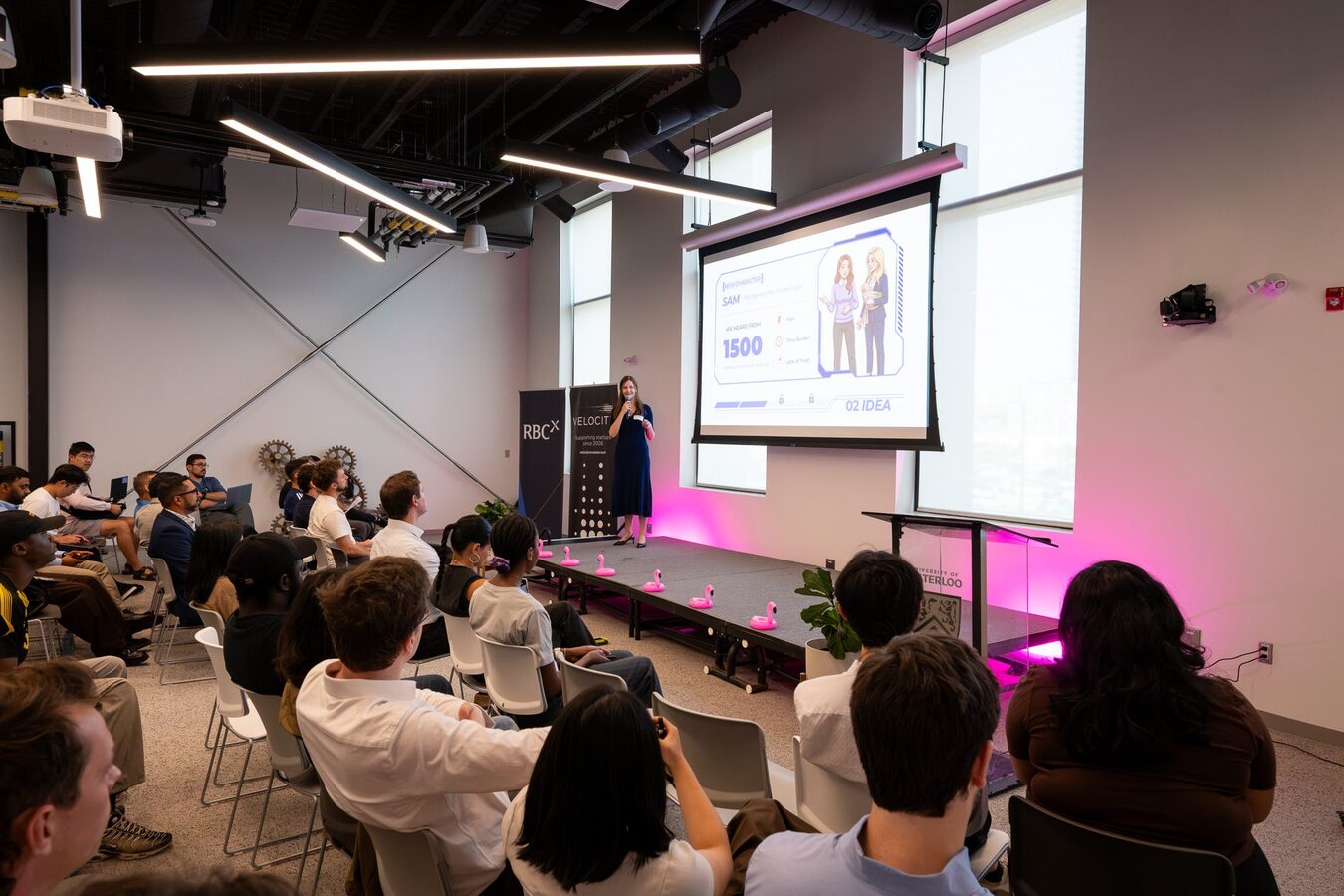
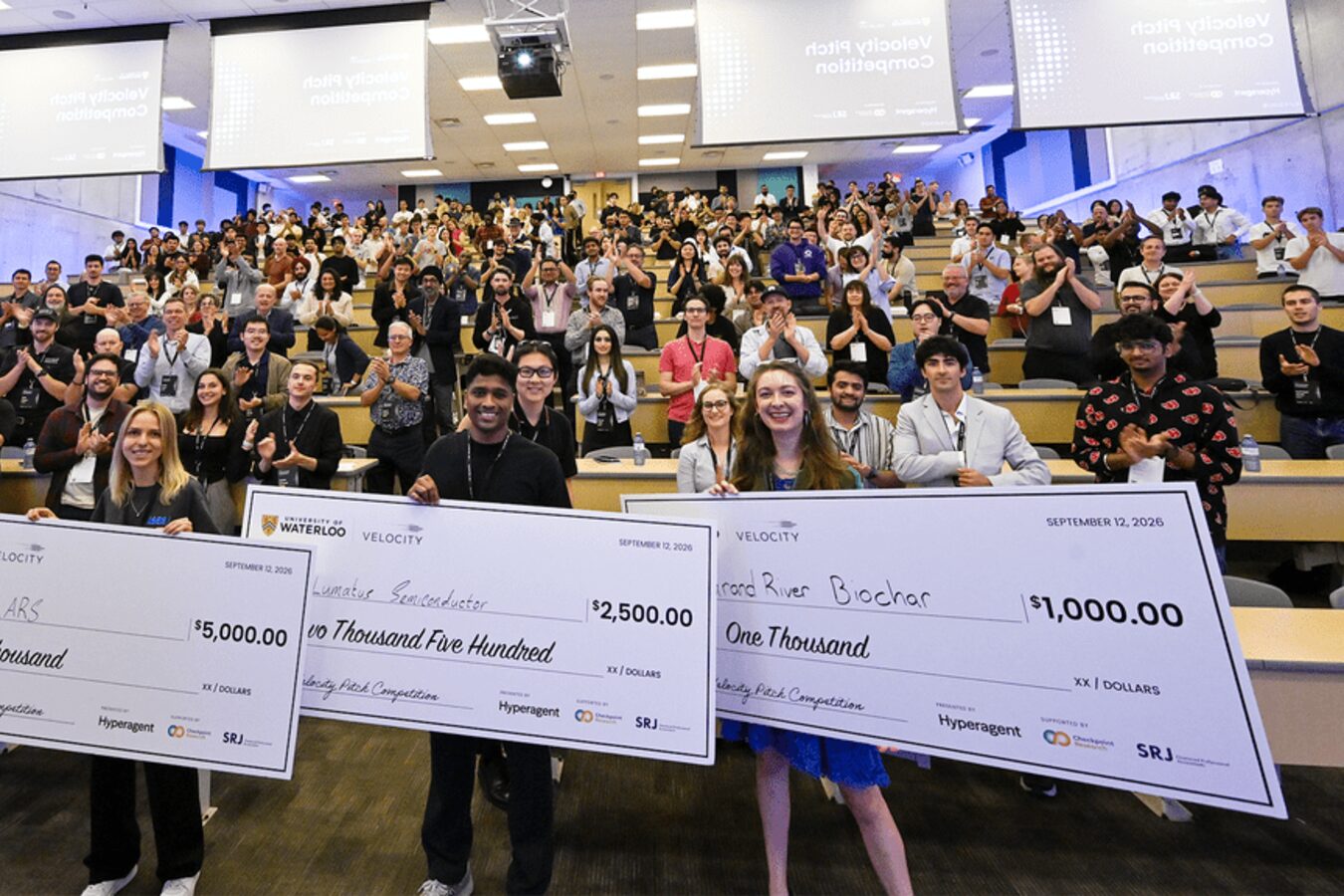
Founders and supporters gather for the Velocity Pitch Competition.
EnterpriseFounders and supporters gather for the Velocity Pitch Competition.Photo: Source: University of Waterloo; see original article for photo credits.

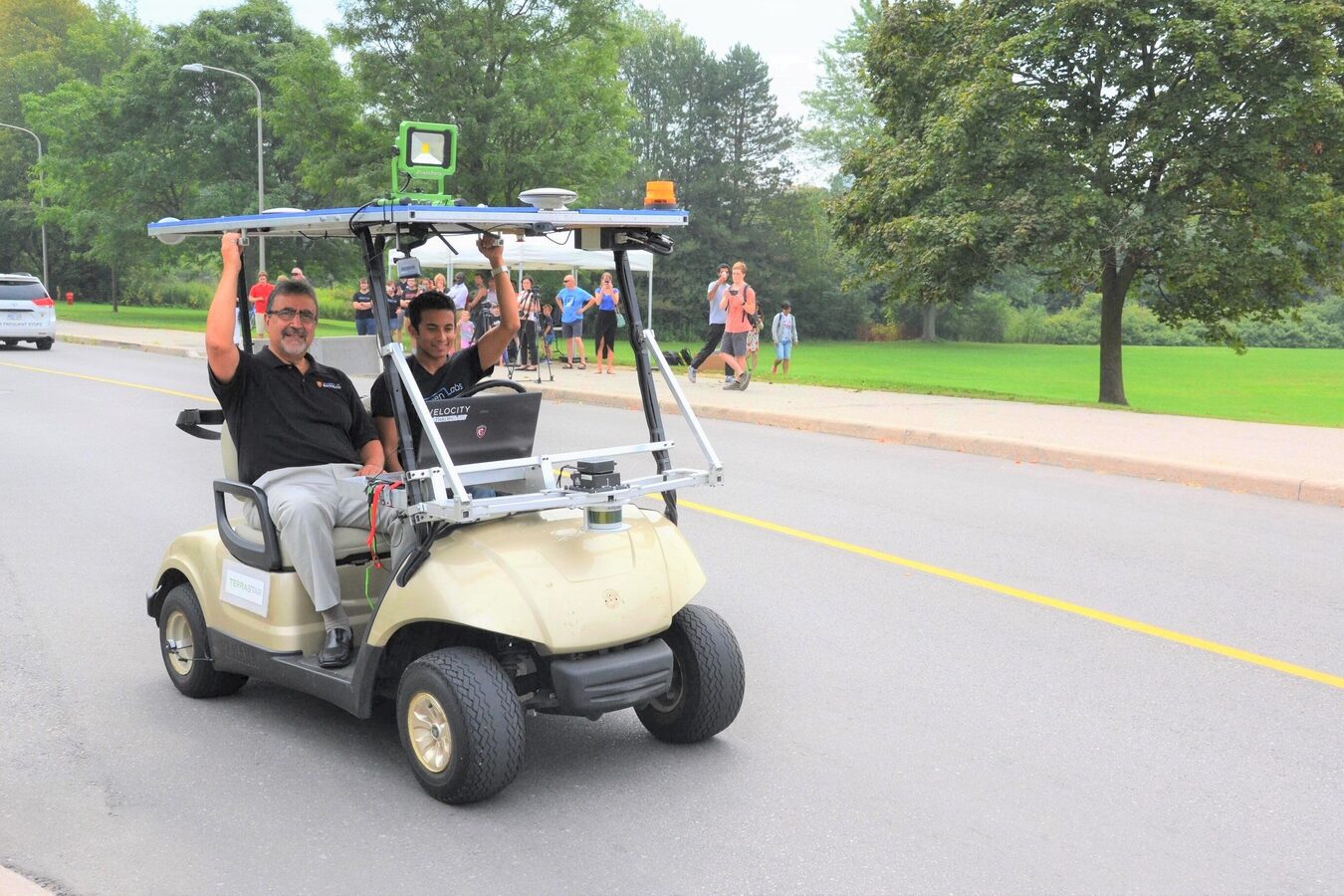
More than 100 judges volunteered at a recent Velocity Pitch Competition, offering feedback and introductions. Founder Connor Kapahi (PhD ’26) describes one unexpected presentation that led to supplier contacts his company had struggled to reach.

The university’s report follows founders working on diagnostics and assistive technologies. Their examples show why an alumni network matters at a practical level: someone can challenge a pitch, explain a market or make an introduction. The story is about work that follows the stage time.

Sources 1
  1. Original reporting · uwaterloo.ca

Share this storyOpen as a single page →

Next · p.02A life beyond the rinkFor Kristin O’Neill, graduate study created room for another kind of ambition.


A life beyond the rink

For Kristin O’Neill, graduate study created room for another kind of ambition.

Kristin O’Neill in training and with her parents at convocation.
AlumniKristin O’Neill in training and with her parents at convocation.Photo: Source: University of Waterloo; see original article for photo credits.

Kristin O’Neill (MASc ’24) combined elite hockey with graduate study in psychology at Waterloo. Her work on child development and language helped shape an interest in speech pathology, a field she plans to pursue after hockey.

The university profile traces the support that made this possible, including flexibility as her professional career moved to Montreal. She later made Canada’s 2026 Olympic team and recently signed with San Jose. Her academic life provided a separate source of purpose during an uncertain sporting career.

Sources 1
  1. Original reporting · uwaterloo.ca

Share this storyOpen as a single page →

Next · p.03The brand is part of the buildFounders learn how a clear promise travels beyond a prototype.

The brand is part of the build

Founders learn how a clear promise travels beyond a prototype.

Building brands, building businesses
EntrepreneurshipBuilding brands, building businessesPhoto: University of Waterloo / original source page

MBET Alumni Impact Series feature Emma Tonallato-Keller, MBET '21.

The official Waterloo report places this work in entrepreneurship / brand. It is a source-linked brief for alumni readers; the source page remains the authority for names, dates and outcomes.

Sources 1
  1. Original reporting · uwaterloo.ca

Share this storyOpen as a single page →

Next · p.04Just build the next thingWaterloo alumni Alex Rodrigues and Brandon Moak took autonomous trucking to San Francisco.

Just build the next thing

Waterloo alumni Alex Rodrigues and Brandon Moak took autonomous trucking to San Francisco.

‘Just build things’
Builders‘Just build things’Photo: University of Waterloo / original source page

Alex Rodrigues and Brandon Moak, the 20-something founders of an autonomous trucking company now valued at approximately US $5 billion, don’t have

The official Waterloo report places this work in builders / sf. It is a source-linked brief for alumni readers; the source page remains the authority for names, dates and outcomes.

Sources 1
  1. Original reporting · uwaterloo.ca

Share this storyOpen as a single page →

Next · p.05Three friends, one durable bondAn alumni friendship shows what lasts after the timetable ends.

Three friends, one durable bond

An alumni friendship shows what lasts after the timetable ends.

Three friends with one unbreakable bond
AlumniThree friends with one unbreakable bondPhoto: University of Waterloo / original source page

Three alumni from the Faculty of Health share their memories and reminisce about Waterloo while reuniting on vacation in Florida.

The official Waterloo report places this work in alumni / community. It is a source-linked brief for alumni readers; the source page remains the authority for names, dates and outcomes.

Sources 1
  1. Original reporting · uwaterloo.ca

Share this storyOpen as a single page →

Next · p.06The network is made of hoursVolunteers turn an alumni list into actual contact.

The network is made of hours

Volunteers turn an alumni list into actual contact.

Alumni volunteers cultivate connections and community
AlumniAlumni volunteers cultivate connections and communityPhoto: University of Waterloo / original source page

Celebrating National Volunteer Week

The official Waterloo report places this work in alumni / volunteers. It is a source-linked brief for alumni readers; the source page remains the authority for names, dates and outcomes.

Sources 1
  1. Original reporting · uwaterloo.ca

Share this storyOpen as a single page →

Next · p.07A family day makes a network visibleAn alumni event creates a low-pressure way back to campus community.

A family day makes a network visible

An alumni event creates a low-pressure way back to campus community.

A thrilling Alumni Family Day at Canada’s Wonderland
AlumniA thrilling Alumni Family Day at Canada’s WonderlandPhoto: University of Waterloo / original source page

An alumni event creates a low-pressure way back to campus community.

The official Waterloo report places this work in alumni / events. It is a source-linked brief for alumni readers; the source page remains the authority for names, dates and outcomes.

Sources 1
  1. Original reporting · uwaterloo.ca

Share this storyOpen as a single page →

Next · p.08Why alumni giveA short alumni reflection asks what support is meant to make possible.

Why alumni give

A short alumni reflection asks what support is meant to make possible.

Why do you give?
AlumniWhy do you give?Photo: University of Waterloo / original source page

University of Waterloo Alumni Council members share why they will give on the University’s first-ever Giving Day, Thursday, May 15.

The official Waterloo report places this work in alumni / reflection. It is a source-linked brief for alumni readers; the source page remains the authority for names, dates and outcomes.

Sources 1
  1. Original reporting · uwaterloo.ca

Share this storyOpen as a single page →

Next · p.09The work of making roomAn alumni recognition story links community to the work of widening access.

The work of making room

An alumni recognition story links community to the work of widening access.

March 8: International Women’s Day
AlumniMarch 8: International Women’s DayPhoto: University of Waterloo / original source page

International Women's Day 2025

The official Waterloo report places this work in alumni / recognition. It is a source-linked brief for alumni readers; the source page remains the authority for names, dates and outcomes.

Sources 1
  1. Original reporting · uwaterloo.ca

Share this storyOpen as a single page →

Next · p.10Community is part of the graduate toolkitMath graduate students build a peer network around difficult questions.

Community is part of the graduate toolkit

Math graduate students build a peer network around difficult questions.

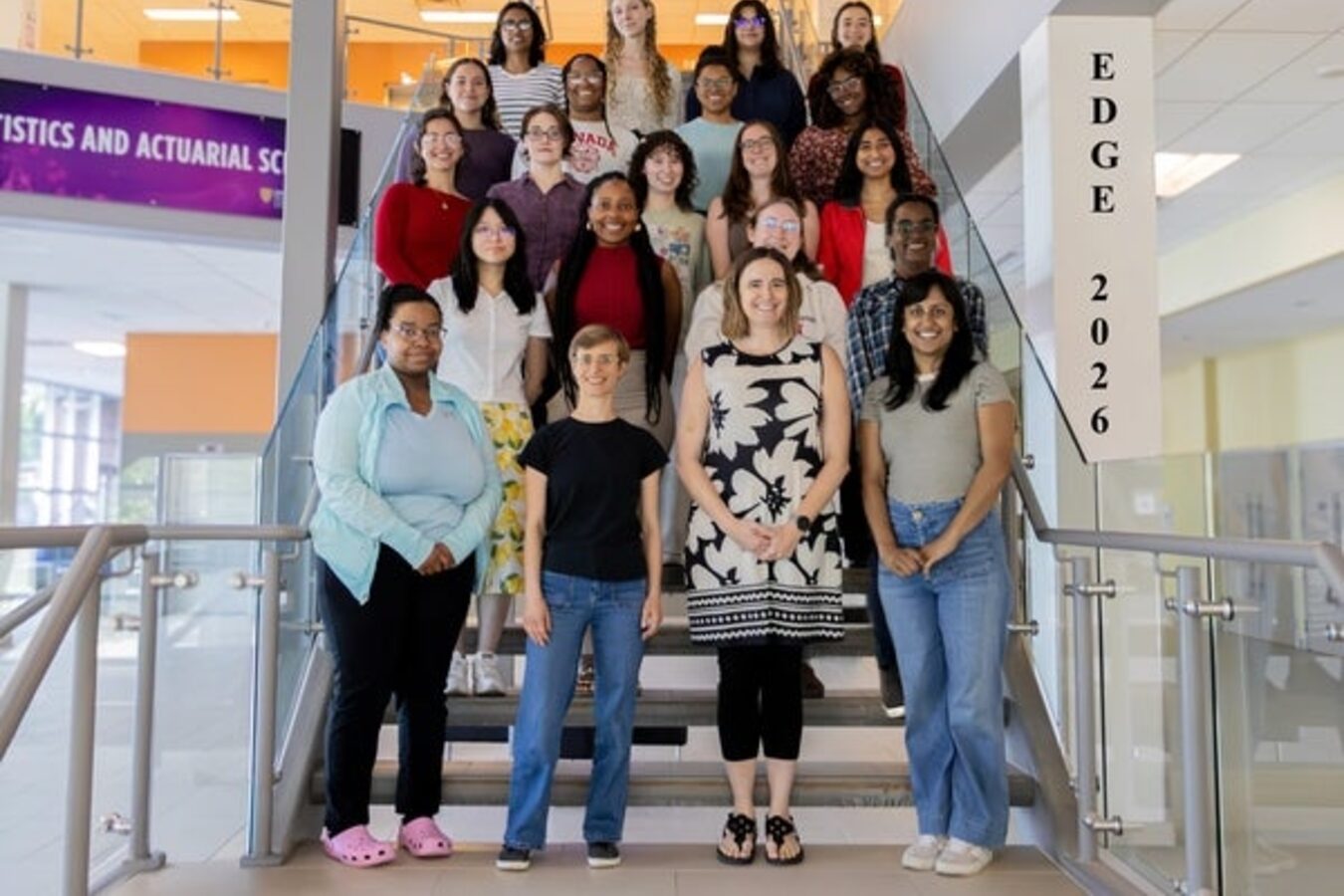
How Building Community Gives Grad Students an “EDGE”
MathHow Building Community Gives Grad Students an “EDGE”Photo: University of Waterloo / original source page

The EDGE for Women program is a one-month intensive that provides mentorship and training to women and gender-minority students at the beginning of their PhDs.

The official Waterloo report places this work in math / graduate life. It is a source-linked brief for alumni readers; the source page remains the authority for names, dates and outcomes.

Sources 1
  1. Original reporting · uwaterloo.ca

Share this storyOpen as a single page →

Next · p.11Waterloo Environment names six 2026 alumni award recipientsDouglas Jones, Reiko Omoto, Jo Fitzgibbons, Kate Linden, Adam Clark and KEEN Footwear are honoured; the banquet is on November 17.

Waterloo Environment names six 2026 alumni award recipients

Douglas Jones, Reiko Omoto, Jo Fitzgibbons, Kate Linden, Adam Clark and KEEN Footwear are honoured; the banquet is on November 17.

Six portrait headshots of the 2026 Faculty of Environment alumni award recipients in a hexagon layout
AlumniSix portrait headshots of the 2026 Faculty of Environment alumni award recipients in a hexagon layoutPhoto: University of Waterloo (uwaterloo.ca); rights under review

The Faculty of Environment at the University of Waterloo announced its 2026 alumni award recipients on September 22. Douglas Jones (BES ’93) and Reiko Omoto (PhD ’13) received Distinguished Alumni Achievement Awards. Jo Fitzgibbons (MES ’19) and Kate Linden (PhD ’18) received Recent Alumni Inspiration Awards.

Adam Clark (BAS ’06, MArch ’09), an urban designer with the City of Kitchener, and KEEN Footwear received Friend of the Faculty Impact Awards. Jones is principal of Limehouse Public School, which has held EcoSchools Platinum certification for five consecutive years. Omoto studies how global sustainability approaches can learn from local knowledge in Japan, Southeast Asia and the United States.

Fitzgibbons plans and researches for the City of Vancouver, and Linden teaches at Cape Breton University. The awards were established in 2008, and this year’s six recipients join more than 40 previous honourees.

Upcoming: the faculty will honour the recipients on November 17 at the Evergreen Awards banquet in Federation Hall. Nominations for future awards are accepted year-round.

Sources 1
  1. Original reporting · uwaterloo.ca

Share this storyOpen as a single page →

Next · p.12Douglas Jones built a rural school around the outdoorsThe Waterloo graduate is principal of Limehouse Public School, which has held EcoSchools Platinum certification for five consecutive years.

Douglas Jones built a rural school around the outdoors

The Waterloo graduate is principal of Limehouse Public School, which has held EcoSchools Platinum certification for five consecutive years.

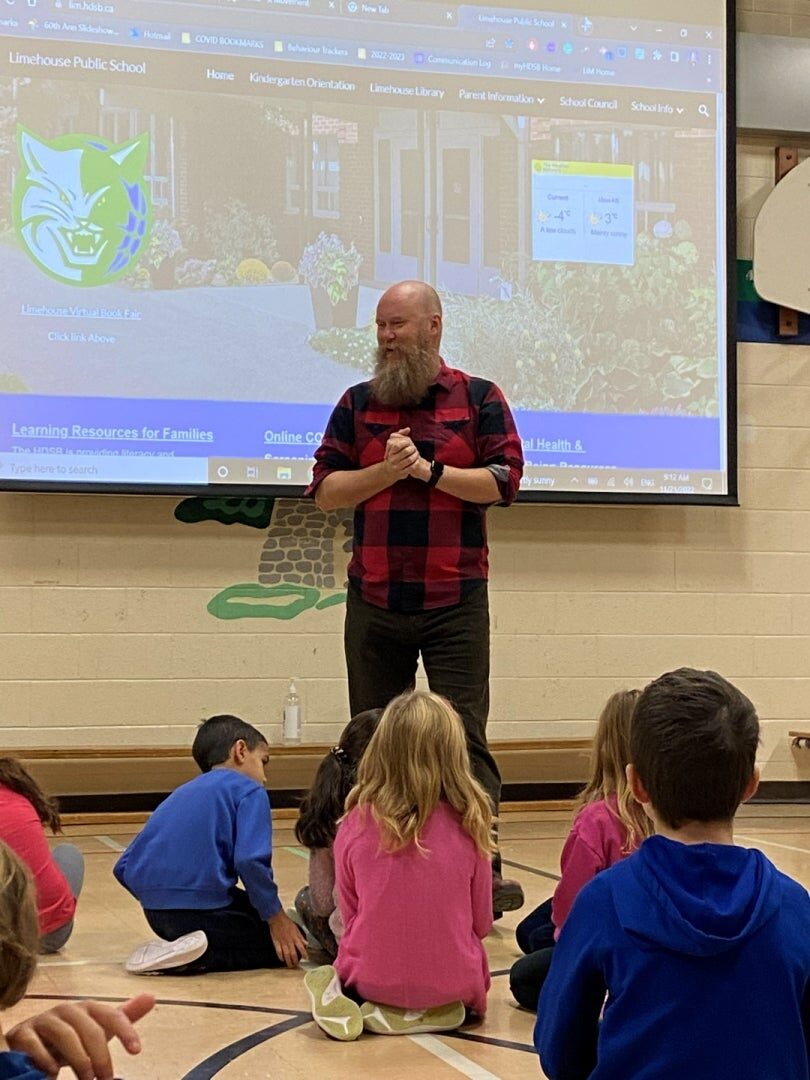
A bearded man in a red plaid shirt speaks to seated elementary students in a school gym
AlumniA bearded man in a red plaid shirt speaks to seated elementary students in a school gymPhoto: University of Waterloo (uwaterloo.ca); rights under review

Douglas Jones (BES ’93) once told a classmate he would never teach geography to high school kids. A third co-op term at Boyne River Natural Science School, an outdoor education centre, changed his mind: a week with a group of Grade 5 students led him back for a second term and into an honours thesis on outdoor education.
He is now principal of Limehouse Public School, a small rural school beside the Bruce Trail and the Limehouse Conservation Area. When he arrived in 2021 he encouraged teachers to ask where students would learn a lesson best. Mornings begin outdoors, older students mentor younger ones, and in the first year the school’s academic results began outperforming board and provincial averages.

Limehouse has held EcoSchools Platinum status for five straight years and was one of five schools in its region to adopt Learning for Sustainable Futures. In 2025, Wilfrid Laurier University researchers placed it at the threshold of Stage 4, Collective Action and Widespread Practice. It has also been approved to become the Northern Centre for Environmental Leadership.

Jones, a 2026 Distinguished Alumni Award recipient, also coaches teachers, principals and administrators who want to teach outdoors and sustainably.

Sources 1
  1. Original reporting · uwaterloo.ca

Share this storyOpen as a single page →

Next · p.13Carly Orth takes her hockey career from Waterloo to SwedenThe former Warriors player signed with Örebro Hockey of Nationella Damhockeyligan and hopes to keep playing professionally, perhaps in the PWHL.

Carly Orth takes her hockey career from Waterloo to Sweden

The former Warriors player signed with Örebro Hockey of Nationella Damhockeyligan and hopes to keep playing professionally, perhaps in the PWHL.

A smiling young woman with wavy hair in front of a Waterloo Warriors backdrop
Campus LifeA smiling young woman with wavy hair in front of a Waterloo Warriors backdropPhoto: Imprint (uwimprint.ca); rights under review

Carly Orth, a former Waterloo Warriors women’s hockey player, has signed with Örebro Hockey, a member of the Nationella Damhockeyligan. An agent sent her highlight video to coaches and general managers. She says she enjoyed talking with the coaches, loves Sweden and found the contract right.

Since the season ended she has trained in the gym almost every day, and this summer she has gradually added ice time. She says she is going with the flow about the move, and her priorities are bringing what she needs and arriving in good shape.

On the ice she hopes to help Örebro compete for a championship. Further ahead she wants to keep playing professionally, in Europe or with the PWHL, and she is taking it day by day.

Orth credits her Waterloo coaches, support staff, teammates, fans and professors, who accommodated practices and games through her undergraduate and master’s studies. She calls leaving bittersweet. Imprint published the profile on August 24, with the move still ahead.

Sources 1
  1. Original reporting · uwimprint.ca

Share this storyOpen as a single page →

Next · p.14Velocity Summer Accelerator sends 30 funded teams into the fallIntellectual Property Ontario backed the 2026 cohort of 55 recent and soon-to-be graduates; AllioHealth founder Ashley Juraschka is one of them.

Velocity Summer Accelerator sends 30 funded teams into the fall

Intellectual Property Ontario backed the 2026 cohort of 55 recent and soon-to-be graduates; AllioHealth founder Ashley Juraschka is one of them.

A presenter speaks on stage in front of a room of startup founders at Velocity
Business & InnovationA presenter speaks on stage in front of a room of startup founders at VelocityPhoto: University of Waterloo (uwaterloo.ca); rights under review

Intellectual Property Ontario (IPON) provided $12,000 fellowships to 30 teams in the 2026 Velocity Summer Accelerator, a program that took in 55 recent and soon-to-be graduates of Waterloo. The idea was to help founders cross the stretch between graduating and running a company full time.

The Summer Accelerator cohort posing together in front of the Velocity wall
Business & InnovationThe Summer Accelerator cohort posing together in front of the Velocity wallPhoto: University of Waterloo (uwaterloo.ca); rights under review

Over three months, teams followed weekly programming aimed at milestones such as letters of intent, first pilots and first sales, then pitched investors at a demo day. Participants came from all six Waterloo faculties, and more than 45 per cent of teams had female founders.

Among the entrants was Ashley Juraschka (MASc in progress, BASc ’24), whose company AllioHealth is building AllioGo, a breast pump designed around how a baby naturally feeds. After the Cooperathon powered by Desjardins, she took AllioHealth to the finals at Startupfest in Montreal, where it won a $5,000 Innovation Award and the People’s Choice Award.

Many teams will keep building with Velocity coaching and follow-on programs such as Velocity Northstar, a three-month run of weekly in-person check-ins covering customer discovery, sales and fundraising.

Sources 1
  1. Original reporting · uwaterloo.ca

Share this storyOpen as a single page →

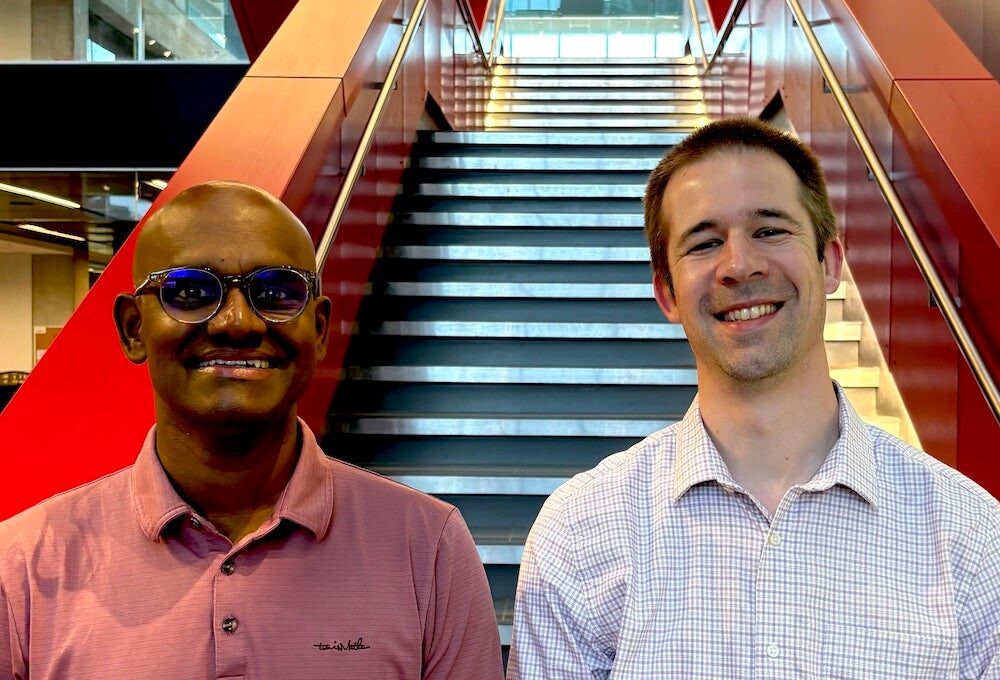
Next · p.15Aswad Tariq and team win Best Paper at SACMAT for a web study of behavioural biometricsTwo master’s alumni and Professor Urs Hengartner examined 232 scripts from 18 vendors to ask whether the tracking protects or invades customers.

Aswad Tariq and team win Best Paper at SACMAT for a web study of behavioural biometrics

Two master’s alumni and Professor Urs Hengartner examined 232 scripts from 18 vendors to ask whether the tracking protects or invades customers.

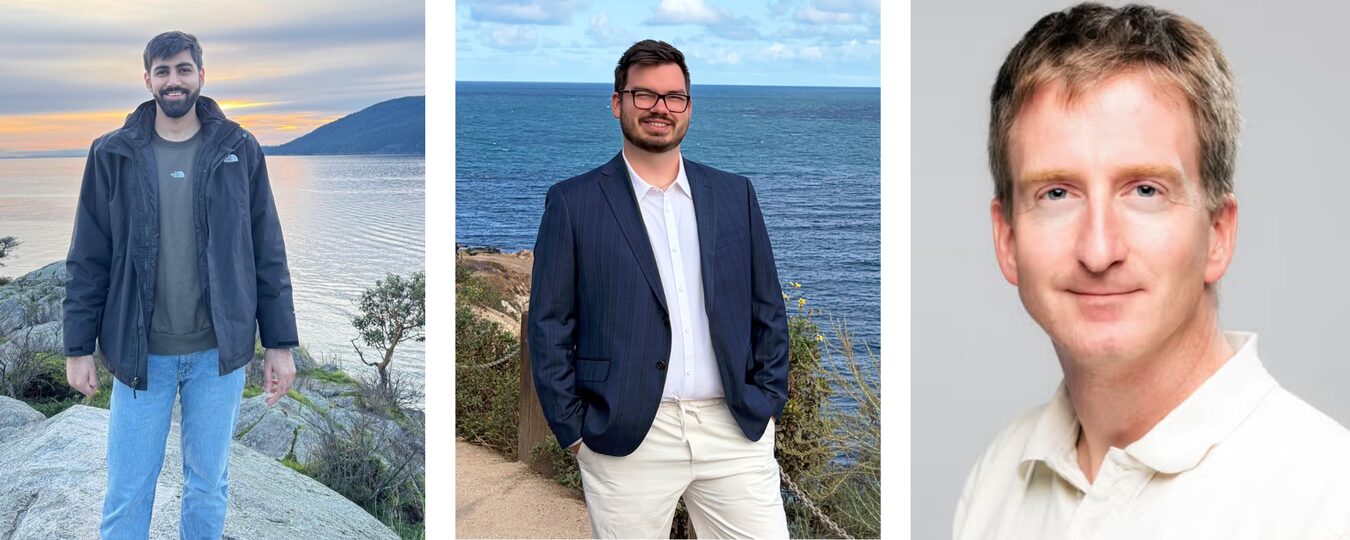
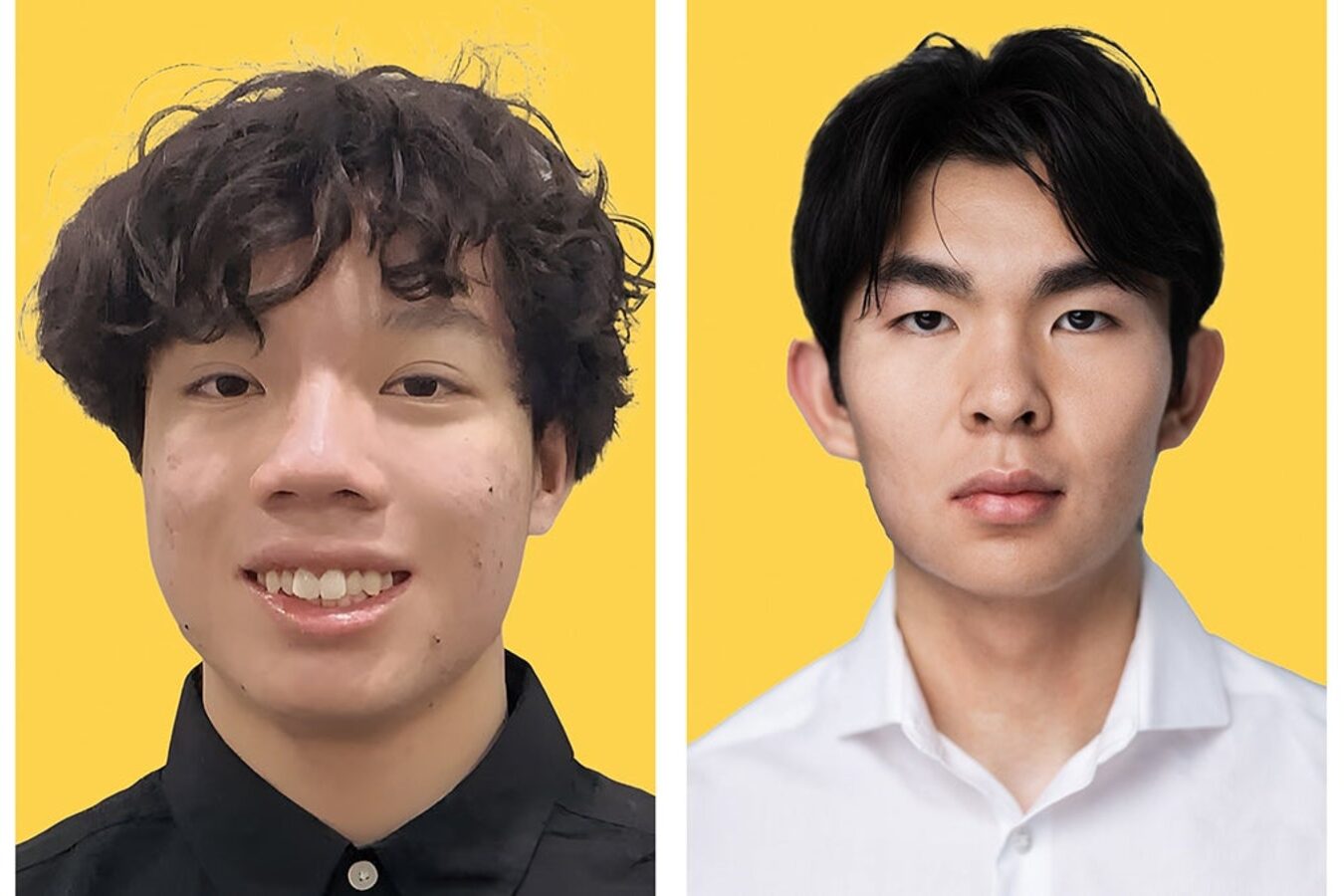
Headshots of Aswad Tariq, Alexandru Bara and Professor Urs Hengartner
ResearchHeadshots of Aswad Tariq, Alexandru Bara and Professor Urs HengartnerPhoto: University of Waterloo (uwaterloo.ca); rights under review

Aswad Tariq (MMath ’25), Alexandru Bara (MMath ’25) and Professor Urs Hengartner of the Cheriton School of Computer Science won the Best Paper Award at the ACM Symposium on Access Control Models and Technologies (SACMAT). Tariq is the lead author.

Their paper studies behavioural biometrics, which analyze patterns such as typing speed, keystroke dynamics and mouse movements to help detect fraud. They ask whether the technology protects customers or invades their privacy, noting that some of the domains involved already appear on public blocklists.

It is the first large-scale study of how widely the technology is used on the web. The team assembled 232 behavioural biometric scripts from 18 vendors, developed a crawler called LoginGPT to find login pages containing them, and used static taint analysis and supervised machine learning to separate authentication from tracking. Hengartner says it is concerning that data is sometimes sent to third parties.

Sources 1
  1. Original reporting · uwaterloo.ca

Share this storyOpen as a single page →

Next · p.16Juanita Metzger turned a Renison degree into walking tours of Waterloo RegionThe Social Development Studies graduate (BA ’96) worked in community development for decades before founding Stroll Walking Tours.

Juanita Metzger turned a Renison degree into walking tours of Waterloo Region

The Social Development Studies graduate (BA ’96) worked in community development for decades before founding Stroll Walking Tours.

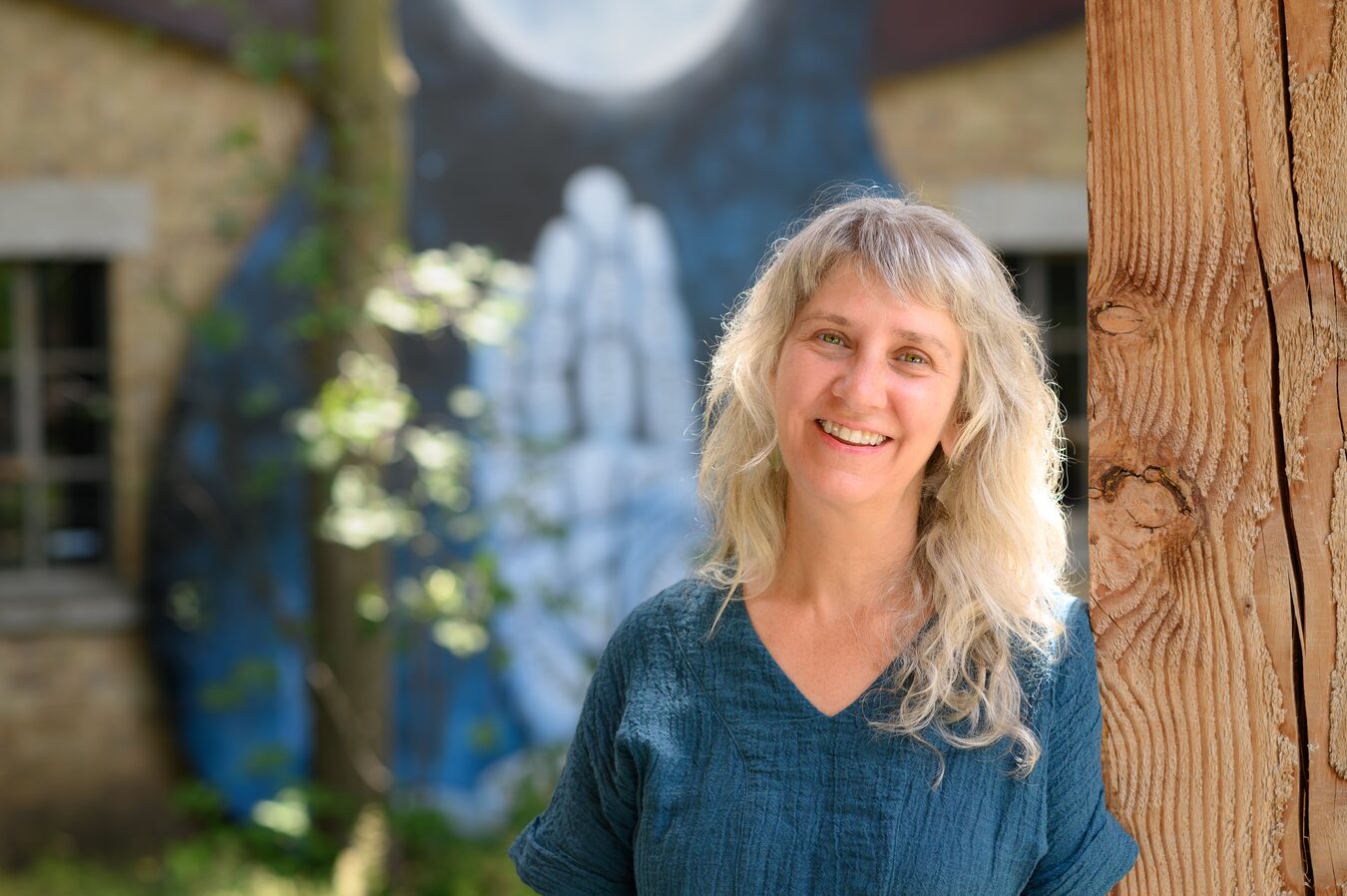
A smiling woman in front of a painted mural, the page’s featured image
AlumniA smiling woman in front of a painted mural, the page’s featured imagePhoto: University of Waterloo (uwaterloo.ca); rights under review

Juanita Metzger (BA ’96) arrived at Renison in 1993 and found her place in the Social Development Studies program, which let her study social issues and communities while staying close to home in Waterloo Region. Professors such as Tom Brenner and Peter Dunn taught her to look at the systems and policies behind people’s circumstances.

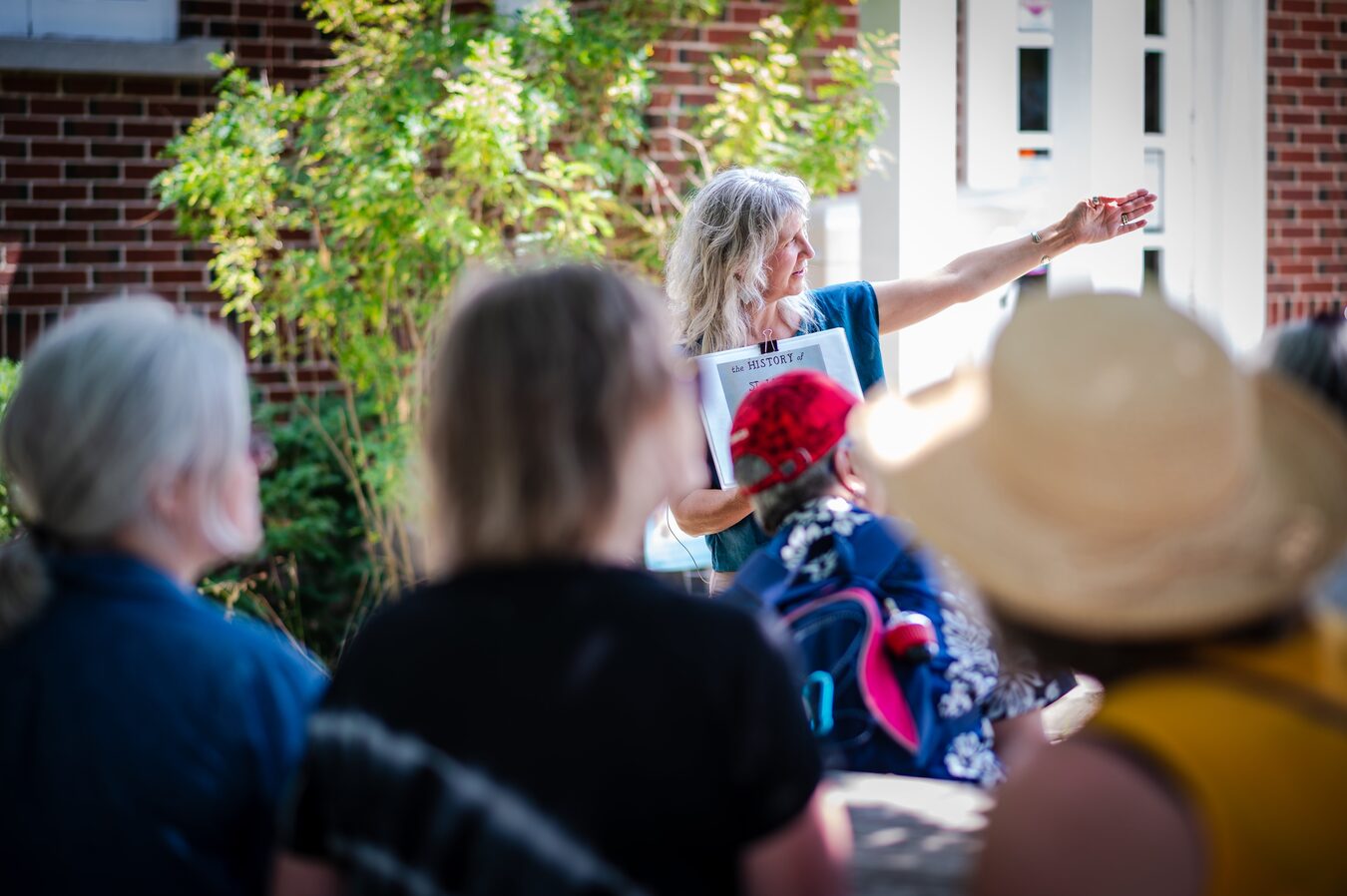
Juanita Metzger pointing and speaking during a walking tour
AlumniJuanita Metzger pointing and speaking during a walking tourPhoto: University of Waterloo (uwaterloo.ca); rights under review

After graduating in 1996 she spent more than twenty years in community development, including work with House of Friendship and the Waterloo Region Crime Prevention Council. She learned to ask residents to take her for a walk, and the stories, introductions and local assets they shared became part of her practice.

In 2018 she left full-time employment, and freelance writing and local storytelling grew into Stroll Walking Tours. Its tours cover local history, food, women’s history and Black history in Waterloo Region. She says people often tell her they finally see themselves in the region’s history. Metzger calls Renison foundational and describes it as human scale.

Sources 1
  1. Original reporting · uwaterloo.ca

Share this storyOpen as a single page →

Next · p.17Terry Crowe tracked down 95 of Waterloo Planning’s first graduatesThe BES ’72 alumnus spent retirement interviewing classmates and published a grad report on the first five cohorts, who graduated from 1967 to 1971.

Terry Crowe tracked down 95 of Waterloo Planning’s first graduates

The BES ’72 alumnus spent retirement interviewing classmates and published a grad report on the first five cohorts, who graduated from 1967 to 1971.

Terry Crowe standing beside a stone fireplace
AlumniTerry Crowe standing beside a stone fireplacePhoto: University of Waterloo (uwaterloo.ca); rights under review

Terry Crowe (BES ’72), a member of the fifth class of Waterloo’s School of Planning, wondered for years what his fellow graduates went on to do. After retiring he started asking, sending former classmates 12 questions about their studies, careers and views on the profession.
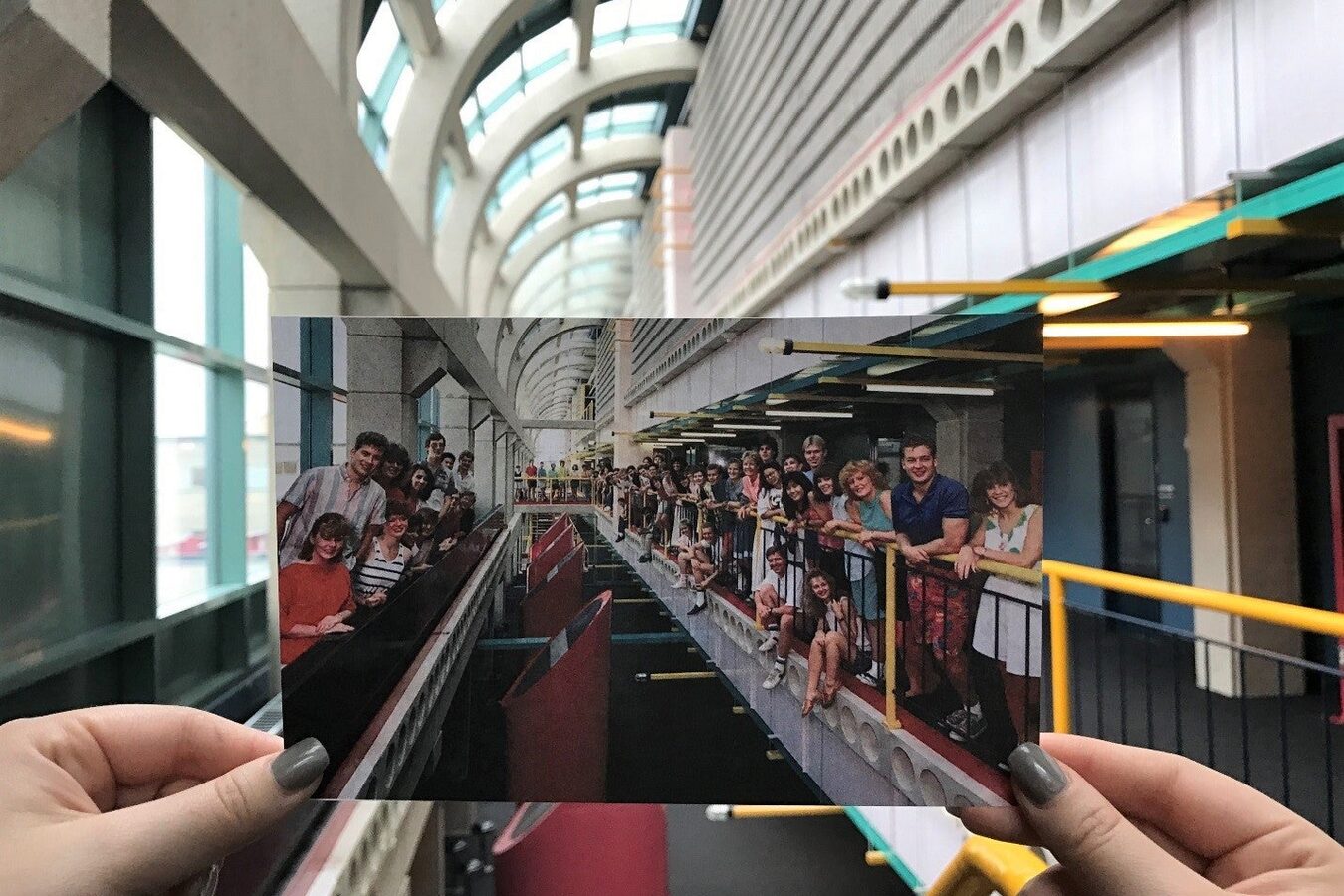
The result is a newly released grad report that follows the first five cohorts, who graduated from 1967 to 1971, to the present. Crowe found 95 of them. They include Jean Monteith, an award-winning planner and Fellow of the Canadian Institute of Planners who founded Monteith Brown Planning Consultants, and David Witty, who helped Atikaki Wilderness Provincial Park win its designation and prepared the memorandum of understanding behind Grasslands National Park.

Crowe himself had a 46-year career from coast to coast, including work on rerouting Nova Scotia’s Highway 101 to save Annapolis Royal and on the 2010 Winter Olympic Speed Skating Oval in Richmond, British Columbia. The faculty says the report shows how the early graduates shaped communities and policy, and reconnecting also brought back long-forgotten memories.

Sources 1
  1. Original reporting · uwaterloo.ca

Share this storyOpen as a single page →

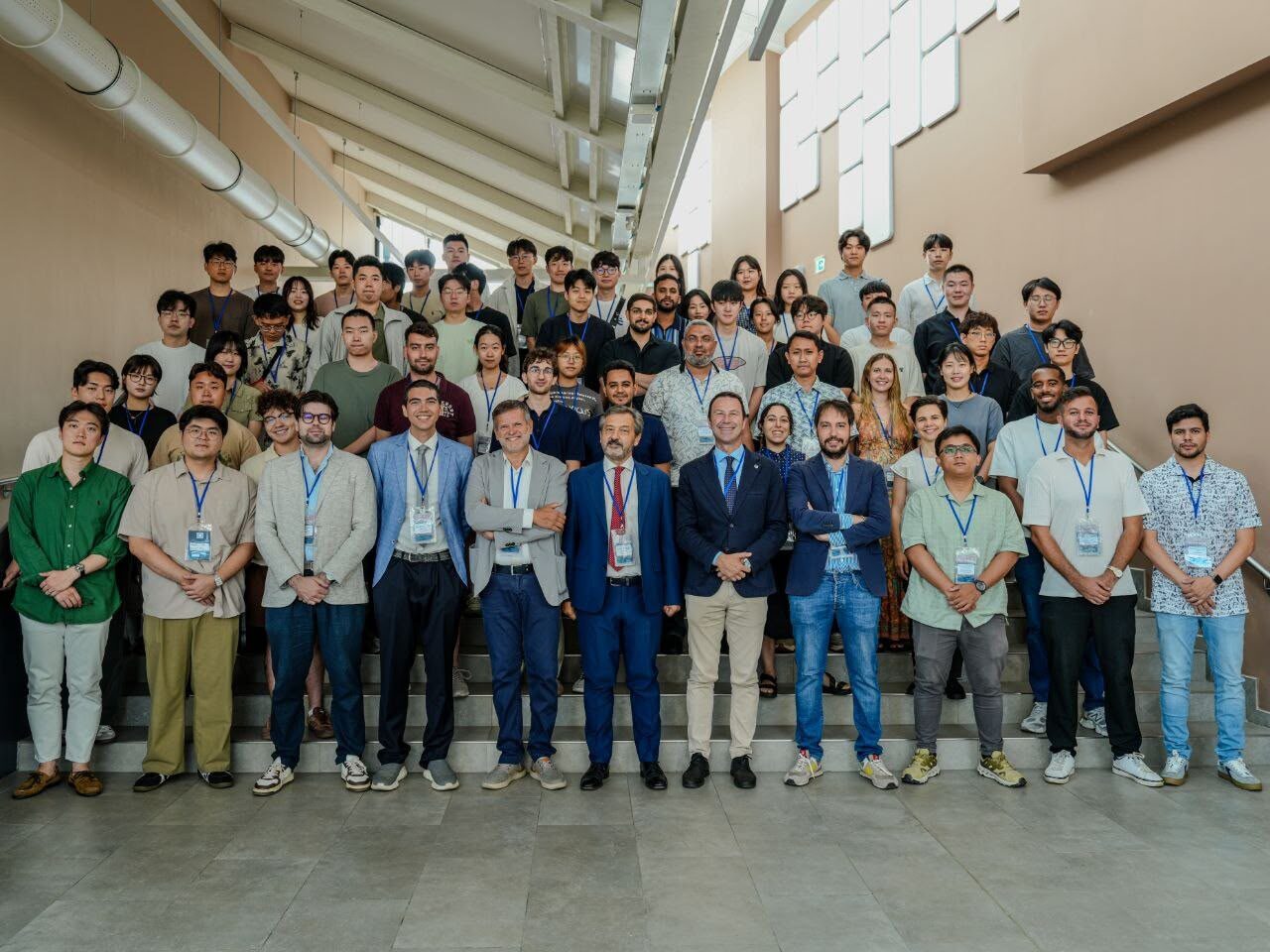
Next · p.18Oscar Hurtado and Luis Marquez win top honours at a smart structures school in TurinThe Waterloo graduate students joined 58 peers at the APESS summer school; one team took first place and another won Best Presentation.

Oscar Hurtado and Luis Marquez win top honours at a smart structures school in Turin

The Waterloo graduate students joined 58 peers at the APESS summer school; one team took first place and another won Best Presentation.

Summer school participants gathered for a group photo
Awards & RecognitionSummer school participants gathered for a group photoPhoto: University of Waterloo (uwaterloo.ca); rights under review

Civil and Environmental Engineering graduate students Oscar Hurtado and Luis Marquez came back from Italy with international recognition after taking part in the 15th APESS summer school on smart structures technology (the Asia-Pacific-Euro school) and the 17th ANCRiSST Workshop at Politecnico di Torino. They joined 58 graduate students from around the world.

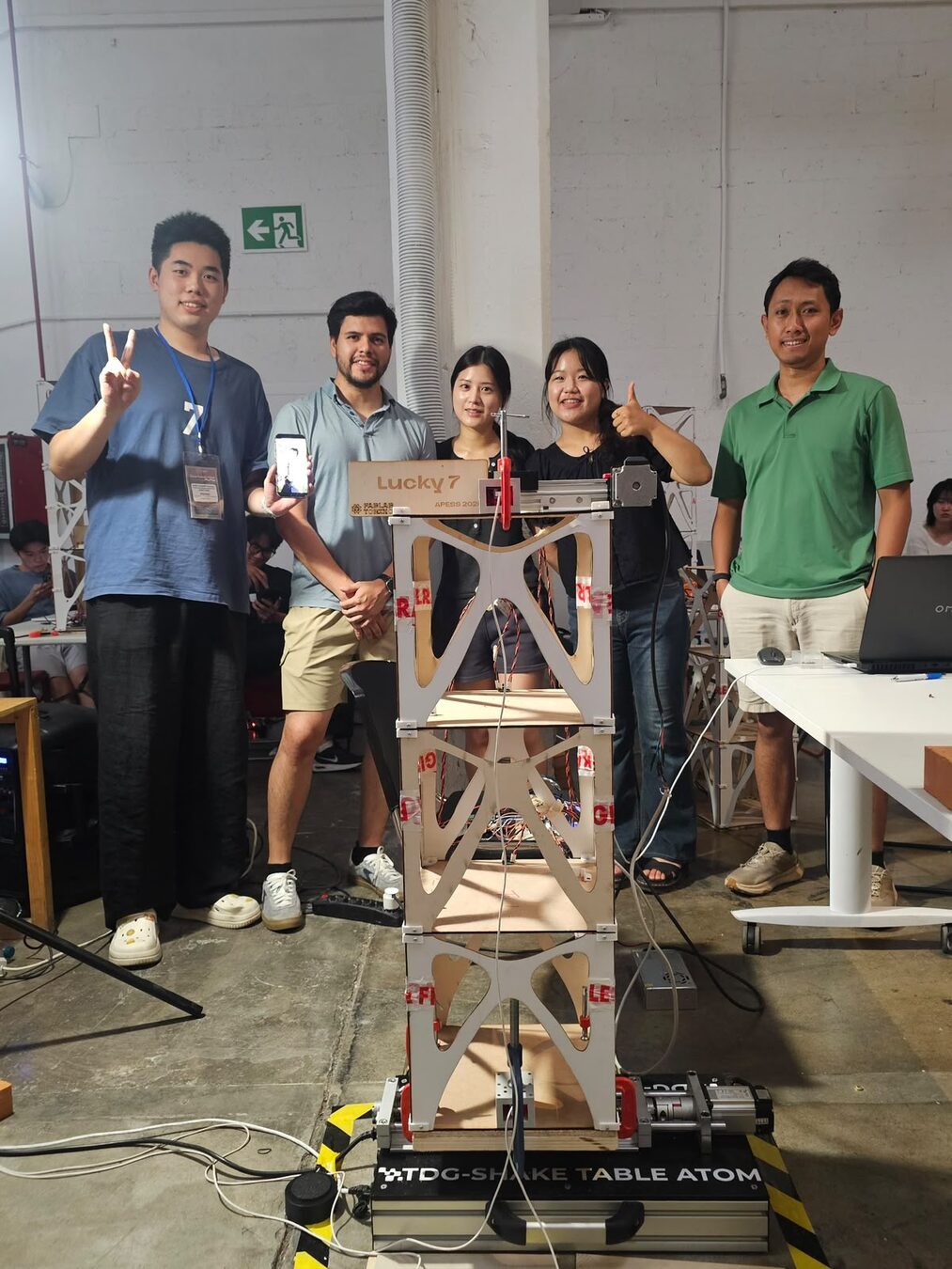
Students standing beside a lattice structure model they built
Awards & RecognitionStudents standing beside a lattice structure model they builtPhoto: University of Waterloo (uwaterloo.ca); rights under review

Participants attended lectures on structural health monitoring, control systems and topology optimization, visited sites including the Regina Margherita Bridge and EUCENTRE’s shake-table laboratories, and spent intensive days in the FabLab with teams from more than a dozen countries.

Hurtado’s team won first place in the structural health monitoring competition with a topologically optimized design that minimized earthquake response, then monitored and updated its model to improve performance. Marquez’s team received the award for Best Presentation. Both say the greatest value is the new questions they bring back to their research at Waterloo.

Sources 1
  1. Original reporting · uwaterloo.ca

Share this storyOpen as a single page →

Next · p.19Six Waterloo Architecture alumni explore diaspora and home in A Room of One’s HomeCurator Bianca Weeko Martin (M’Arch ’22) gathered graduate thesis work at Riverside Gallery; the Masterworks 2026 show ran until October 1.

Six Waterloo Architecture alumni explore diaspora and home in A Room of One’s Home

Curator Bianca Weeko Martin (M’Arch ’22) gathered graduate thesis work at Riverside Gallery; the Masterworks 2026 show ran until October 1.

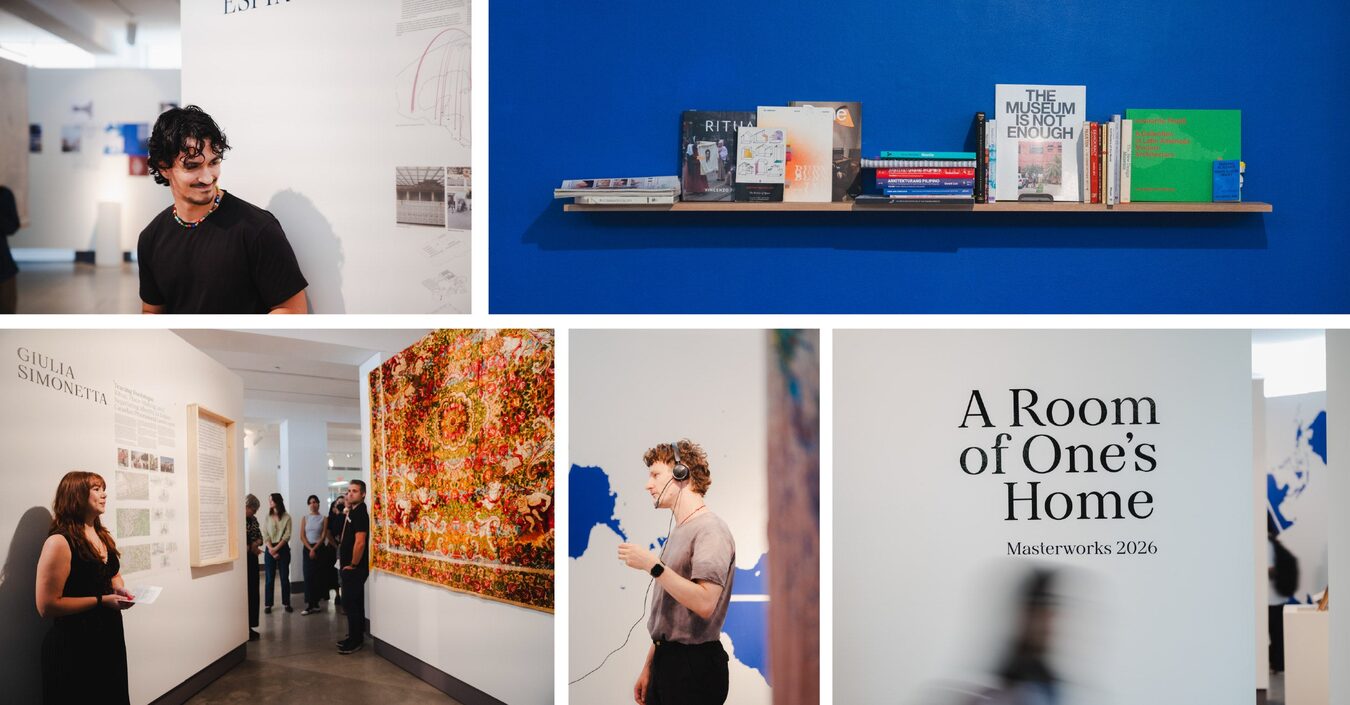
Collage of photos from Masterworks 2026: A Room of One’s Home
ArtsCollage of photos from Masterworks 2026: A Room of One’s HomePhoto: University of Waterloo (uwaterloo.ca); rights under review

Masterworks 2026: A Room of One’s Home gathered the graduate thesis work of six Waterloo Architecture alumni at the Riverside Gallery, Design at Riverside, and ran until October 1, 2026. Visitors move through rooms of drawings, counter-archival projects, artifacts and photography that explore identity, memory and architecture. The projects acknowledge displacement and cultural loss without reducing identity to nostalgia.

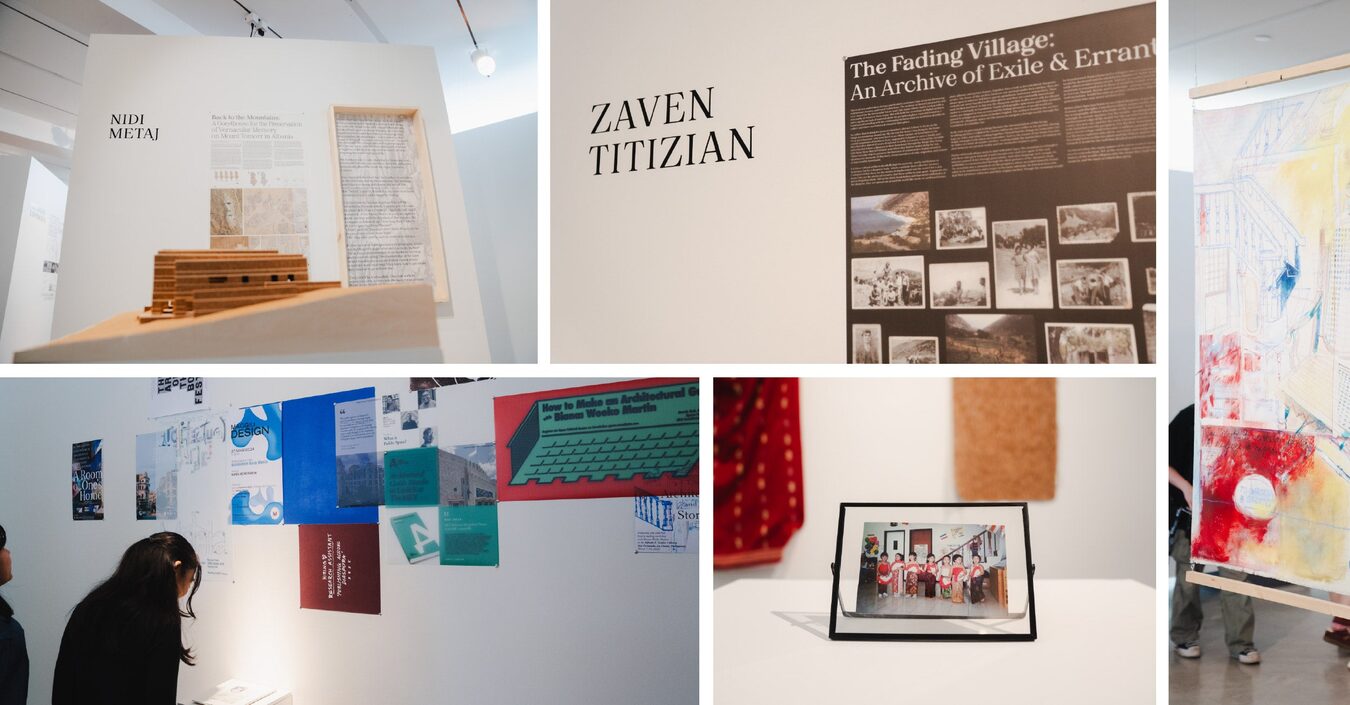
Second collage of photographs from the exhibition
ArtsSecond collage of photographs from the exhibitionPhoto: University of Waterloo (uwaterloo.ca); rights under review

Ricardo Espinoza (Caribbean Sea) and Nidi Metaj (Albania) are joined by Angeline Reyes (Philippines), Giulia Simonetta (Italy), Zaven Titizian (Syria and Lebanon) and Hiba Z. (Indus River Basin), each tracing a link to a place of origin. Curator Bianca Weeko Martin (M’Arch ’22) says the show took a village, and she put much of it together from Toronto without a driver’s licence.

Martin is a writer and researcher. She wrote the Architectural Guide: Manila, and her piece Tita Tallulah was recently longlisted for the 2026 CBC Nonfiction Prize. Masterworks is Waterloo Architecture’s annual exhibition of graduate and alumni research, supported by Diamond Schmitt.

Sources 1
  1. Original reporting · uwaterloo.ca

Share this storyOpen as a single page →

Next · p.20Irina Bukhteeva and Alex Smirnov take a Waterloo-tested board game to KickstarterThe physics and applied mathematics PhD alumni launched Wagglebee Games around Tokelau, a Polynesian exploration game, and hope to launch in fall 2026.

Irina Bukhteeva and Alex Smirnov take a Waterloo-tested board game to Kickstarter

The physics and applied mathematics PhD alumni launched Wagglebee Games around Tokelau, a Polynesian exploration game, and hope to launch in fall 2026.

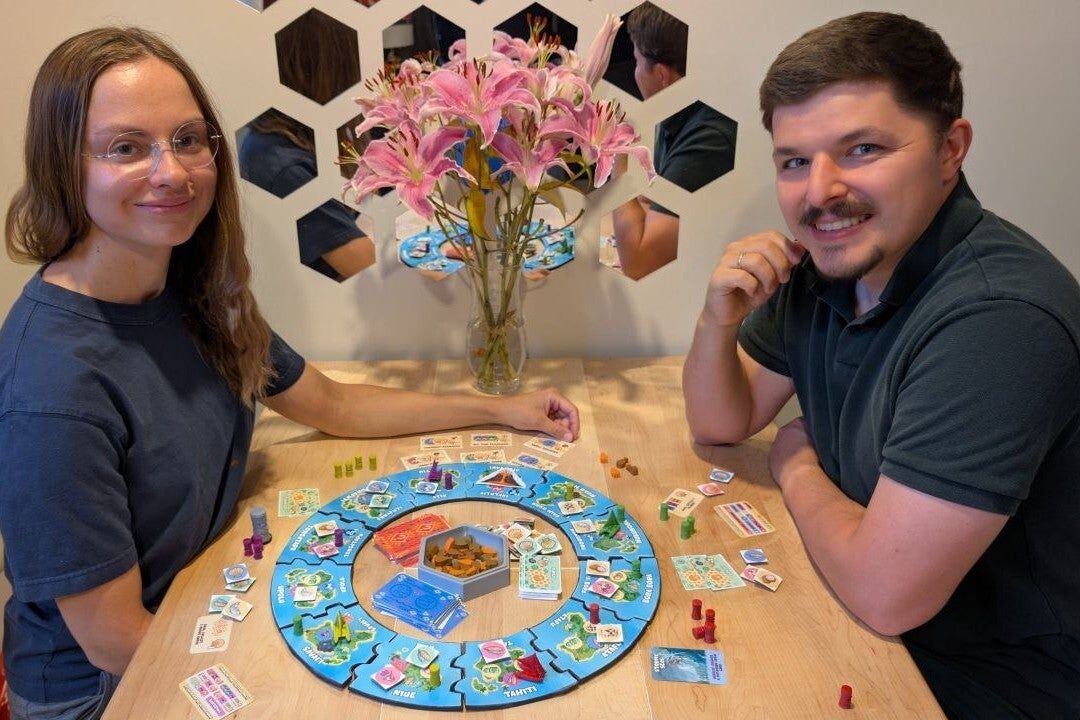
A woman and man sitting at a table playing the circular board game Tokelau
Business & InnovationA woman and man sitting at a table playing the circular board game TokelauPhoto: University of Waterloo (uwaterloo.ca); rights under review

Irina Bukhteeva (PhD ’25, Physics) and Alexey “Alex” Smirnov (PhD ’24, Applied Mathematics) designed a board game during graduate school and have turned it into a label, Wagglebee Games. The game, Tokelau, was playtested in student apartments, board game cafés and at kitchen tables around Waterloo.

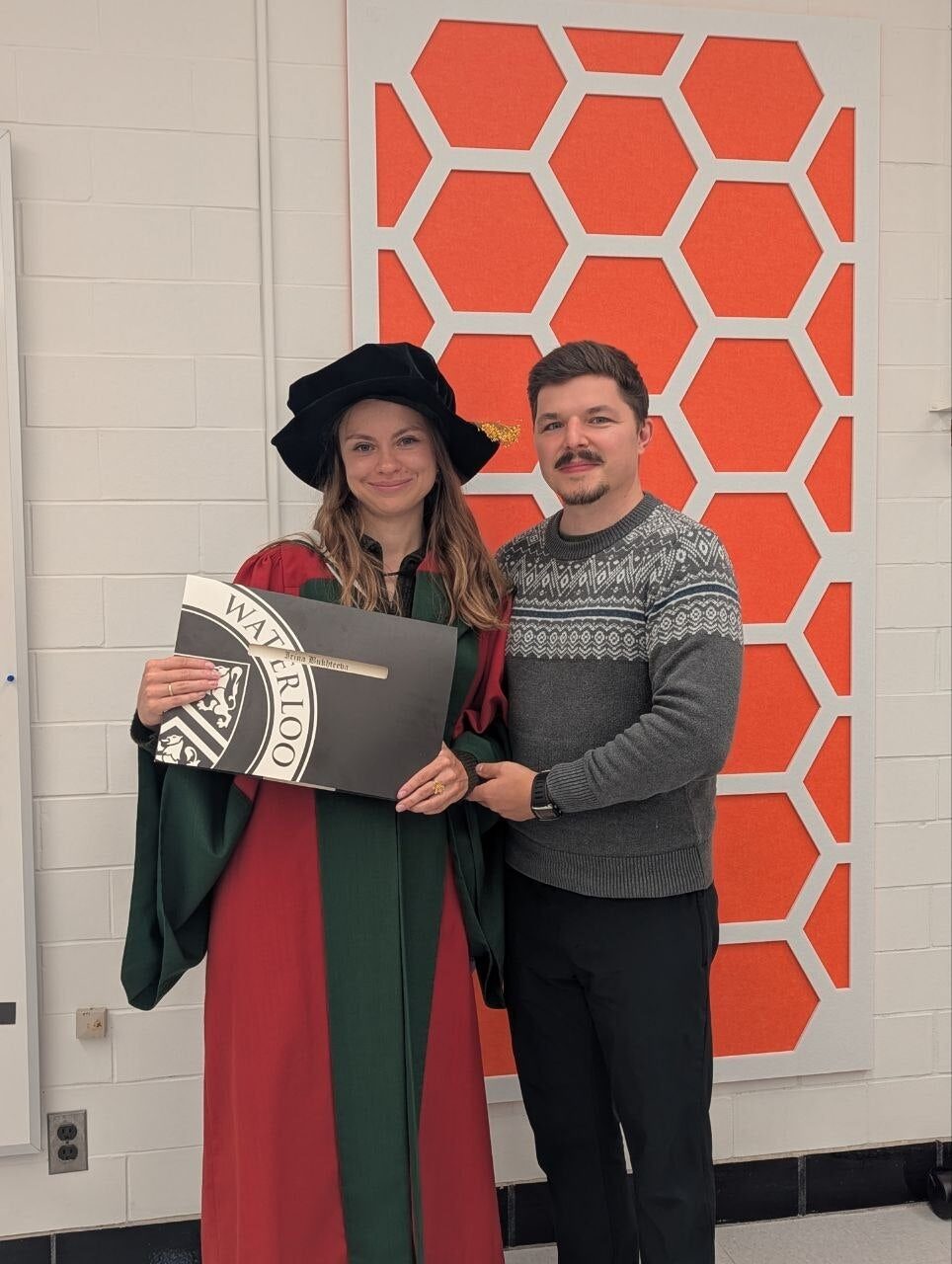
Irina Bukhteeva at convocation with Alexey Smirnov
Business & InnovationIrina Bukhteeva at convocation with Alexey SmirnovPhoto: University of Waterloo (uwaterloo.ca); rights under review

Tokelau is a strategy game for two to six players, aged 12 and up, based on exploration and trade across the islands of Polynesia. Players sail between islands in shifting winds, gather resources, found settlements and build trade networks on a modular board that can form thousands of island layouts. Miguel Valenzuela Beltrán drew the artwork, and visual cues help colour-blind players.

The couple say every playtest felt like an experiment, and that learning to take reviewer-style criticism during a PhD helped them keep improving the design. Smirnov now works as an optical engineer in Ottawa, and Bukhteeva moved into postdoctoral research in molecular biology and regenerative medicine.

Upcoming: Tokelau is featured on Kickstarter, and the two hope to launch the project in fall 2026.

Sources 1
  1. Original reporting · uwaterloo.ca

Share this storyOpen as a single page →

Next · p.21Mentorship is an engineering inputA mentorship award recognises the work that helps graduate researchers persist.

Mentorship is an engineering input

A mentorship award recognises the work that helps graduate researchers persist.

Prof receives national grad studies mentorship award
EngineeringProf receives national grad studies mentorship awardPhoto: University of Waterloo / original source page

Dr. Catherine Burns has been selected as the recipient of the 2026 Dr. Suning Wang Award for Outstanding Graduate Mentorship, presented by CAGS.

The official Waterloo report places this work in engineering / mentorship. It is a source-linked brief for alumni readers; the source page remains the authority for names, dates and outcomes.

Sources 1
  1. Original reporting · uwaterloo.ca

Share this storyOpen as a single page →

Next · p.22Jo Fitzgibbons carries community knowledge into Vancouver planningThe Waterloo planning graduate works across departments at the City of Vancouver to embed ecology in land use, development and public infrastructure.

Jo Fitzgibbons carries community knowledge into Vancouver planning

The Waterloo planning graduate works across departments at the City of Vancouver to embed ecology in land use, development and public infrastructure.

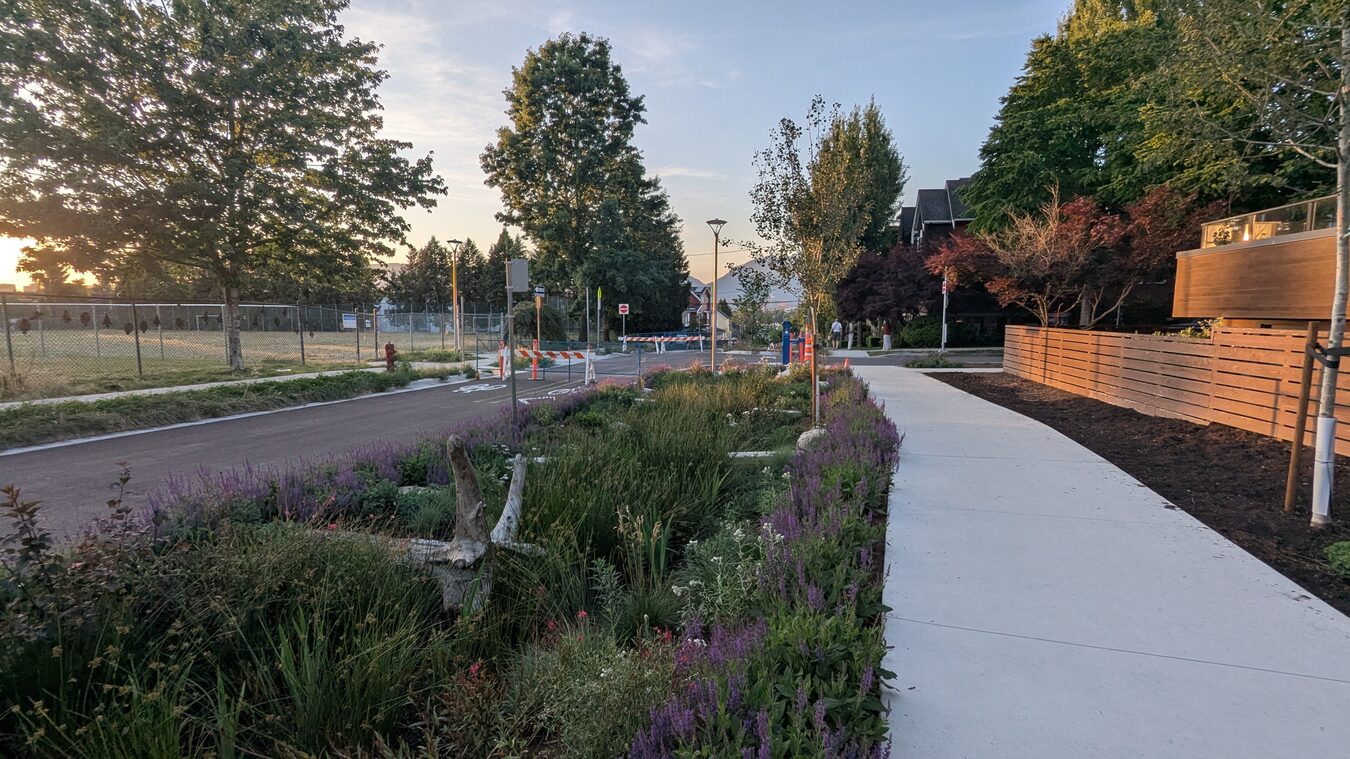
A landscaped urban street with a garden median and sidewalk in warm evening light
AlumniA landscaped urban street with a garden median and sidewalk in warm evening lightPhoto: University of Waterloo (uwaterloo.ca); rights under review

Jo Fitzgibbons (MES ’19) calls herself a former “bog child,” happiest catching frogs in wetlands. A walk through a Toronto ravine during a hard season reminded her what nature had always given her, and it shaped a career built on community-engaged research.

She interned with the City of Toronto, competed internationally for Waterloo and researched equity in resilience planning, testing her ideas in practice. Associate Professor Carrie Mitchell taught her to work as a situated researcher, and the Governor General’s Gold Medal went to her master’s research. Her doctoral work at the University of British Columbia asked whose knowledge counts in environmental decisions, and some chapters appear as a toolkit and a zine.

She became a Registered Professional Planner and finished her PhD while working in local government. At the City of Vancouver she works with engineers, planners, finance and social policy staff to embed ecology in land-use planning, development and public infrastructure, and she values small, careful changes that build up over time.

Fitzgibbons is a 2026 Recent Alumni Inspiration Award recipient from the Faculty of Environment.

Sources 1
  1. Original reporting · uwaterloo.ca

Share this storyOpen as a single page →

Next · p.23A psychologist builds the tool he needsJOLIVE grew from a research bottleneck into a software venture.

Chapter 02

Science & Technology

Labs, models and discoveries, from quantum light to AI.

37 stories

A psychologist builds the tool he needs

JOLIVE grew from a research bottleneck into a software venture.

Jacob Oliveira on Waterloo’s campus.
IdeasJacob Oliveira on Waterloo’s campus.Photo: Source: University of Waterloo; see original article for photo credits.

Psychology PhD student Jacob Oliveira built JOLIVE to reduce the programming work involved in behavioural studies. Its visual interface supports surveys, experiments and optional AI chat components, with study ordering handled by the platform.

Waterloo reports that Oliveira used the tool for eight studies involving 840 participants in one semester. He is developing the incorporated business with a team and a computer science co-op student. The result is a useful example of a product emerging from direct experience of a problem.

Sources 1
  1. Original reporting · uwaterloo.ca

Share this storyOpen as a single page →

Next · p.24The summer that brought him backDavid Carciente tested the fit of a lab before choosing graduate school.

The summer that brought him back

David Carciente tested the fit of a lab before choosing graduate school.

David Carciente and fellow participants during his Rising Stars summer.
CampusDavid Carciente and fellow participants during his Rising Stars summer.Photo: Source: University of Waterloo; see original article for photo credits.

David Carciente joined Waterloo’s first Rising Stars Fellowship cohort in 2024 while studying software engineering at Concordia. In the Vision and Image Processing Lab, he helped make computer vision tools more accessible to marine researchers.

He returned for a master’s in Systems Design Engineering after getting to know the supervisors and research environment. His current work pairs satellite imagery with sea ice charts. The fellowship offered something a prospectus cannot: time to discover what working in a particular lab feels like.

Sources 1
  1. Original reporting · uwaterloo.ca

Share this storyOpen as a single page →

Next · p.25A longer runway for collaborationWaterloo and Airbus formalize a framework for research and talent development.

A longer runway for collaboration

Waterloo and Airbus formalize a framework for research and talent development.

Waterloo’s Suzanne Kearns with partners from Airbus.
IndustryWaterloo’s Suzanne Kearns with partners from Airbus.Photo: Source: University of Waterloo; see original article for photo credits.

A new agreement connects Waterloo and Airbus across sustainable aviation, advanced materials, digital systems and emerging aerospace technologies. The Waterloo Institute for Sustainable Aeronautics coordinates the partnership, alongside the Future in Motion Network.

The framework builds on a relationship begun in 2021 with Airbus’s local digital aviation team, now operating as Skywise. It also points toward student projects and experiential learning. These are planned avenues for collaboration, rather than a tally of completed projects or new jobs.

Sources 1
  1. Original reporting · uwaterloo.ca

Share this storyOpen as a single page →

Next · p.26The work term becomes an AI labStudents help local businesses move from AI curiosity to a tested workflow.

The work term becomes an AI lab

Students help local businesses move from AI curiosity to a tested workflow.

Waterloo co-op students lead AI adoption in local businesses
AIWaterloo co-op students lead AI adoption in local businessesPhoto: University of Waterloo / original source page

A new Communitech initiative is putting University of Waterloo's students at the centre of efforts to transform how local businesses adopt AI

The official Waterloo report places this work in ai / co-op. It is a source-linked brief for alumni readers; the source page remains the authority for names, dates and outcomes.

Sources 1
  1. Original reporting · uwaterloo.ca

Share this storyOpen as a single page →

Next · p.27The organizational side of AIA Waterloo partnership treats adoption as a people and process problem.

The organizational side of AI

A Waterloo partnership treats adoption as a people and process problem.

Partnering to lead AI transformation across organizations
AIPartnering to lead AI transformation across organizationsPhoto: University of Waterloo / original source page

Cohere and the University of Waterloo partner to prepare students to lead AI transformation work

The official Waterloo report places this work in ai / work. It is a source-linked brief for alumni readers; the source page remains the authority for names, dates and outcomes.

Sources 1
  1. Original reporting · uwaterloo.ca

Share this storyOpen as a single page →

Next · p.28The rules around the modelMaura Grossman's work sits where law, data governance and AI meet.

The rules around the model

Maura Grossman's work sits where law, data governance and AI meet.

Maura R. Grossman receives two recognitions for work at intersection of law, data governance, and AI
Computer ScienceMaura R. Grossman receives two recognitions for work at intersection of law, data governance, and AIPhoto: University of Waterloo / original source page

A news article announcing that Research Professor Maura R. Grossman has received two awards for her work at the intersection of law, data governance, and AI

The official Waterloo report places this work in computer science / ai. It is a source-linked brief for alumni readers; the source page remains the authority for names, dates and outcomes.

Sources 1
  1. Original reporting · uwaterloo.ca

Share this storyOpen as a single page →

Next · p.29The next cohortSchulich Leaders arrive with a mandate to build and question.

The next cohort

Schulich Leaders arrive with a mandate to build and question.

Meet the 2026 Schulich Leaders at the Cheriton School of Computer Science
Computer ScienceMeet the 2026 Schulich Leaders at the Cheriton School of Computer SciencePhoto: University of Waterloo / original source page

A news article announcing the four incoming 2026 Schulich Leaders at the Cheriton School of Computer Science

The official Waterloo report places this work in computer science / students. It is a source-linked brief for alumni readers; the source page remains the authority for names, dates and outcomes.

Sources 1
  1. Original reporting · uwaterloo.ca

Share this storyOpen as a single page →

Next · p.30Learning from the frightening failureA failure story can become a better engineering lesson.

Learning from the frightening failure

A failure story can become a better engineering lesson.

De-frightening failure
Computer ScienceDe-frightening failurePhoto: University of Waterloo / original source page

From being named an MLH top 50 honoree to scaling up hackathons, Jeffrey Zang learned to build by embracing failure.

The official Waterloo report places this work in computer science / teaching. It is a source-linked brief for alumni readers; the source page remains the authority for names, dates and outcomes.

Sources 1
  1. Original reporting · uwaterloo.ca

Share this storyOpen as a single page →

Next · p.31The small pitch, made clearlyBella Chen's pitch shows how technical work becomes legible to a room.

The small pitch, made clearly

Bella Chen's pitch shows how technical work becomes legible to a room.

Attention, attention! Bella Chen wins big at ARC Pitch Day 2026
Computer ScienceAttention, attention! Bella Chen wins big at ARC Pitch Day 2026Photo: University of Waterloo / original source page

PhD student wins seed funding for her technology that supports children with ADHD

The official Waterloo report places this work in computer science / pitch. It is a source-linked brief for alumni readers; the source page remains the authority for names, dates and outcomes.

Sources 1
  1. Original reporting · uwaterloo.ca

Share this storyOpen as a single page →

Next · p.32A co-op alum raises for a hard workflowHome appraisal becomes an AI product after a Waterloo co-op path.

A co-op alum raises for a hard workflow

Home appraisal becomes an AI product after a Waterloo co-op path.

E Co-op alum raises $5 million to transform home appraisals with AI
EntrepreneurshipE Co-op alum raises $5 million to transform home appraisals with AIPhoto: University of Waterloo / original source page

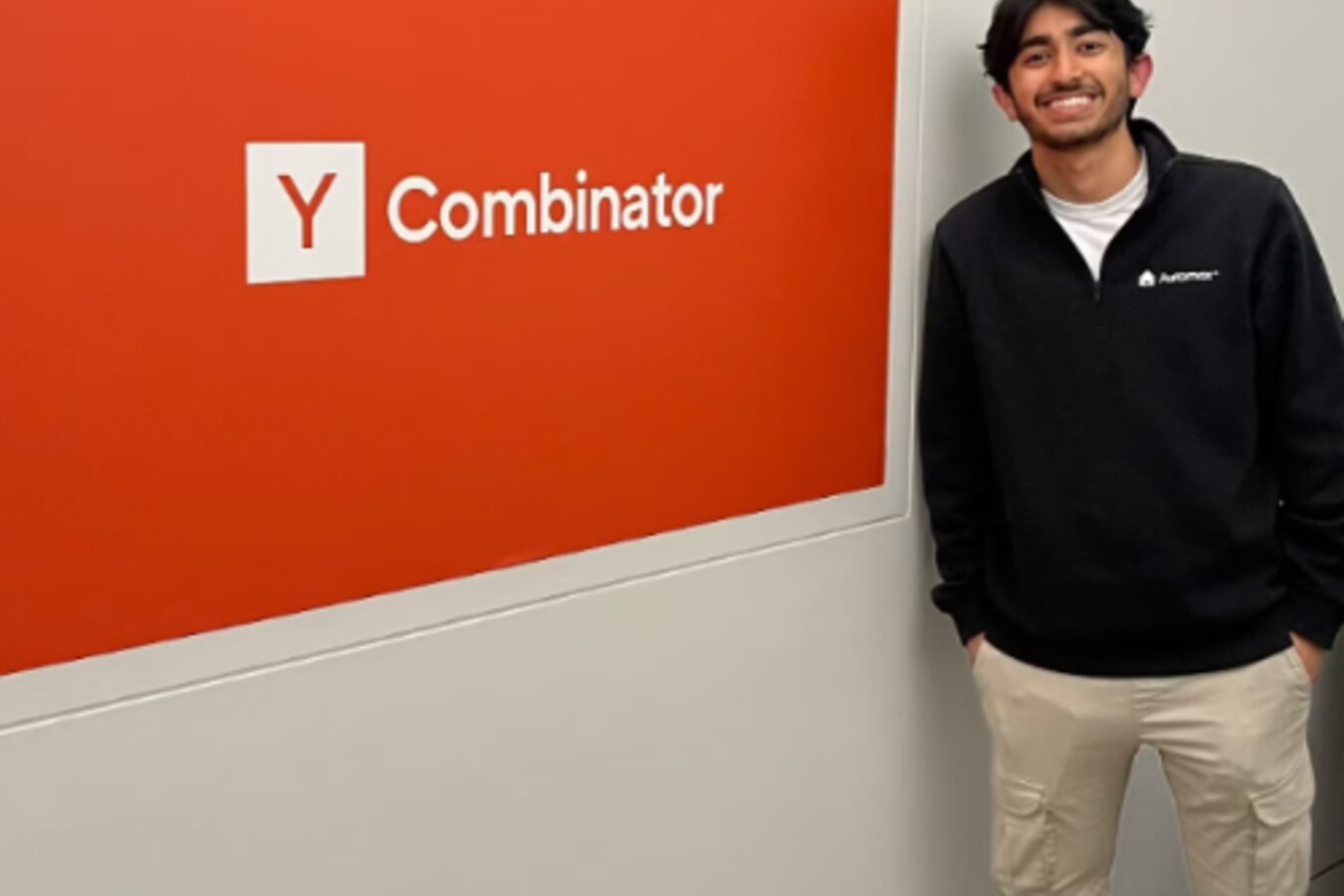
Feature on E Co-op alum Humza Ahmed, founder of Automax.ai, who raised more than $5 million in funding after completing Y Combinator.

The official Waterloo report places this work in entrepreneurship / alumni. It is a source-linked brief for alumni readers; the source page remains the authority for names, dates and outcomes.

Sources 1
  1. Original reporting · uwaterloo.ca

Share this storyOpen as a single page →

Next · p.33Business research gets a wider briefConrad School researchers connect business questions to public funding.

Business research gets a wider brief

Conrad School researchers connect business questions to public funding.

Conrad School professors receive federal funding to advance research on global business and innovation
EntrepreneurshipConrad School professors receive federal funding to advance research on global business and innovationPhoto: University of Waterloo / original source page

News item featuring Professors Victor Cui and Felix Arndt sharing federal funding announcement for research.

The official Waterloo report places this work in entrepreneurship / research. It is a source-linked brief for alumni readers; the source page remains the authority for names, dates and outcomes.

Sources 1
  1. Original reporting · uwaterloo.ca

Share this storyOpen as a single page →

Next · p.34Engineering leadership, before fortyA national recognition places an engineering career in public view.

Engineering leadership, before forty

A national recognition places an engineering career in public view.

Professor named one of Canada's Top 40 under 40
EngineeringProfessor named one of Canada's Top 40 under 40Photo: University of Waterloo / original source page

Michael Benoit has been recognized as one of Canada's Top 40 Under 40® for 2026, one of the country’s most recognized honours for young leaders.

The official Waterloo report places this work in engineering / recognition. It is a source-linked brief for alumni readers; the source page remains the authority for names, dates and outcomes.

Sources 1
  1. Original reporting · uwaterloo.ca

Share this storyOpen as a single page →

Next · p.35Three chemical engineering students win Waterloo’s first ARC pitch competitionDrew Davidson, Chuchi Chen, Ellie Zarnke and Bahareh Arab pitched ventures in firefighter gear, salmon feed and natural dyes.

Three chemical engineering students win Waterloo’s first ARC pitch competition

Drew Davidson, Chuchi Chen, Ellie Zarnke and Bahareh Arab pitched ventures in firefighter gear, salmon feed and natural dyes.

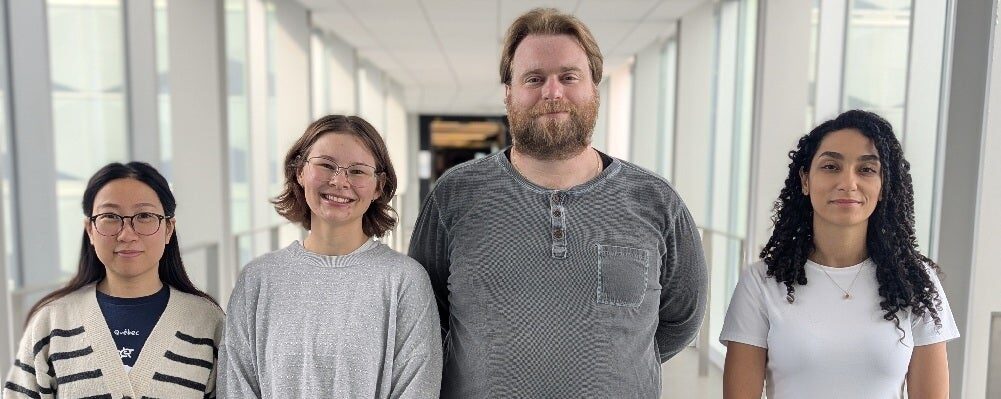
The four pitch competition winners standing and smiling: Chuchi Chen, Ellie Zarnke, Drew Davidson and Bahareh Arab
Business & InnovationThe four pitch competition winners standing and smiling: Chuchi Chen, Ellie Zarnke, Drew Davidson and Bahareh ArabPhoto: University of Waterloo (uwaterloo.ca); rights under review

Three chemical engineering graduate students won the inaugural pitch competition of the Academy of Research Commercialization (ARC). The new program is run by Engineering and Conrad together, with help from Velocity and WatCo, the Waterloo Commercialization Office, and it prepares PhD students to turn deep-tech research into ventures.

Drew Davidson’s ArcticEdge Technologies is making a nanotechnology moisture barrier for firefighting gear to replace PFAS, which has been identified as carcinogenic. He was inspired by his mother, Kelley Willemze, a Cambridge firefighter for more than 30 years. Batches are going to clients for evaluation, including gear maker LION and Wuxly, which supplies cold weather gear to the Canadian military.

Chuchi Chen and Ellie Zarnke pitched Aqualis Bio, a probiotic for salmon feed. Their engineered microbes secrete astaxanthin, the additive that gives farmed salmon their pink colour, and they say it could cost $1500 against a current range of $2000 to $7000. They have filed provisional IP and confirmed the function at lab scale.

Bahareh Arab’s Porphyrion relies on engineered microbes and precision fermentation to make natural colours that can stand in for the synthetic dyes found in everyday products.

Sources 1
  1. Original reporting · uwaterloo.ca

Share this storyOpen as a single page →

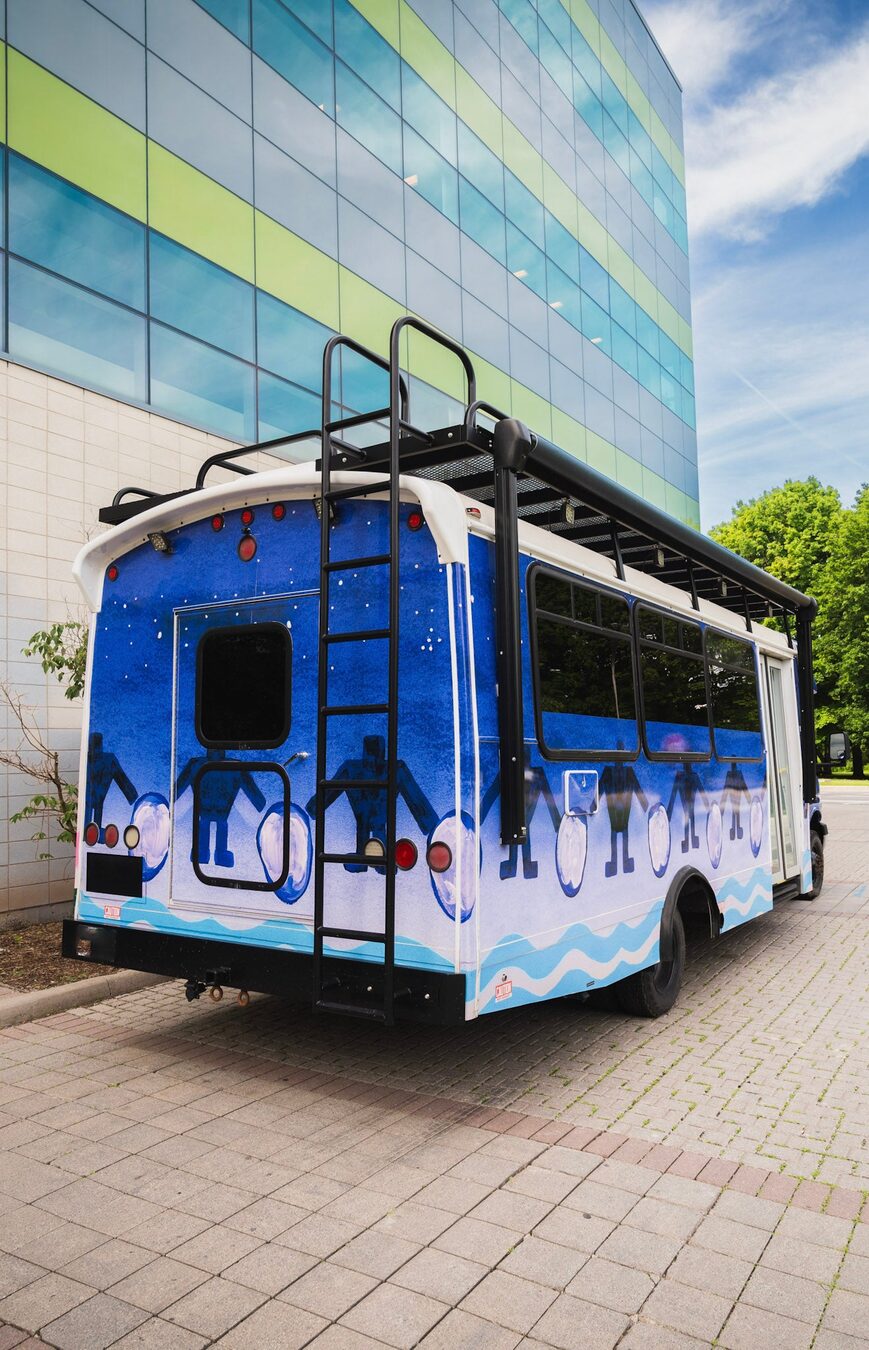
Next · p.36Kelsey Leonard’s WAMPUM Lab puts an Indigenous science lab on the roadA retrofitted 2014 bus with wet and dry lab space, solar panels and refrigeration will carry community-led research to remote sites.

Kelsey Leonard’s WAMPUM Lab puts an Indigenous science lab on the road

A retrofitted 2014 bus with wet and dry lab space, solar panels and refrigeration will carry community-led research to remote sites.

Five people standing in front of the WAMPUM mobile lab bus
ResearchFive people standing in front of the WAMPUM mobile lab busPhoto: University of Waterloo (uwaterloo.ca); rights under review

Kelsey Leonard (Shinnecock) holds the Canada Research Chair in Indigenous Waters, Climate and Sustainability. She is a professor in Waterloo’s Faculty of Environment. Her WAMPUM Lab, which works on Indigenous ocean, water and climate justice, has built a mobile laboratory so community-led research can happen where people live.

Back of the bus with wampum belt designs against a nighttime scene
ResearchBack of the bus with wampum belt designs against a nighttime scenePhoto: University of Waterloo (uwaterloo.ca); rights under review

Leonard says Indigenous nation leaders the lab works with proposed the idea, and it gained momentum at environmental conferences before COVID. The aim was a welcoming space where elders and youth can practise place-based science.

The team retrofitted a 2014 bus instead of buying a new vehicle and added solar panels. It carries wet and dry lab space, a desk, refrigeration for water and soil samples, and outdoor worktables for jobs such as fish and shellfish cleaning. Onondaga pop artist Frank Buffalo Hyde designed the exterior, with sweetgrass on one side and wampum belt designs, whales and a quahog clam on the other.

Future plans include Indigenous community events and powwows. Funding for the infrastructure came from the John R. Evans Leaders Fund of the Canada Foundation for Innovation.

Sources 1
  1. Original reporting · uwaterloo.ca

Share this storyOpen as a single page →

Next · p.37Thiru Sinnathamby’s $500,000 gift funds AI for water risk at WaterlooThe NVIDIA engineering executive and alumnus endowed a professorship; John Quilty’s team forecasts floods and predicts drinking water contamination.
Thiru Sinnathamby’s $500,000 gift funds AI for water risk at Waterloo

The NVIDIA engineering executive and alumnus endowed a professorship; John Quilty’s team forecasts floods and predicts drinking water contamination.
Thiru Sinnathamby and Dr. John Quilty
AlumniThiru Sinnathamby and Dr. John QuiltyPhoto: University of Waterloo (uwaterloo.ca); rights under review

Thiru Sinnathamby (BASc ’01, electrical engineering), Vice-President of Engineering at NVIDIA, invested $500,000 to establish the Sinnathamby Professorship in AI for Sustainable Solutions in Waterloo’s Faculty of Engineering. His family also helps fund wells in Africa and Asia through groups such as Charity: Water.

Dr. John Quilty of Civil and Environmental Engineering leads the research it supports. His graduate team builds AI models that follow water from source to tap, forecast river flow, optimize reservoir operations and predict contamination. Better predictions for rare 50 to 100-year floods already feed a forecasting partnership with Natural Resources Canada.

PhD student Soheil Khosravi is building reservoir-operation models that include the physical dynamics and operating limits of the reservoir, so water managers can see why a release decision makes sense. Quilty says the professorship let him recruit the students for the work.

Sinnathamby, who benefited from co-op as a student, calls the idea a multiplier effect: students who see an alum invest in their work may one day do the same for someone else.

Sources 1
  1. Original reporting · uwaterloo.ca

Share this storyOpen as a single page →

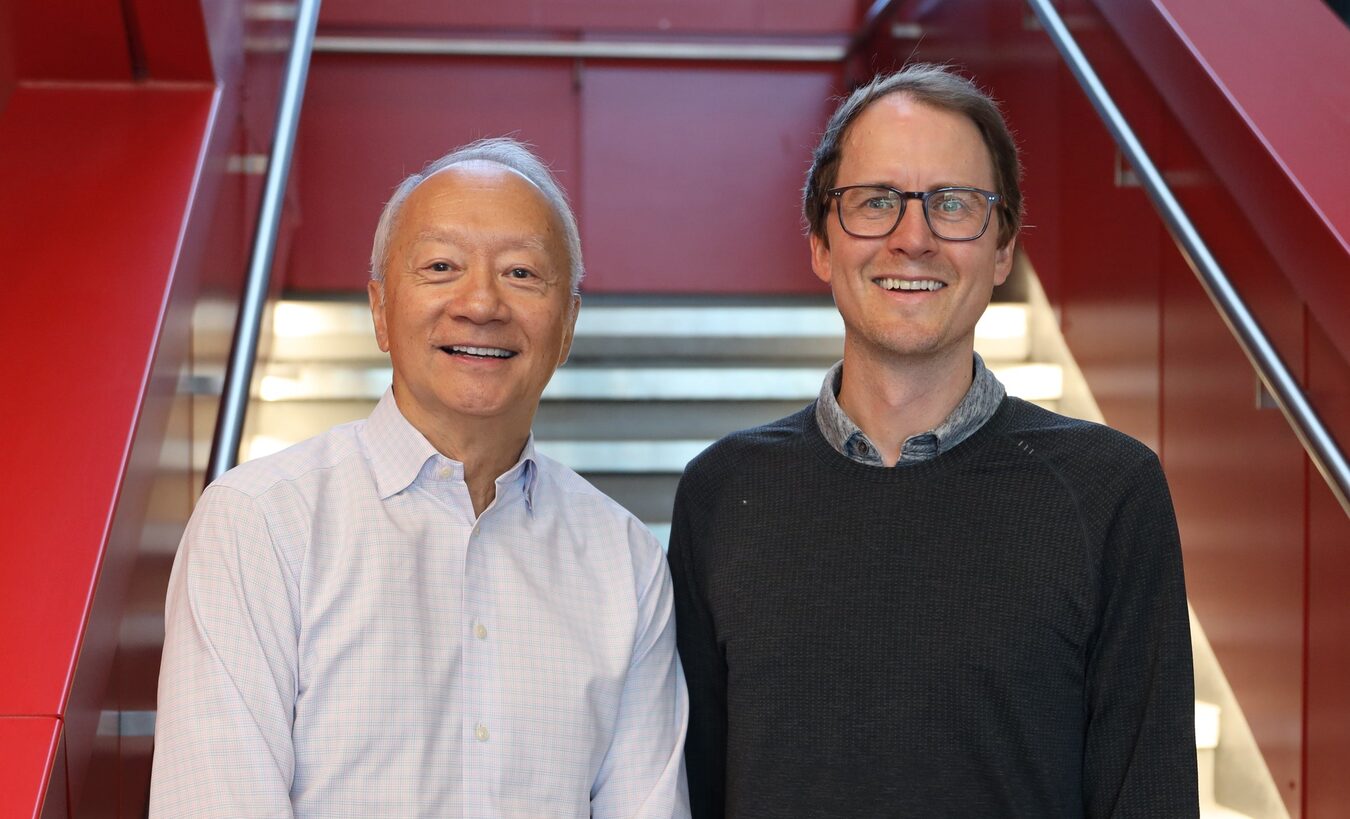
Next · p.38Tang Family Foundation gives $500,000 for embodied AI scholarships at WaterlooEight inaugural graduate recipients each received $15,000, and one PhD candidate is working on exoskeletons for people with mobility impairment.

Tang Family Foundation gives $500,000 for embodied AI scholarships at Waterloo

Eight inaugural graduate recipients each received $15,000, and one PhD candidate is working on exoskeletons for people with mobility impairment.

Roger Tang (left) and Dr. Stephen Smith on a staircase
ResearchRoger Tang (left) and Dr. Stephen Smith on a staircasePhoto: University of Waterloo (uwaterloo.ca); rights under review

A $500,000 investment from the Tang Family Foundation, a charitable fund under the Philantra Foundation, will pay for graduate scholarships in embodied AI at Waterloo’s Data and Artificial Intelligence Institute (Waterloo.AI). The first eight recipients, from Engineering and Math, each received $15,000.

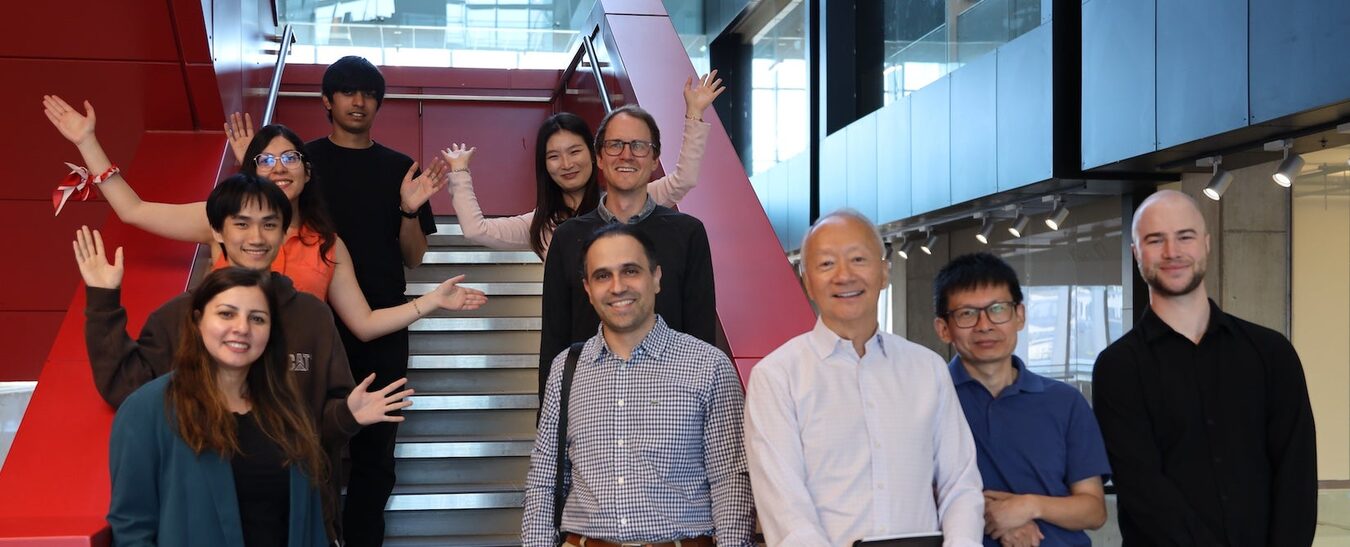
The first cohort of scholarship recipients with Dr. Stephen Smith, Roger Tang and colleagues
ResearchThe first cohort of scholarship recipients with Dr. Stephen Smith, Roger Tang and colleaguesPhoto: University of Waterloo (uwaterloo.ca); rights under review

Waterloo.AI director Stephen Smith describes embodied intelligence as AI that senses and acts in real environments. A robot clearing a kitchen, he explains, can use a large language model to infer that a mug is fragile and belongs in a cupboard, reasoning that once had to be coded by hand for every object and room.

PhD candidate Atusa Ghorbani Siavashani, co-supervised by John McPhee and Arash Arami, is working on exoskeletons, wearable robots that could help people living with mobility impairment. The scholarship, the student says, shows that industry as well as academia cares about the work.

At a demo day the scholars tried their algorithms on real hardware. Smith would like the event to become a regular, more public showcase.

Sources 1
  1. Original reporting · uwaterloo.ca

Share this storyOpen as a single page →

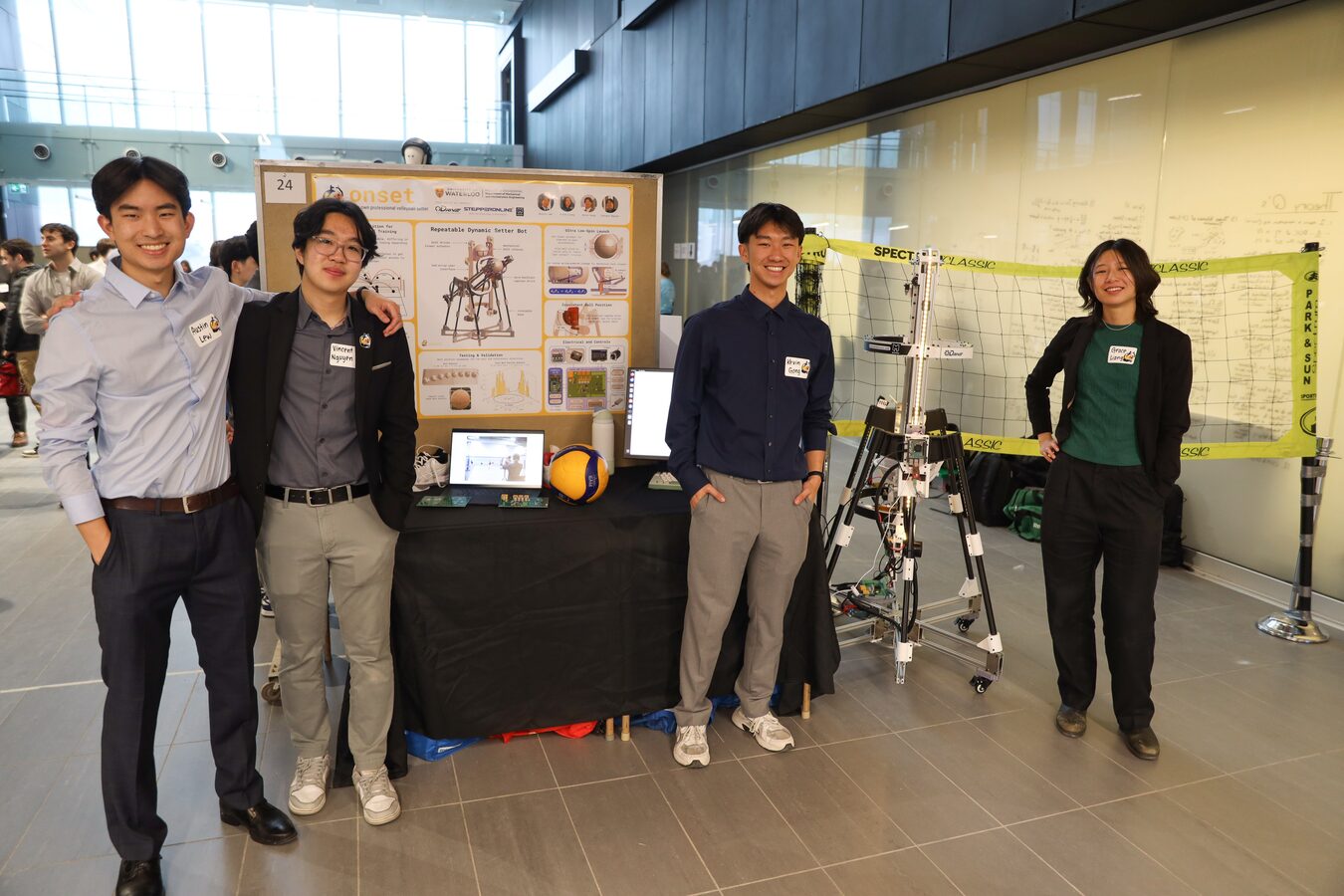
Next · p.39Team Onset’s volleyball-setting robot wins a national design awardFour new Waterloo mechanical and mechatronics graduates built a robot that delivers repeatable, game-like sets for solo practice.

Team Onset’s volleyball-setting robot wins a national design award

Four new Waterloo mechanical and mechatronics graduates built a robot that delivers repeatable, game-like sets for solo practice.

Team Onset posing together at their project display
Awards & RecognitionTeam Onset posing together at their project displayPhoto: University of Waterloo (uwaterloo.ca); rights under review

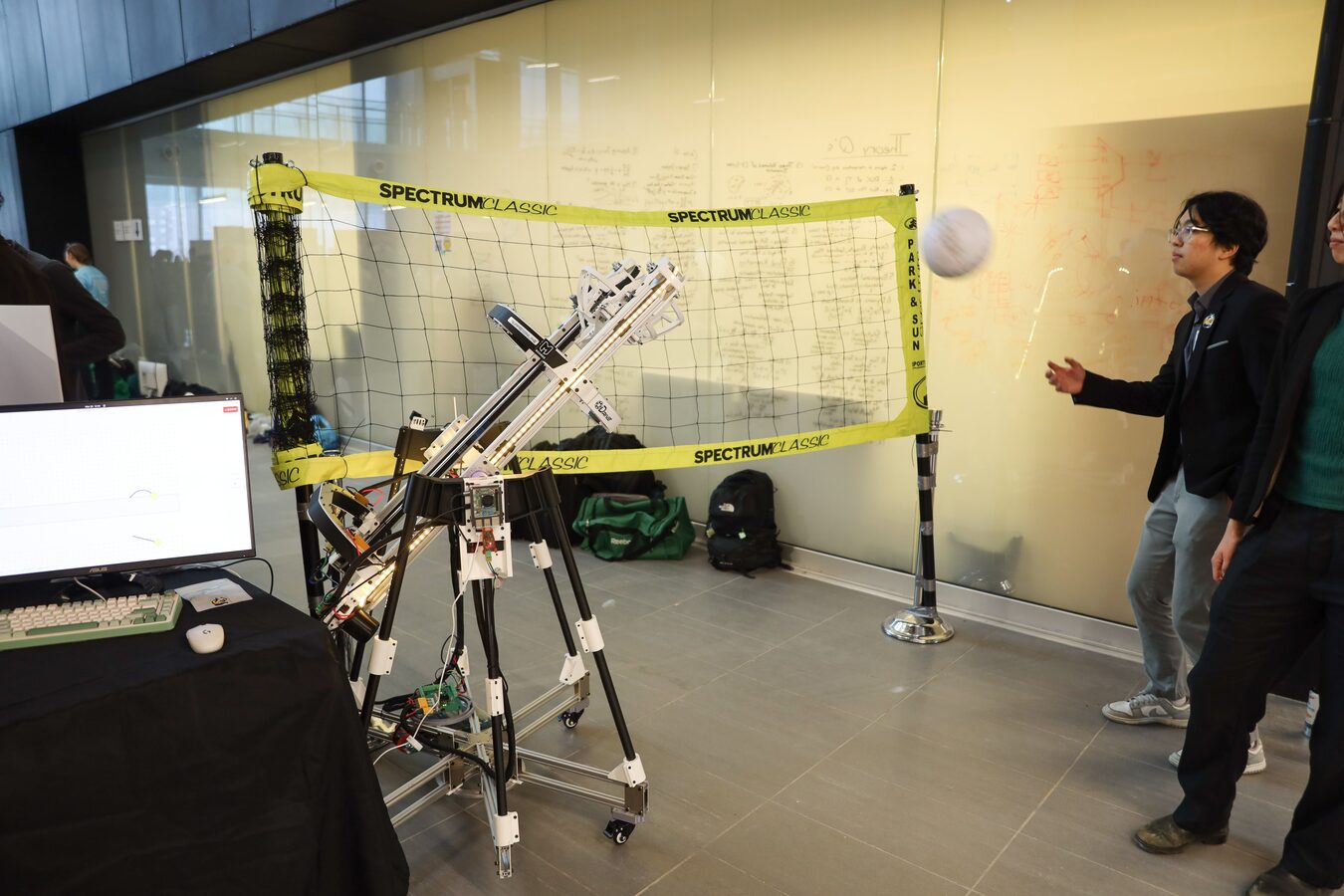
Grace Liang, Kevin Gong, Vincent Nguyen and Austin Lew have just graduated from mechanical and mechatronics engineering at Waterloo. For their capstone they built a robot for coaching professional volleyball players and teams. It delivers repeatable, game-like sets, so an athlete can practise without needing a teammate to set the ball.

The volleyball-setting robot in motion beside a net
Awards & RecognitionThe volleyball-setting robot in motion beside a netPhoto: University of Waterloo (uwaterloo.ca); rights under review

Competing as Team Onset, they entered the Canadian Society for Mechanical Engineering (CSME) National Design Competition and were honoured for the technical strength of their design. Each year students across Canada submit capstone and non-capstone projects for national recognition and cash prizes.

At the department’s yearly awards ceremony the project also won Most Innovative Project, an award sponsored by Dyson. The team presented the design at the department’s symposium in March, so this summer’s announcement follows earlier showings.

Sources 1
  1. Original reporting · uwaterloo.ca

Share this storyOpen as a single page →

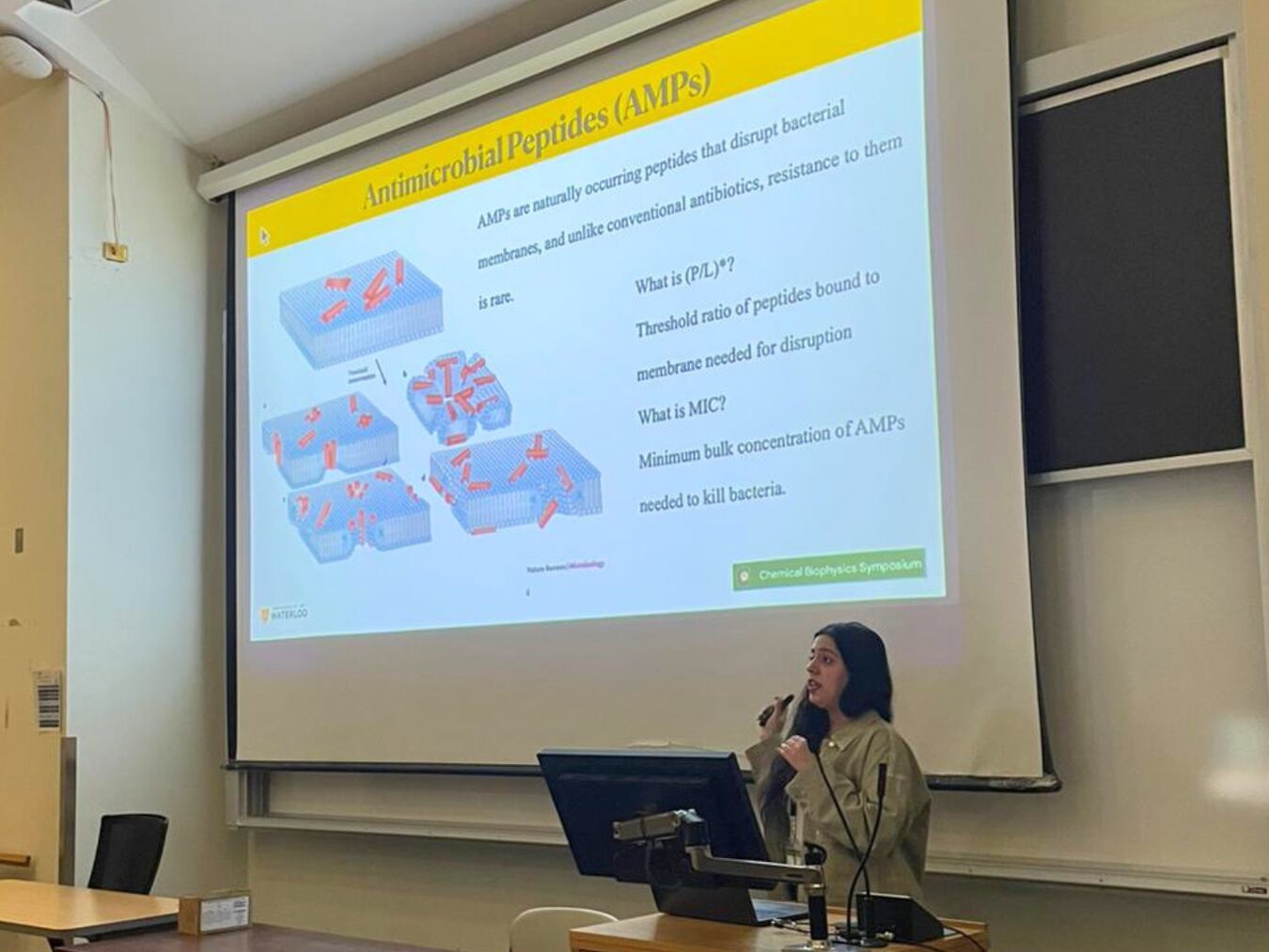
Next · p.40Shahrzad Tofighi models how salt changes antimicrobial peptides’ attack on bacteriaThe Waterloo physics master’s student, supervised by Bae-Yeun Ha, applies mathematical modelling to antimicrobial resistance.

Shahrzad Tofighi models how salt changes antimicrobial peptides’ attack on bacteria

The Waterloo physics master’s student, supervised by Bae-Yeun Ha, applies mathematical modelling to antimicrobial resistance.

Shahrzad Tofighi presenting her research at a conference beside a slide on antimicrobial peptides
ResearchShahrzad Tofighi presenting her research at a conference beside a slide on antimicrobial peptidesPhoto: University of Waterloo (uwaterloo.ca); rights under review

Shahrzad Tofighi, a Master of Science in Physics student at Waterloo, applies physics to antimicrobial resistance (AMR), which occurs when bacteria, viruses, fungi and parasites stop responding to medicines such as antibiotics. The World Health Organization estimates that bacterial AMR caused 1.27 million deaths in 2019.

She builds mathematical models of how antimicrobial peptides interact with bacterial membranes. The peptides attack bacteria through the membrane, which makes resistance harder to develop. Tofighi does not alter the peptides themselves. She studies how conditions such as salt concentration change how well they work.

Her supervisor is Dr. Bae-Yeun Ha, whom she credits with teaching her to question assumptions and work through uncertainty, a change from the course-based thinking of her undergraduate years. The long-term hope is that such theory can guide experiments, reduce costly lab work and inform dose studies for peptide-based antibiotics.

Sources 1
  1. Original reporting · uwaterloo.ca

Share this storyOpen as a single page →

Next · p.41Maxime van der Heijden’s 3D-printed electrode borrows from nature to improve flow batteriesThe Waterloo chemical engineering team redesigned a key part of redox flow batteries, a technology for storing wind and solar energy.

Maxime van der Heijden’s 3D-printed electrode borrows from nature to improve flow batteries

The Waterloo chemical engineering team redesigned a key part of redox flow batteries, a technology for storing wind and solar energy.

Professor Maxime van der Heijden holding a 3D printed structure that will become an electrode
ResearchProfessor Maxime van der Heijden holding a 3D printed structure that will become an electrodePhoto: University of Waterloo (uwaterloo.ca); rights under review

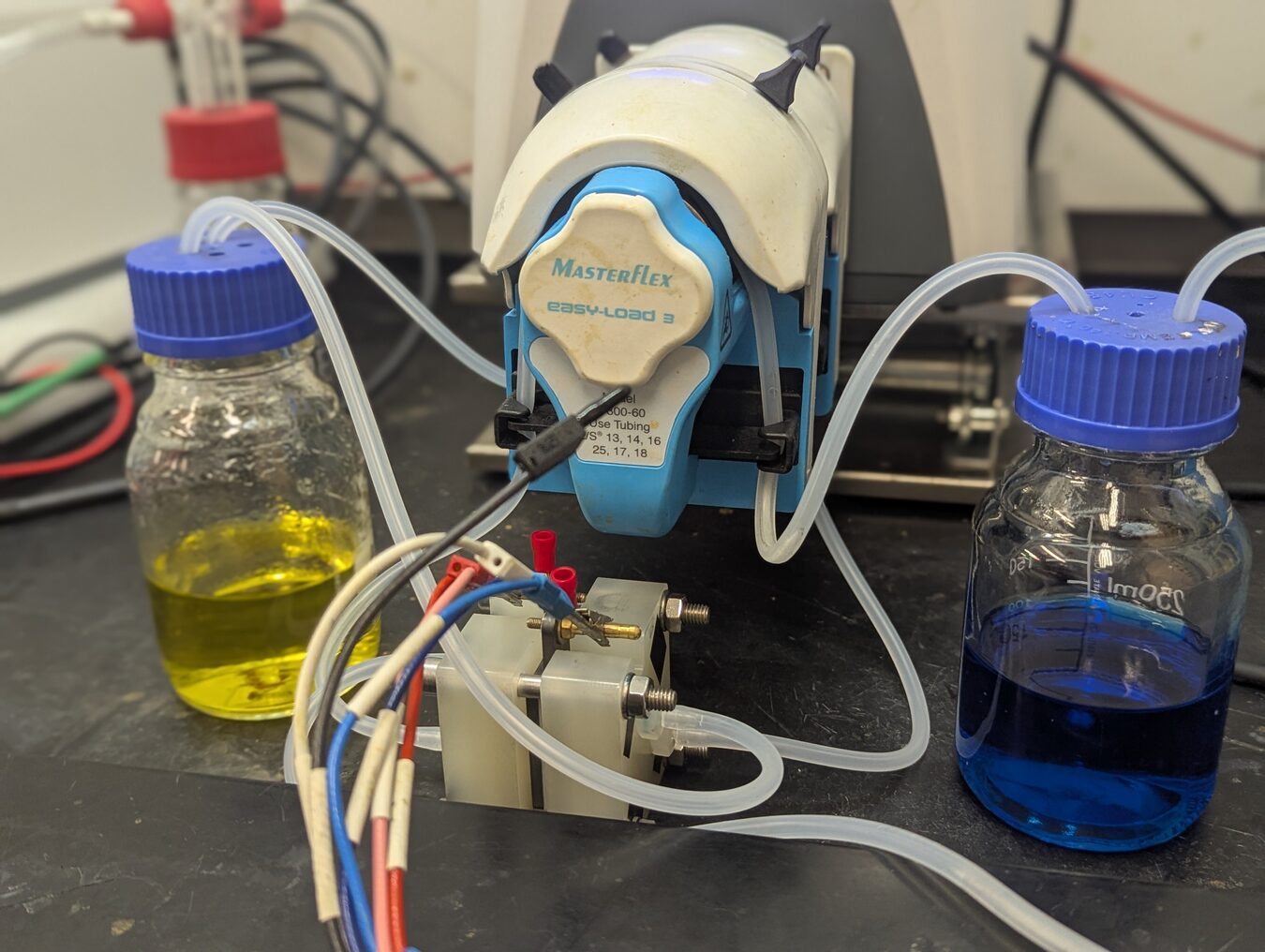
A team led by Waterloo chemical engineering professor Dr. Maxime van der Heijden has built a 3D-printed electrode that could make it easier and safer to store large amounts of wind and solar energy. The researchers drew on natural structures to redesign a key component of redox flow batteries, helping the liquid move more efficiently so the reactions that store and release energy work better.

A redox flow battery setup with a reactor and two beakers as electrolyte tanks
ResearchA redox flow battery setup with a reactor and two beakers as electrolyte tanksPhoto: University of Waterloo (uwaterloo.ca); rights under review

Redox flow batteries differ from lithium-ion batteries. They hold energy in water-based liquid electrolytes in external tanks, which avoids the flammable materials in lithium-ion cells, and capacity grows by using bigger tanks. Van der Heijden calls them well suited to large-scale renewable storage and grid use, and describes them as complementary to lithium-ion rather than a replacement.

Wind and solar power are intermittent, so storage that returns energy to the grid later matters. Printing the electrodes let the team control their porous structure and the flow of fluid through them with a precision that conventional methods struggle to match.

Sources 1
  1. Original reporting · uwaterloo.ca

Share this storyOpen as a single page →

Next · p.42James Wolffsohn brings eye-care research from the U.K. to Waterloo OptometryHe holds an Eddie Goldenberg Research Chair in Health Innovation, and his official start date was October 1, 2026.

James Wolffsohn brings eye-care research from the U.K. to Waterloo Optometry

He holds an Eddie Goldenberg Research Chair in Health Innovation, and his official start date was October 1, 2026.

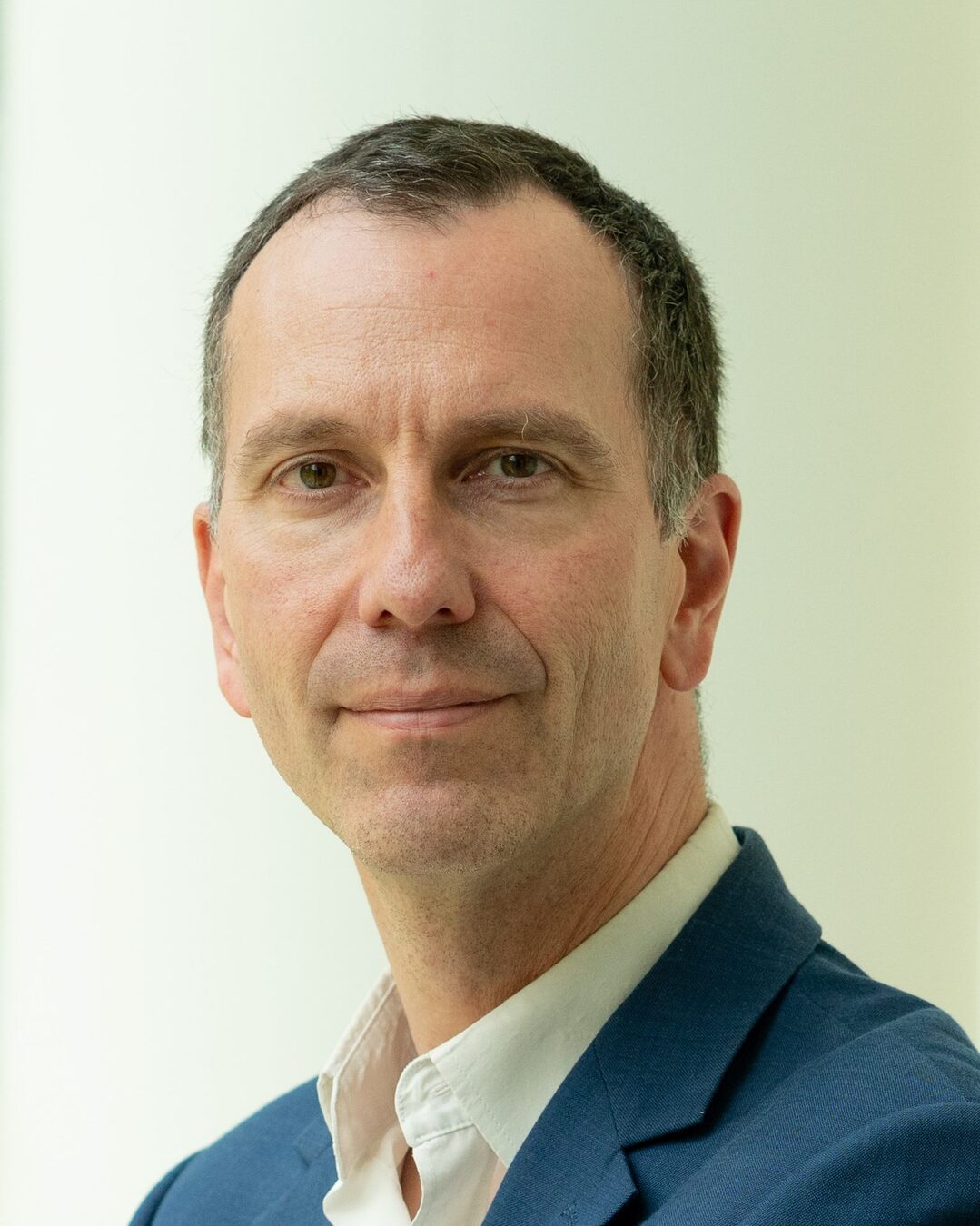
James Wolffsohn
ResearchJames WolffsohnPhoto: University of Waterloo (uwaterloo.ca); rights under review

Dr. James Wolffsohn, a global eye health researcher from the U.K., joins Waterloo’s School of Optometry and Vision Science with a Government of Canada Eddie Goldenberg Research Chair in Health Innovation. The announcement was published on September 3, and his official start date was October 1, 2026.

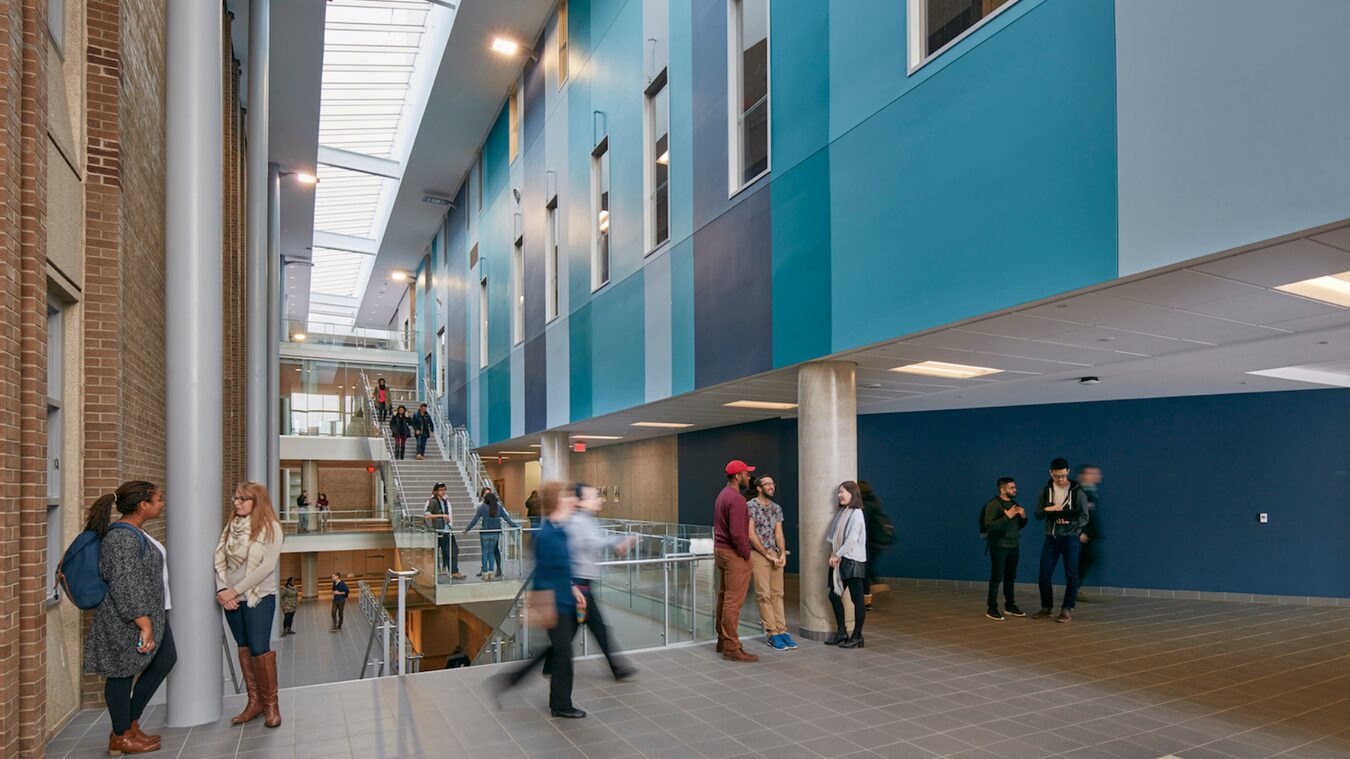
A bright atrium inside the optometry building
ResearchA bright atrium inside the optometry buildingPhoto: University of Waterloo (uwaterloo.ca); rights under review

He plans a research program that runs from discovery through commercialization and involves Waterloo students at each stage. His questions include how low-cost portable diagnostics can widen early detection, how AI image analysis can cut preventable vision loss, and how new insight into disease can shape next-generation treatments and lenses.

He lists unequal access to care, rising childhood myopia, dry eye and its links to screen time, age-related retinal conditions and gaps in rural and remote services as the problems he wants to address, including through tele-optometry, mobile screening and community-based monitoring of conditions such as macular degeneration.

He points to Waterloo’s creator-owned intellectual property model, its Commercialization Office and the new Waterloo Eye Institute as reasons the move suits his translational work.

Sources 1
  1. Original reporting · uwaterloo.ca

Share this storyOpen as a single page →

Next · p.43Raafat Mansour elected to the Royal Society of Canada for radio-frequency engineeringThe founding director of the Centre for Integrated RF Engineering co-founded two spinoff companies, including eye-tracking pioneer AdHawk Microsystems.

Raafat Mansour elected to the Royal Society of Canada for radio-frequency engineering

The founding director of the Centre for Integrated RF Engineering co-founded two spinoff companies, including eye-tracking pioneer AdHawk Microsystems.

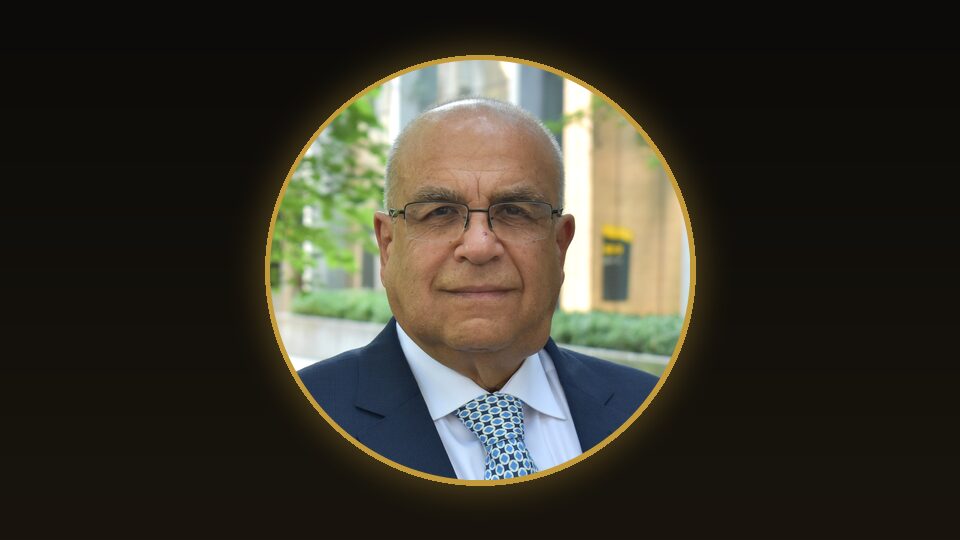
Raafat Mansour in a circular portrait
Awards & RecognitionRaafat Mansour in a circular portraitPhoto: University of Waterloo (uwaterloo.ca); rights under review

Dr. Raafat Mansour, a professor in Electrical and Computer Engineering, has been elected a Fellow of the Royal Society of Canada. The society cited his leadership in engineering for radio-frequency (RF), microwave and micro-electromechanical systems.

As founding director of the Centre for Integrated RF Engineering, he has helped make Waterloo a leader in RF and microsystems research, including work on high-performance communications and on cryogenic RF hardware for quantum computers.

More than 100 graduate students and postdoctoral fellows have trained under him, and he co-founded two spinoff companies, one of them AdHawk Microsystems, which pioneered eye-tracking technology. Mansour has 37 patents and more than 450 peer-reviewed publications to his name, and he is also a Fellow of the IEEE, the Canadian Academy of Engineering and the Engineering Institute of Canada.

Sources 1
  1. Original reporting · uwaterloo.ca

Share this storyOpen as a single page →

Next · p.44Diego Lalla, inspired by his mother’s recovery, moves from Science to Waterloo OptometryThe new BSc graduate in Biological and Medical Physics has secured a place in the School of Optometry and Vision Science.

Diego Lalla, inspired by his mother’s recovery, moves from Science to Waterloo Optometry

The new BSc graduate in Biological and Medical Physics has secured a place in the School of Optometry and Vision Science.

Diego Lalla in front of a black banner with the Waterloo Eye Institute logo
AlumniDiego Lalla in front of a black banner with the Waterloo Eye Institute logoPhoto: University of Waterloo (uwaterloo.ca); rights under review

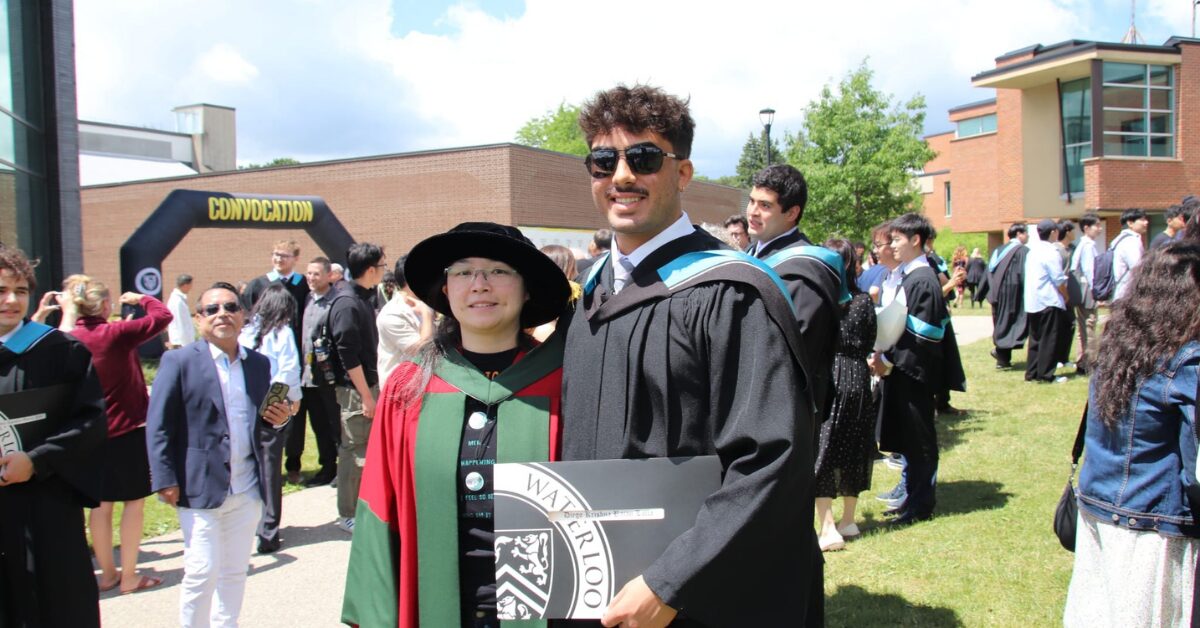
Diego Lalla (BSc ’26) grew up watching his mother struggle with severe vision problems and migraines. After nearly a dozen eye specialists failed to give her an effective plan, she went to the Waterloo Eye Institute Optometry Clinic, where optometry students found the cause and treated it. Lalla says that when her sight began to return, everything clicked.

Diego Lalla and Associate Professor Brenda Lee at Spring 2026 convocation
AlumniDiego Lalla and Associate Professor Brenda Lee at Spring 2026 convocationPhoto: University of Waterloo (uwaterloo.ca); rights under review

By Grade 10 he had decided on Waterloo’s School of Optometry and Vision Science, and he picked the Faculty of Science’s Biological and Medical Physics program as the route. A co-op term as a physician’s assistant, working with neurologists, occupational therapists and psychologists, confirmed his plan, and he says co-op mattered to his admission.

Professors Brenda Lee, Josh Neufeld and Stefan Idziak sparked an interest in teaching. He worked as a Learning Assistant at Sheridan College and spent 10 hours a week tutoring on campus. He has now secured his place in the optometry program.

Sources 1
  1. Original reporting · uwaterloo.ca

Share this storyOpen as a single page →

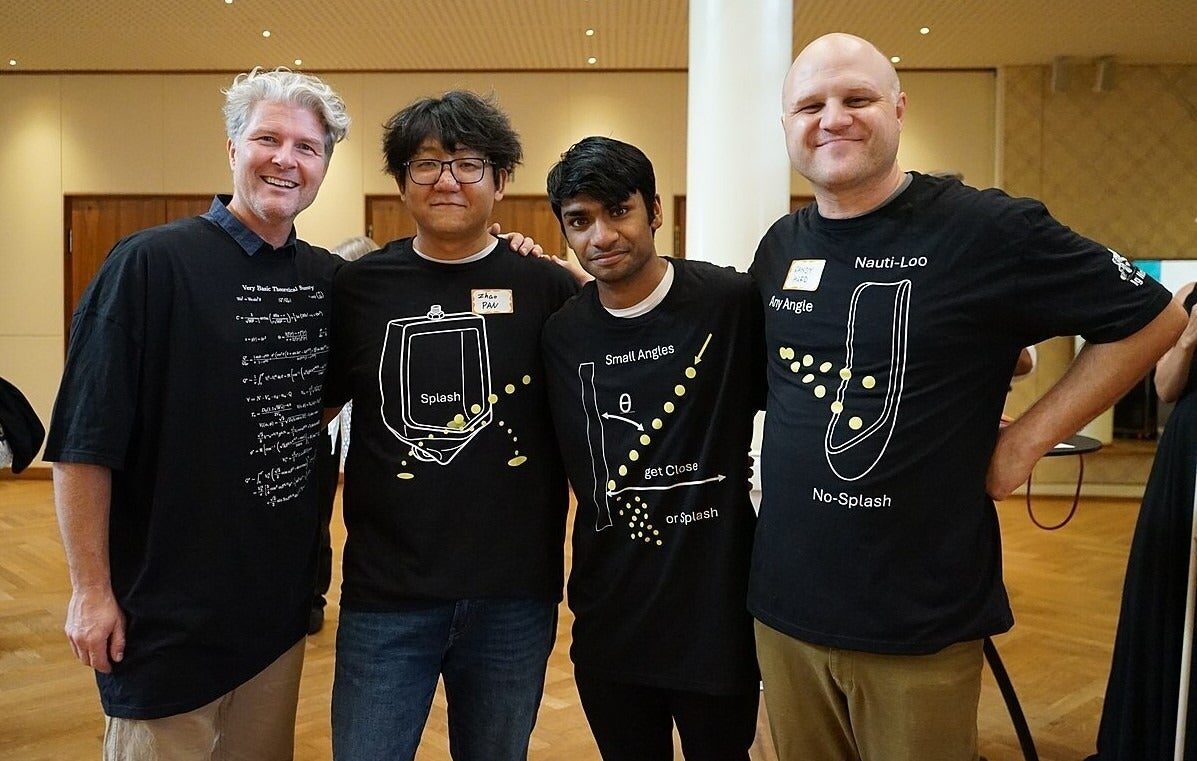
Next · p.45Zhao Pan and Kaveeshan Thurairajah win an Ig Nobel Physics Prize for a splash-free urinalThe Waterloo engineering professor and PhD student celebrated with blueberry wine; their Nautilus design keeps the stream under about 30 degrees to the wall.

Zhao Pan and Kaveeshan Thurairajah win an Ig Nobel Physics Prize for a splash-free urinal

The Waterloo engineering professor and PhD student celebrated with blueberry wine; their Nautilus design keeps the stream under about 30 degrees to the wall.

Four researchers at the Ig Nobel Awards ceremony
Awards & RecognitionFour researchers at the Ig Nobel Awards ceremonyPhoto: University of Waterloo (uwaterloo.ca); rights under review

Mechanical and mechatronics engineering professor Zhao Pan and PhD student Kaveeshan Thurairajah won the 2026 Ig Nobel Physics Prize for a splash-free urinal design. They toasted the news with blueberry wine from espresso cups in his office, then attended the sold-out ceremony in Zurich in bright yellow raincoats.

Urinal designs tested by Waterloo Engineering researchers
Awards & RecognitionUrinal designs tested by Waterloo Engineering researchersPhoto: University of Waterloo (uwaterloo.ca); rights under review

The Ig Nobels, organized by the magazine Annals of Improbable Research, honour research that makes people laugh, then think. The winning design, Nautilus (pronounced Nauti-loo), all but eliminates splatter by keeping the angle at which a stream meets the wall under about 30 degrees, a limit found by theoretical modelling and checked in physical experiments. More than a decade of off-and-on research went into it.

Pan says most of the work, which led to a journal paper in 2025, was done by undergraduate students, including Mabel Song and JD Zhu. Thurairajah was still an undergraduate when he led the study and first presented early findings at a conference in the United States in 2022. Professors Randy Hurd of Weber State University and Tadd Truscott of King Abdullah University of Science and Technology are also on the team. Ten prizes were awarded in all.

Sources 1
  1. Original reporting · uwaterloo.ca

Share this storyOpen as a single page →

Next · p.46Derek Ting’s TextNow unveils a sculpture to mark $1 billion in revenueThe Waterloo alumnus launched TextNow in 2009 as a co-op placement, and the company unveiled the public piece at its north campus headquarters.

Derek Ting’s TextNow unveils a sculpture to mark $1 billion in revenue

The Waterloo alumnus launched TextNow in 2009 as a co-op placement, and the company unveiled the public piece at its north campus headquarters.

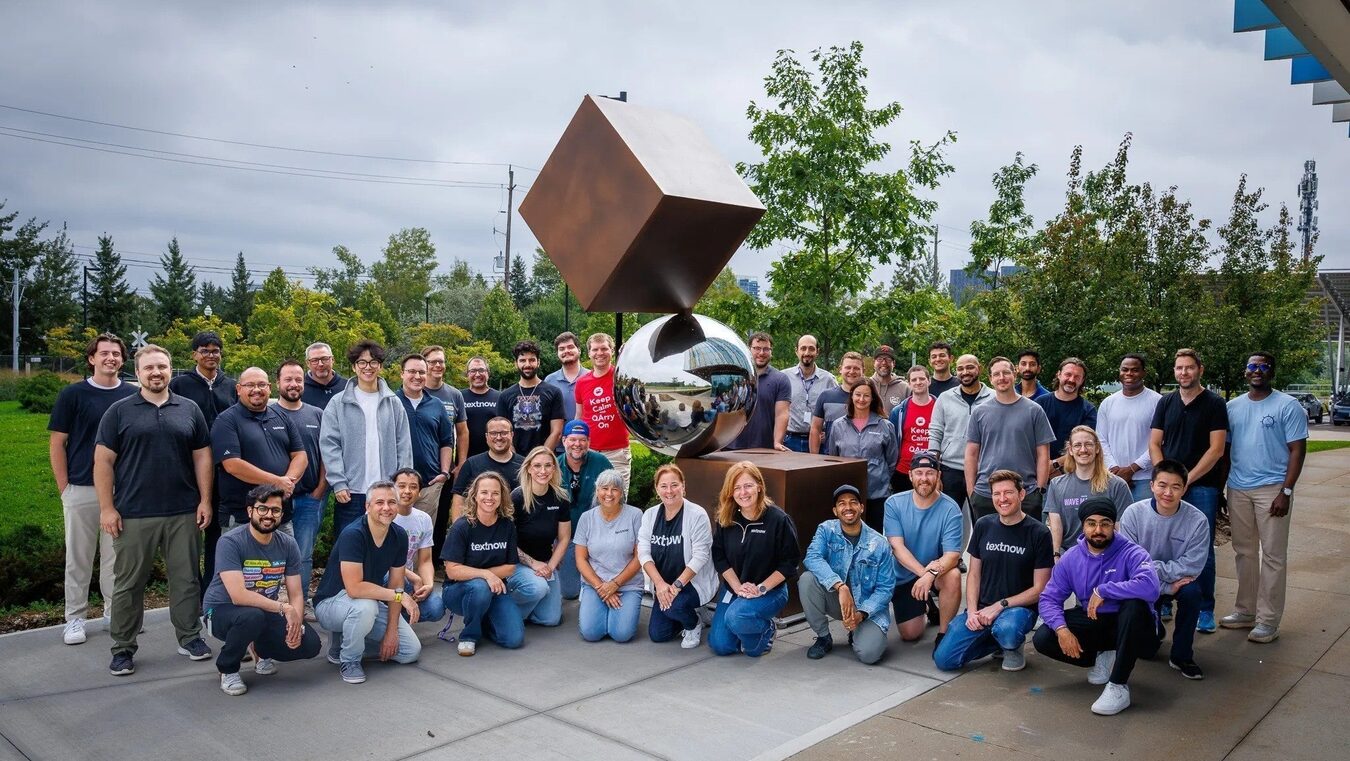
Employees gathered in front of the new sculpture outside the headquarters
Business & InnovationEmployees gathered in front of the new sculpture outside the headquartersPhoto: University of Waterloo (uwaterloo.ca); rights under review

TextNow marked cumulative revenue above $1 billion by unveiling a public sculpture at its headquarters in the David Johnston Research and Technology Park on Waterloo’s north campus. Derek Ting (BASc ’10) launched the company in 2009 as a co-op placement, to help pay his bills while he earned his computer engineering degree.

Its app-based free phone service has attracted millions of users and is described as the largest ad-supported free wireless service in the United States, offering a local number plus nationwide talk and text, with wireless data available for a flexible fee. TextNow also has an office in San Francisco.

The company has grown without venture capital beyond its initial seed funding, staying close to the local technology ecosystem. Ting, a co-founder and its CEO, said the milestone is less about the number than what it represents. “We have shown there is another way,” he said.

The company calls the sculpture a lasting marker of what was built in Waterloo and an invitation to the next generation of founders.

Sources 1
  1. Original reporting · uwaterloo.ca

Share this storyOpen as a single page →

Next · p.47Volunteers put Feather Friendly decals on the Quantum-Nano Centre to protect birdsProfessor Jennifer Clary-Lemon leads the QNC Bird-Window Collision and Monitoring Project, which will be monitored for three years.

Volunteers put Feather Friendly decals on the Quantum-Nano Centre to protect birds

Professor Jennifer Clary-Lemon leads the QNC Bird-Window Collision and Monitoring Project, which will be monitored for three years.

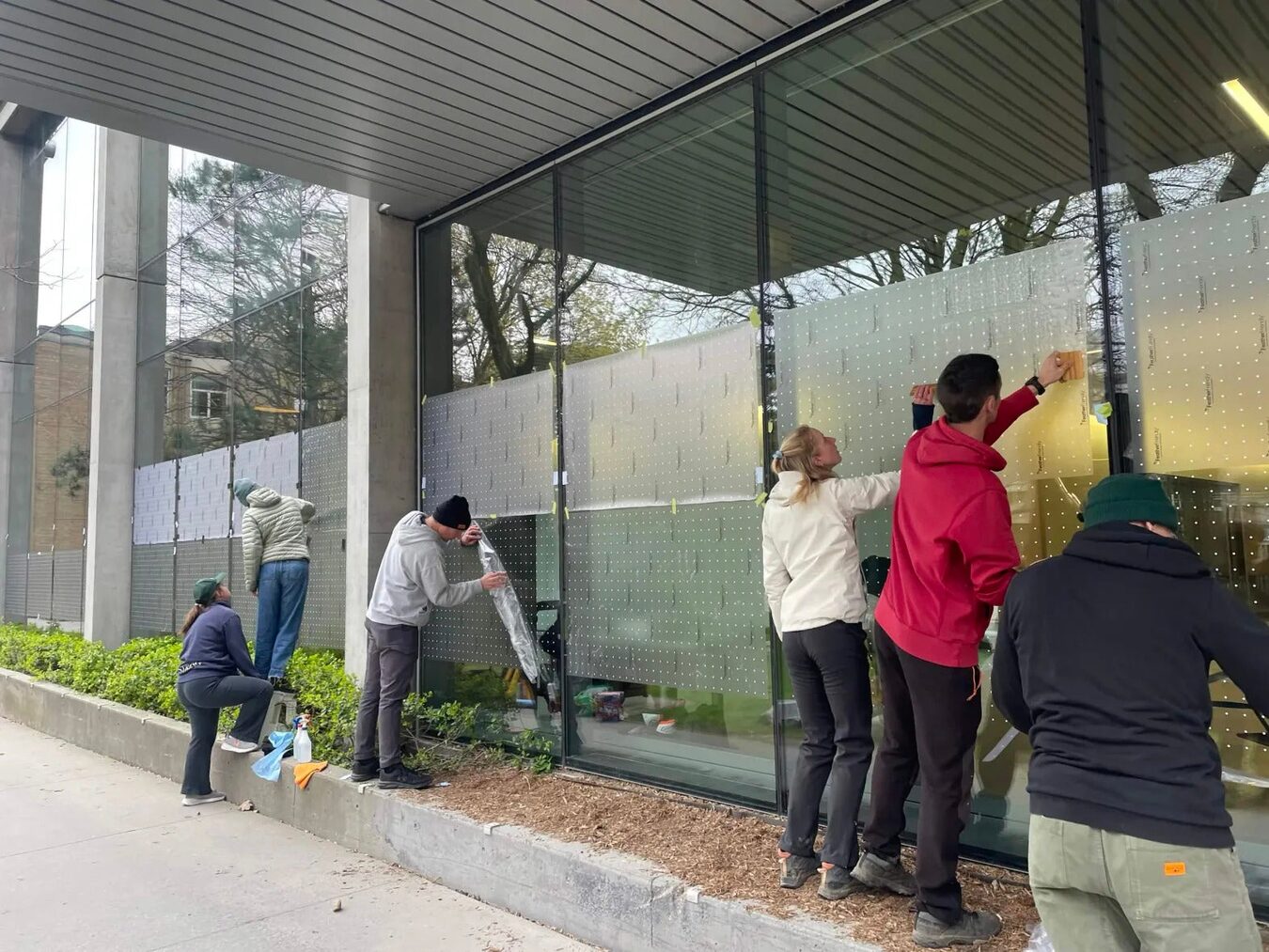
Volunteers installing Feather Friendly decals across the Quantum-Nano Centre
Campus LifeVolunteers installing Feather Friendly decals across the Quantum-Nano CentrePhoto: University of Waterloo (uwaterloo.ca); rights under review

Twenty volunteers from the Society for Environmental Restoration at Waterloo (SER-UW), Bird Friendly Kitchener and Bird Friendly Waterloo began work in May 2026 on putting Feather Friendly decals on the northeast side of the Mike and Ophelia Lazaridis Quantum-Nano Centre (QNC), on its first and second floors. The building was chosen because it has been noted as having the highest bird fatality on campus.

The Quantum-Nano Centre with Feather Friendly decals
Campus LifeThe Quantum-Nano Centre with Feather Friendly decalsPhoto: University of Waterloo (uwaterloo.ca); rights under review

Professor Jennifer Clary-Lemon leads the project, which the Sustainability Action Fund paid for. She credits Plant Operations staff for handling scheduling, labour and cleaning, which made for an easy two days of installation. The decals come from a Mississauga company and are known to reduce bird-window collisions by 95%.

An estimated 16 to 42 million birds die in window collisions in Canada each year, often because they mistake reflections of vegetation for real objects. Over the next three years SER-UW will keep monitoring the building for collision fatalities to measure results. The university suggests covering windows with decals, turning off lights in empty rooms and keeping houseplants away from windows.

Sources 1
  1. Original reporting · uwaterloo.ca

Share this storyOpen as a single page →

Next · p.48Canada is the Move: Michael Litt, Jocelyne Murphy and Chris Albinson on building in WaterlooEngineering and the Conrad School hosted a conversation, moderated by Professor Chris Holt, on the region’s technology and entrepreneurship ecosystem.

Canada is the Move: Michael Litt, Jocelyne Murphy and Chris Albinson on building in Waterloo

Engineering and the Conrad School hosted a conversation, moderated by Professor Chris Holt, on the region’s technology and entrepreneurship ecosystem.

Four people posing together, one in a red Canada shirt, at the Canada is the Move event
Business & InnovationFour people posing together, one in a red Canada shirt, at the Canada is the Move eventPhoto: University of Waterloo (uwaterloo.ca); rights under review

Engineering and the Conrad School of Entrepreneurship and Business co-hosted Canada is the Move, a conversation on the ambition, energy and connections behind Waterloo’s technology and entrepreneurship ecosystem. Professor Chris Holt moderated.

On stage, Michael Litt (BASc ’10) spoke as a co-founder of Vidyard and Garage Capital, Jocelyne Murphy (BASc ’25) as a co-founder of Wygo, and Chris Albinson as Managing Partner of True North Fund.

Murphy says three things gave her team the financial freedom to build Wygo’s foundation before raising venture capital: Enterprise Co-op at the Conrad School, the Pearl Sullivan Scholarship for Community Leadership and the Accelerator Centre. Wygo was also the official platform behind this year’s Waterloo Tech Week.

The conversation described Waterloo as a dense web of students, alumni, founders, mentors and community partners who trade ideas and open doors for one another. The Conrad School says programs such as E Co-op let students test ideas and build ventures. The event took place the week before the September 23 report.

Sources 1
  1. Original reporting · uwaterloo.ca

Share this storyOpen as a single page →

Next · p.49Henry Abanum is building a food coating that releases an antimicrobial only when bacteria appearThe Master of Science in Pharmacy student works with liposomes that respond to bacterial toxins, aiming to cut foodborne illness and spoilage.

Henry Abanum is building a food coating that releases an antimicrobial only when bacteria appear

The Master of Science in Pharmacy student works with liposomes that respond to bacterial toxins, aiming to cut foodborne illness and spoilage.

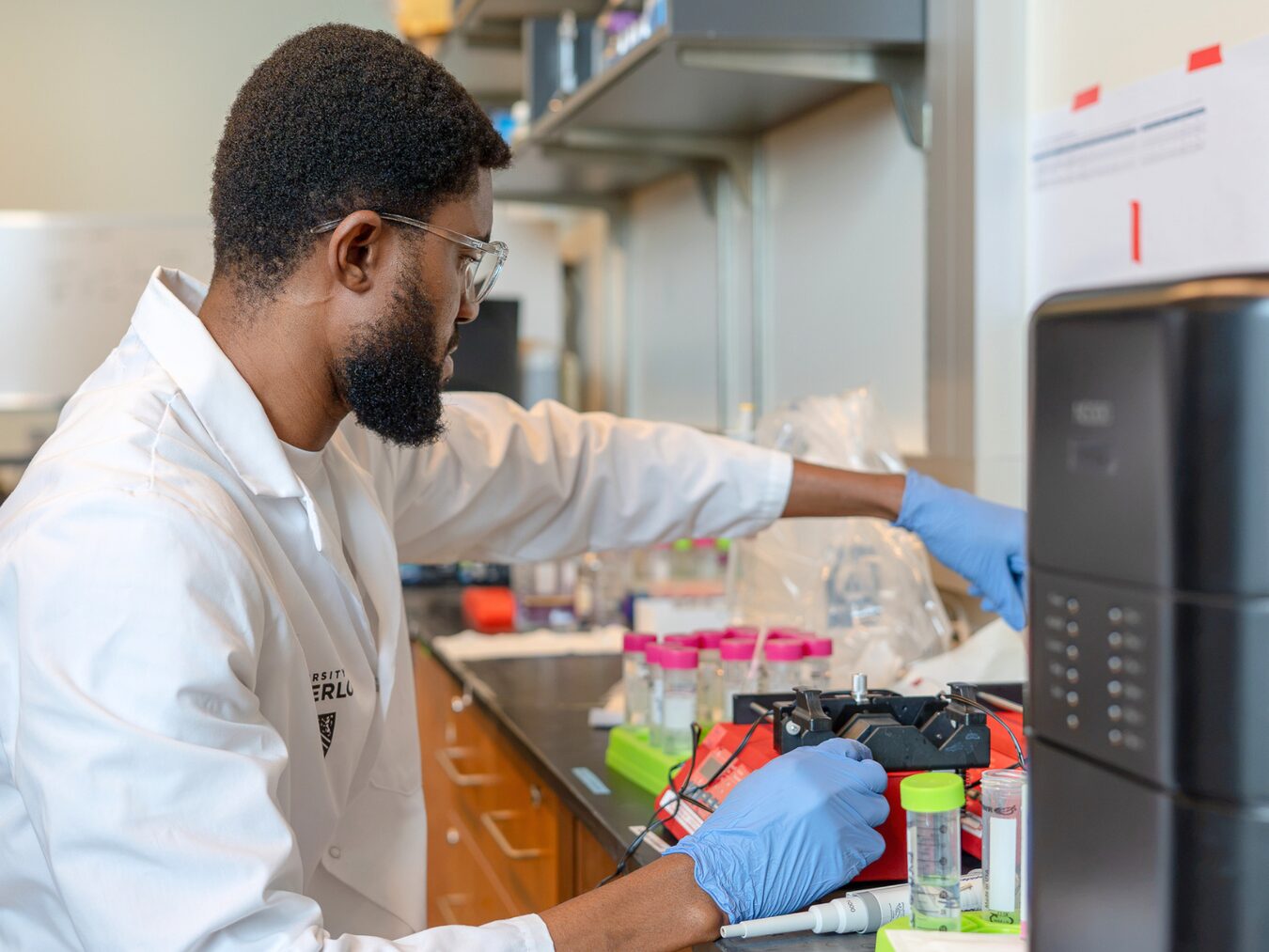
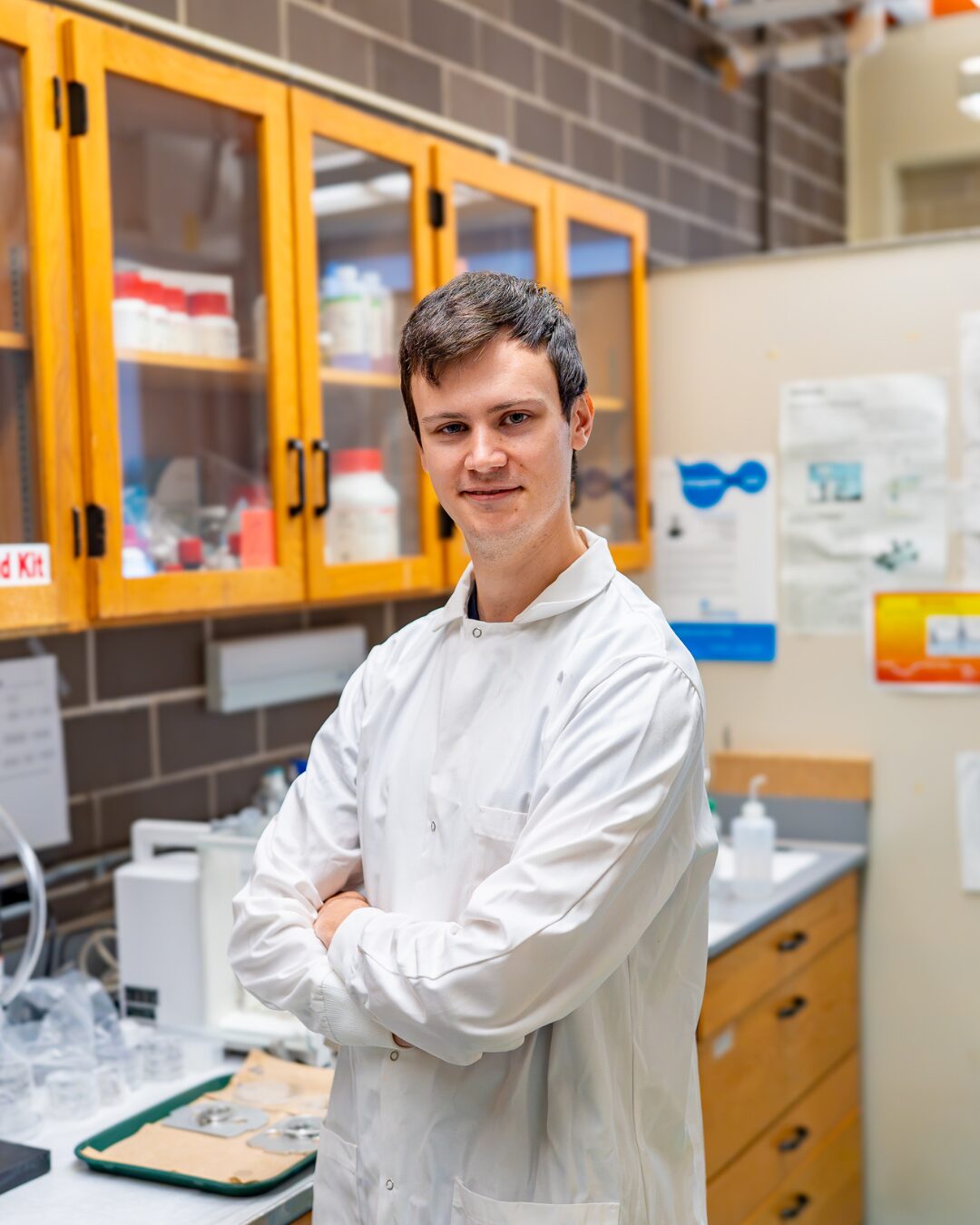
Henry Abanum working in a lab
ResearchHenry Abanum working in a labPhoto: University of Waterloo (uwaterloo.ca); rights under review

Henry Abanum, a Master of Science in Pharmacy student at Waterloo, is developing a bacteria-responsive coating for food contact materials. It pairs toxin detection with on-demand release of an antimicrobial, a response to concern over Listeria outbreaks. The World Health Organization estimates that unsafe food causes 866 million illnesses and 1.5 million deaths a year.

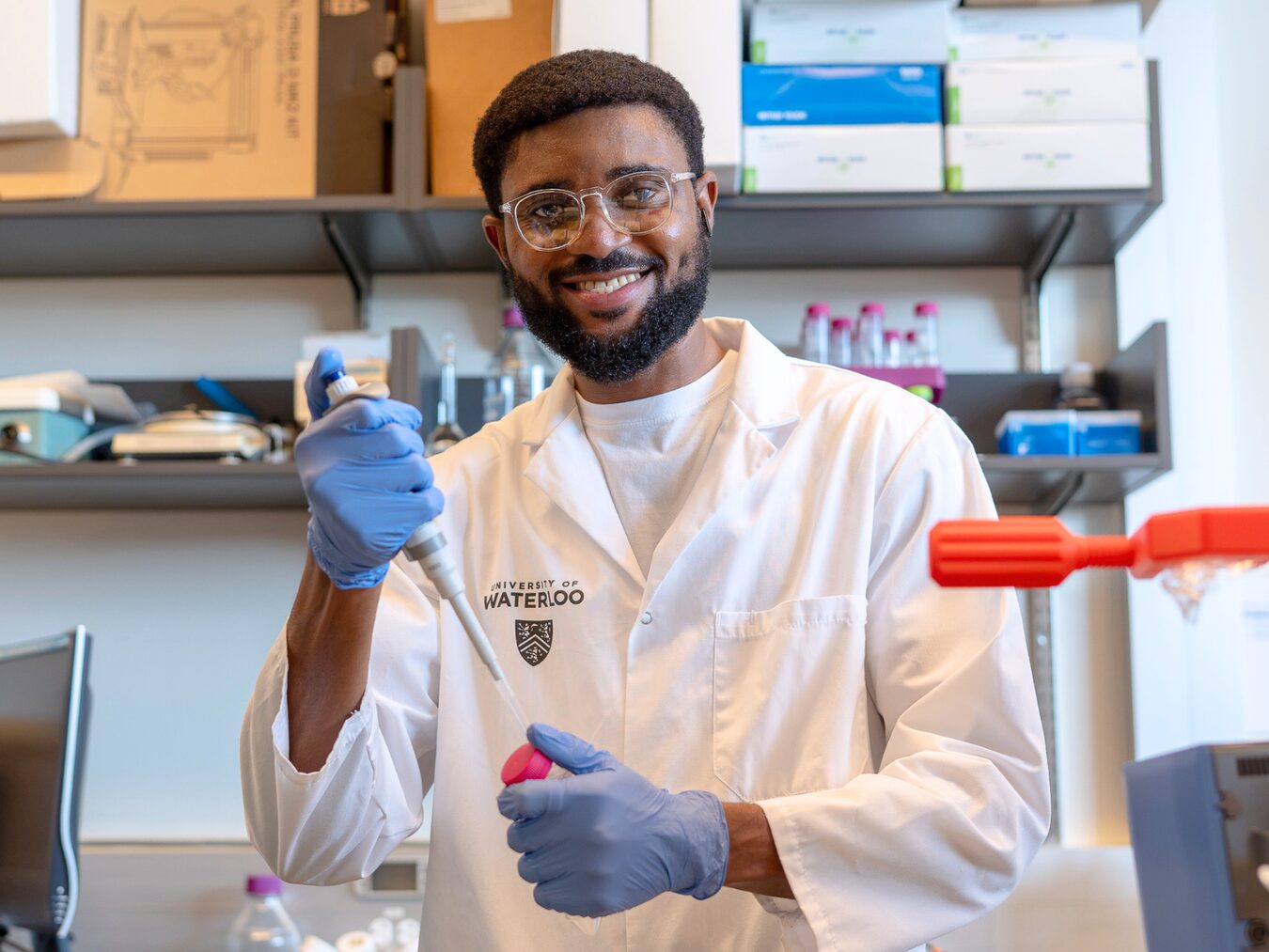
Henry Abanum holding a pipette in a lab coat
ResearchHenry Abanum holding a pipette in a lab coatPhoto: University of Waterloo (uwaterloo.ca); rights under review

The coating relies on tiny biocompatible carriers called liposomes, which respond to bacterial toxins and release a naturally derived antimicrobial only when it is needed. Abanum describes the work as a blend of drug delivery and food safety that could improve quality, extend shelf life and reduce spoilage, which would also ease food waste and its greenhouse gas emissions.

His interest in applied research began during pharmacy training in Nigeria, where he became drawn to industrial pharmacy. After a PharmD and work as a clinical pharmacist, he applied to Waterloo’s School of Pharmacy, citing its multidisciplinary environment and industry collaborations.

Sources 1
  1. Original reporting · uwaterloo.ca

Share this storyOpen as a single page →

Next · p.50Three Waterloo students test whether green tea extract protects neurons from amyloid betaCharlotte Baur, Hugh Hossfeld and Isabella Barichello work in Zoya Leonenko’s lab on EGCG and model cell membranes.

Three Waterloo students test whether green tea extract protects neurons from amyloid beta

Charlotte Baur, Hugh Hossfeld and Isabella Barichello work in Zoya Leonenko’s lab on EGCG and model cell membranes.

Charlotte Baur in the lab
ResearchCharlotte Baur in the labPhoto: University of Waterloo (uwaterloo.ca); rights under review

In Dr. Zoya Leonenko’s Physics and Astronomy lab, three students serve as research assistants: Charlotte Baur, in fourth-year Biological and Medical Physics; Hugh Hossfeld, in third-year Honours Science; and Isabella Barichello, in third-year Biomedical Engineering. They are testing epigallocatechin gallate (EGCG), an antioxidant found in green tea, as a possible shield against the cell damage linked to Alzheimer’s disease.

Hugh Hossfeld in the lab
ResearchHugh Hossfeld in the labPhoto: University of Waterloo (uwaterloo.ca); rights under review

The lab works with model versions of neuronal membranes and watches how they respond to amyloid beta, the protein clusters that form plaques. Baur and Hossfeld use electrophysiology to see whether EGCG blocks the pore-like openings that amyloid beta oligomers create, which let ions pass. They have observed reduced membrane permeability, which suggests the extract could protect the membrane.

Barichello comes at the problem from the surface, using surface plasmon resonance to study how amyloid beta attaches to the membrane and whether EGCG reduces that. The work builds on earlier studies of compounds such as melatonin and trehalose. The results so far come from model membranes in the lab, not from patients.

Sources 1
  1. Original reporting · uwaterloo.ca

Share this storyOpen as a single page →

Next · p.51Eight Waterloo researchers join the Royal Society of Canada, and Geoffrey Fong wins the Eric Jackman PrizeAndrew Fenton Cooper, Myra Fernandes and Fong are among the group to be inducted in Ottawa on November 13.

Eight Waterloo researchers join the Royal Society of Canada, and Geoffrey Fong wins the Eric Jackman Prize

Andrew Fenton Cooper, Myra Fernandes and Fong are among the group to be inducted in Ottawa on November 13.

Dr. Geoffrey Fong
Awards & RecognitionDr. Geoffrey FongPhoto: University of Waterloo (uwaterloo.ca); rights under review

Eight University of Waterloo researchers were elected Fellows and College Members of the Royal Society of Canada (RSC) in 2026, in fields from global governance and public health to AI, cybersecurity and quantum neurobiology. Separately, Dr. Geoffrey Fong, who has been an RSC Fellow since 2017, became only the second person to receive the Eric Jackman Prize in the Human Behavioural and Social Sciences.

Dr. Andrew Fenton Cooper
Awards & RecognitionDr. Andrew Fenton CooperPhoto: University of Waterloo (uwaterloo.ca); rights under review

Fong founded the International Tobacco Control Policy Evaluation Project (the ITC Project) and is its chief principal investigator; it was the first international cohort study to track tobacco use alongside tobacco control policy. More than 150 researchers across 31 countries have used it to evaluate measures under the World Health Organization’s tobacco treaty, such as warning labels, smoke-free laws and taxes.

Andrew Fenton Cooper (BA ’72, MA ’73) studies diplomacy and global governance, including the G20 and BRICS, and has written nine books on his own. Myra Fernandes, a psychology professor, studies how the brain coordinates systems to optimize memory in younger and older adults and in people with dementia, and she chairs the Psychonomic Society.

Upcoming: the Waterloo group will be among 159 scholars, artists and scientists formally inducted at the RSC Celebration of Excellence and Engagement in Ottawa on November 13.

Sources 1
  1. Original reporting · uwaterloo.ca

Share this storyOpen as a single page →

Next · p.52Waterloo Science labs put microbes to work on landfill methane, algal blooms and mine drainageLaura Hug, Jozef Nissimov and Jenine McCutcheon lead three projects that use microorganisms against environmental problems.

Waterloo Science labs put microbes to work on landfill methane, algal blooms and mine drainage

Laura Hug, Jozef Nissimov and Jenine McCutcheon lead three projects that use microorganisms against environmental problems.

Dr. Laura Hug conducting field work
ResearchDr. Laura Hug conducting field workPhoto: University of Waterloo (uwaterloo.ca); rights under review

Researchers in Waterloo’s Faculty of Science are studying microbes as tools for environmental problems. In Biology, Dr. Laura Hug’s group targets legacy methane from older landfilled waste, working with microbial communities that can oxidize methane, degrade bioplastics and break down industrial solvents. Her lab has collected samples with the Region of Waterloo’s waste management division for a decade.

Dr. Jozef Nissimov conducting a lab experiment
ResearchDr. Jozef Nissimov conducting a lab experimentPhoto: University of Waterloo (uwaterloo.ca); rights under review

Dr. Jozef Nissimov leads the Environmental Virology and Ecology Research Group, which asks whether microbial communities help control harmful algal blooms or make them worse. His lab has shown that when a virus kills the bloom-forming cyanobacterium Microcystis aeruginosa, it can trigger a spike in the liver toxin microcystin, many times above safe drinking-water limits, even when the water looks clear again. Samples come from lakes including the IISD Experimental Lakes Area.

In Earth and Environmental Sciences, Dr. Jenine McCutcheon’s team visits active and historic mine sites to see how microbes can improve or worsen water quality. Canada has more than 10,000 abandoned mines, and many still leak acidic, metal-rich drainage into surrounding land and water.

Sources 1
  1. Original reporting · uwaterloo.ca

Share this storyOpen as a single page →

Next · p.53When minutes become the research questionWaterloo researchers examine why stroke treatment can still lose time.

When minutes become the research question

Waterloo researchers examine why stroke treatment can still lose time.

Researchers identify barriers to faster stroke treatment
ResearchResearchers identify barriers to faster stroke treatmentPhoto: University of Waterloo / original source page

A new study has identified workflow barriers that contribute to delays, helping health providers improve outcomes for patients across the stroke care pathway.

The official Waterloo report places this work in research / health. It is a source-linked brief for alumni readers; the source page remains the authority for names, dates and outcomes.

Sources 1
  1. Original reporting · uwaterloo.ca

Share this storyOpen as a single page →

Next · p.54Pilotless planes, practical routesAutonomous aircraft research asks where access matters most.

Pilotless planes, practical routes

Autonomous aircraft research asks where access matters most.

Pilotless planes for the hardest-to-reach places
EngineeringPilotless planes for the hardest-to-reach placesPhoto: University of Waterloo / original source page

Waterloo-founded startup Ribbit scaling autonomous fixed-wing aircraft to expand transportation access in remote, infrastructure-limited environments across Canada and beyond.

The official Waterloo report places this work in engineering / aviation. It is a source-linked brief for alumni readers; the source page remains the authority for names, dates and outcomes.

Sources 1
  1. Original reporting · uwaterloo.ca

Share this storyOpen as a single page →

Next · p.55Making AI easier to trustThe hard part of an AI system can be the relationship around it.

Making AI easier to trust

The hard part of an AI system can be the relationship around it.

The case for AI people really trust
AIThe case for AI people really trustPhoto: University of Waterloo / original source page

Canada can lead the revolution by educating leaders who bake core principles right in.

The official Waterloo report places this work in ai / culture. It is a source-linked brief for alumni readers; the source page remains the authority for names, dates and outcomes.

Sources 1
  1. Original reporting · uwaterloo.ca

Share this storyOpen as a single page →

Next · p.56Andrew Ramsook wins $100,000 to study the muscles that breatheThe kinesiology professor, who joined Waterloo in 2025, will build an integrated respiratory testing lab with John R. Evans Leaders Fund money.

Andrew Ramsook wins $100,000 to study the muscles that breathe

The kinesiology professor, who joined Waterloo in 2025, will build an integrated respiratory testing lab with John R. Evans Leaders Fund money.

A glass-fronted campus building at sunset
ResearchA glass-fronted campus building at sunsetPhoto: University of Waterloo (uwaterloo.ca); rights under review

Dr. Andrew Ramsook, a kinesiology professor who arrived at Waterloo in 2025, has been awarded $100,000 by the John R. Evans Leaders Fund, part of the Canada Foundation for Innovation. It will pay for instruments that test breathing from the airways and lungs through to the muscles that drive them.

His proposal notes that lung disease is estimated to cost Canadians $24 billion by 2030, with an aging population, wildfire smoke and rising youth vaping among the drivers. Within the respiratory system, only the breathing muscles are known to improve with training, and they can change blood flow, heart rate and blood pressure.

The new lab will help him learn how those muscles signal the rest of the body. Early experiments will look at fatigue in the breathing muscles during and after hard breathing work such as exercise, followed by readings of how active they are, and a final combined assessment of lung size and how well the lungs move oxygen into the blood.

Sources 1
  1. Original reporting · uwaterloo.ca

Share this storyOpen as a single page →

Next · p.57James Redekopp and Karl Keshavarzi launch UW High Performance ComputingThe new Sedra Student Design Centre team has nearly finished a C++ simulation and was recruiting for the Fall 2026 term.

James Redekopp and Karl Keshavarzi launch UW High Performance Computing

The new Sedra Student Design Centre team has nearly finished a C++ simulation and was recruiting for the Fall 2026 term.

The Sedra Student Design Centre sign and workshop floor
Campus LifeThe Sedra Student Design Centre sign and workshop floorPhoto: University of Waterloo (uwaterloo.ca); rights under review

UW High Performance Computing (UWHPC) was founded earlier this year by computer engineering students James Redekopp and Karl Keshavarzi inside the Sedra Student Design Centre, with Dr. Tahsin Reza of Electrical and Computer Engineering as faculty advisor. Redekopp says they started it because the team they wanted to join did not exist.

The first project, nearly finished, is a Variational Monte Carlo simulation written from scratch in C++. The method estimates properties of quantum systems with many interacting particles by statistical sampling, so the faster the software runs, the larger the problem the team can take on. Redekopp says performance tuning is rarely a single change that makes a program faster.

Next term the team turns to machine learning systems, starting with GPU optimization and specialized compilation. It takes on any high-performance problem members care about, from scientific computing to compilers and distributed systems.

As of the September 3 report, recruitment for the Fall 2026 term was open, with a hands-on onboarding challenge for applicants. Keshavarzi says GPU programming is not a prerequisite, because the team looks for the motivation to dig deeper. UWHPC is one of more than 40 student design teams in Waterloo Engineering.

Sources 1
  1. Original reporting · uwaterloo.ca

Share this storyOpen as a single page →

Next · p.58Miles Yoshida built a fibre-optic oxygen sensor for soil during a SURF summerThe fourth-year Environmental Sciences student worked with the Ecohydrology Research Group on a sensor read with a standard DSLR camera.

Miles Yoshida built a fibre-optic oxygen sensor for soil during a SURF summer

The fourth-year Environmental Sciences student worked with the Ecohydrology Research Group on a sensor read with a standard DSLR camera.

A student at imaging equipment in a lab
ResearchA student at imaging equipment in a labPhoto: University of Waterloo (uwaterloo.ca); rights under review

Miles Yoshida, a fourth-year Environmental Sciences student in the Water Science specialization, spent a summer developing and calibrating a fibre-optic oxygen sensor system for soil. The Faculty of Science’s Summer Undergraduate Research Fund backed the work, and he hopes to pursue graduate studies in water and environmental science.

He worked in the Ecohydrology Research Group in Earth and Environmental Sciences under Philippe Van Cappellen and Fereidoun Rezanezhad. The sensor uses fibre-optic cables coated with a platinum complex whose luminescence dims as oxygen rises, and he tracks changes in the emitted light with a standard DSLR camera.

Over the summer he refined the design and tested it at different temperatures and oxygen concentrations, then analyzed the data to compare the system’s performance with commercial oxygen sensors. Soil oxygen influences microbial activity, nutrient cycling and contaminant transport, which is why finer measurements matter.

Sources 1
  1. Original reporting · uwaterloo.ca

Share this storyOpen as a single page →

Next · p.59Waterloo and Guelph researchers target greenhouse disease and drone-seeded wheat in OntarioChristian Euler, Nasser Mohieddin Abukhdeir and Tizazu Mekonnen work with provincial and industry partners on early detection and a starch hydrogel seed coating.

Waterloo and Guelph researchers target greenhouse disease and drone-seeded wheat in Ontario

Christian Euler, Nasser Mohieddin Abukhdeir and Tizazu Mekonnen work with provincial and industry partners on early detection and a starch hydrogel seed coating.

Seeds coated with a biodegradable polymer to hold moisture
ResearchSeeds coated with a biodegradable polymer to hold moisturePhoto: University of Waterloo (uwaterloo.ca); rights under review

Waterloo chemical engineers are working with the University of Guelph, the Ontario Ministry of Agriculture, Food and Agribusiness (OMAFA) and industry on two farm problems. The first involves Ontario’s 5,200-acre greenhouse sector, worth $1.8 billion a year, where disease and pests can spread fast and manual monitoring is slow.

A researcher holding coated seeds
ResearchA researcher holding coated seedsPhoto: University of Waterloo (uwaterloo.ca); rights under review

That project builds a system that watches greenhouse crops for early signs of disease and stress before they are visible, combining computer vision, metabolic modelling and machine learning. Professor Nasser Mohieddin Abukhdeir leads for Waterloo, and Professor Christian Euler’s metabolic models reveal plant changes before symptoms appear, at least three days earlier, he says. Canada and Ontario fund it through the Sustainable Canadian Agricultural Partnership.

The second project, with Corteva Agrisciences, asks whether drones can scatter winter wheat seed into standing soybeans in eastern Ontario, where the planting window is short. Guelph professor Joshua Nasielski says surface seed dried out, and fewer than half of 1.6 million seeds per acre survived. Professor Tizazu Mekonnen designed a biodegradable, super-absorbent hydrogel from potato starch to hold moisture around each seed until rain arrives, and unlike synthetic coatings it fully degrades.

Sources 1
  1. Original reporting · uwaterloo.ca

Share this storyOpen as a single page →

Next · p.60Reiko Omoto tests global sustainability rules against village realityThe Waterloo PhD graduate teaches at Tottori University and studies fisheries, farming and rural communities in Japan, Southeast Asia and the United States.

Waterloo in numbers

University of Waterloo / In numbersChart 01

Seven of 45 Rising Stars fellows have chosen Waterloo graduate study

Fellows since 2024 by graduate-study status · 45 fellows · as reported September 9, 2026 · 7 ÷ 45 = 15.6% · Unit: fellows

Enrolled in a Waterloo master's now3
Due to start this fall (master's or PhD)4
Other fellows (outcome not stated)38

fellows · shared zero baseline

Source: Waterloo News · September 9, 2026

Source body: "three Rising Stars fellows currently enrolled in a Waterloo master's program; four more start this fall" and "seven of the 45 students who've come through the fellowship since 2024"; 38 = 45 − 7 (derived). A snapshot of a young program, not a placement rate or a causal estimate.

View values as a table
CategoryValue
Enrolled in a Waterloo master's now3
Due to start this fall (master's or PhD)4
Other fellows (outcome not stated)38

Chapter 03

Climate & Environment

Land, water, energy and the species that depend on them.

7 stories

Reiko Omoto tests global sustainability rules against village reality

The Waterloo PhD graduate teaches at Tottori University and studies fisheries, farming and rural communities in Japan, Southeast Asia and the United States.

Reiko Omoto smiling in a black shirt, portrait from the alumni awards announcement page
AlumniReiko Omoto smiling in a black shirt, portrait from the alumni awards announcement pagePhoto: University of Waterloo (uwaterloo.ca); rights under review

Reiko Omoto (PhD ’13) holds a professorship in regional sciences at Tottori University and gardens in the mountain village of Chizu, Japan, where in winter she digs carrots for dinner out of frozen ground. Her Waterloo doctoral research followed small-scale shrimp farmers in Vietnam to see what global sustainability standards meant for them.

That work left her with a question she has kept asking: can global solutions succeed if they are not grounded in the realities of the people they are meant to serve? She went on to work with communities across Japan, Southeast Asia and the United States, and she later became the Marine Stewardship Council’s Fisheries Manager for Japan.

In Okinawa she documented seaweed farmers restoring corals with methods academics had first dismissed. In Chizu she worked with women entrepreneurs responding to population decline, and a 2025 paper she co-authored with them helped their efforts gain recognition with town council.

She is proudest of her book Local Certification: Regionally Created Food Distribution Systems. It did not sell among academics, but farmers, fishers and food producers read it, and some built certification systems of their own. Omoto is a 2026 Distinguished Alumni Award recipient from the Faculty of Environment.

Sources 1
  1. Original reporting · uwaterloo.ca

Share this storyOpen as a single page →

Next · p.61Katja Kubasta logged 586 roadside surveys for Eastern Fox SnakesA KEEN Global Citizen Internship placed the Waterloo Environment student with the Long Point Biosphere Region; KEEN has renewed its faculty partnership for five years.

Katja Kubasta logged 586 roadside surveys for Eastern Fox Snakes

A KEEN Global Citizen Internship placed the Waterloo Environment student with the Long Point Biosphere Region; KEEN has renewed its faculty partnership for five years.

A person in a red jacket bends over in a wetland, holding green plant stalks
Campus LifeA person in a red jacket bends over in a wetland, holding green plant stalksPhoto: University of Waterloo (uwaterloo.ca); rights under review

Katja Kubasta, a Faculty of Environment student, completed 586 roadside surveys over four months in Norfolk County. She documented wildlife and pointed to places where new infrastructure could do more to protect species at risk.

The placement was with the Long Point Biosphere Region through a KEEN Global Citizen Internship, supervised by Chantel Markle of Waterloo and road ecologist Kari Gunson. The roads and habitat she monitored are used by endangered Eastern Fox Snakes, and the area holds Ontario’s largest Carolinian population of the species. Its president, Brian Craig, said the organization could not have done the research and monitoring without KEEN’s support.

KEEN Footwear has backed Waterloo students through graduate scholarships, internships and co-op opportunities, and it agreed to extend its partnership with the faculty by five more years. Its support has also reached the Nature Conservancy of Canada and the rare Charitable Research Reserve, where it supported learning and work on more than 1,200 acres of protected land.

KEEN received a 2026 Friend of the Faculty Impact Award for sustained investment in student learning.

Sources 1
  1. Original reporting · uwaterloo.ca

Share this storyOpen as a single page →

Next · p.62Kyara Simoes found only eleven of 86 national sport bodies mention climate changeHer Waterloo master’s thesis assessed climate readiness across national-level Canadian sport organizations, from baseball to karate to triathlon.

Kyara Simoes found only eleven of 86 national sport bodies mention climate change

Her Waterloo master’s thesis assessed climate readiness across national-level Canadian sport organizations, from baseball to karate to triathlon.

Kyara Simoes
ResearchKyara SimoesPhoto: University of Waterloo (uwaterloo.ca); rights under review

Kyara Simoes, a recent graduate of Waterloo’s Master of Environmental Studies program, assessed how ready national-level Canadian sport organizations are for climate change. She had watched warm winters end skiing and smoky air stop her runs, and she chose Waterloo to work with climate researchers Michelle Rutty and Daniel Scott.

A group of people in a lab space
ResearchA group of people in a lab spacePhoto: University of Waterloo (uwaterloo.ca); rights under review

She reviewed 86 organizations, among them baseball, karate and triathlon bodies, using their public strategic plans, annual reports and sustainability reports. Only eleven mention climate change or environmental sustainability, and only five maintain a webpage on the subject.

Simoes argues that Sport Canada is well placed to help the whole sector by building climate considerations into future funding frameworks and by centralizing practical guidance, such as what a community coach should do on a smoky day or in a heat wave. For context, about 300 sports organizations have committed to halving emissions by 2030 under a United Nations framework launched in 2018.

Sources 1
  1. Original reporting · uwaterloo.ca

Share this storyOpen as a single page →

Next · p.63Dustin Garrick’s Water Cycles takes group bike rides to the Grand River with Six Nations partnersWildfire smoke moved the Two Row by the Grand pilot indoors and the teachings went ahead; a public Thanksgiving event was set for October 3.

Dustin Garrick’s Water Cycles takes group bike rides to the Grand River with Six Nations partners

Wildfire smoke moved the Two Row by the Grand pilot indoors and the teachings went ahead; a public Thanksgiving event was set for October 3.

A group of cyclists with their bikes on a wooded path
ResearchA group of cyclists with their bikes on a wooded pathPhoto: University of Waterloo (uwaterloo.ca); rights under review

Water Cycles Expeditions grew from an idea of students and partners supported by Dr. Dustin Garrick, a professor in the Faculty of Environment: put people on bikes to reconnect them with water. The project blends social enterprise, experiential education and community science. Its hypothesis is that riding in groups near water builds empathy, then learning, then community action on managing it.

Wildfire smoke over the Grand River
ResearchWildfire smoke over the Grand RiverPhoto: University of Waterloo (uwaterloo.ca); rights under review

The latest pilot, Two Row by the Grand, was co-led by Garrick and Spring Carter of Six Nations Tourism, with a Reconciliation-focused ride along the Grand River planned beside the annual Two Row on the Grand paddling event. Wildfire smoke from northwestern Ontario led Environment and Climate Change Canada to issue an orange-level warning in mid-July, so activities moved indoors. The ride did not happen, but the teachings did, starting with the Two Row Wampum.

Water Cycles says it has led 15 rides since 2022, with 500 participants in Canada, the United States and Kenya. Next come a Waterloo course on cycling for sustainability, a scavenger hunt for school students and, with Canada Foundation for Innovation funding, a fleet of 30 bikes for a bike-share program. A public Water Cycles Thanksgiving event was scheduled in Belwood on October 3.

Sources 1
  1. Original reporting · uwaterloo.ca

Share this storyOpen as a single page →

Next · p.64Faculty of Environment unveils a Moccasin Identifier treaty marker on Ring RoadAmanda St. Marie, Carolyn King and Laurie Froman spoke at the September 25 unveiling, and the Moccasin Identifier team returns in early November.

Faculty of Environment unveils a Moccasin Identifier treaty marker on Ring Road

Amanda St. Marie, Carolyn King and Laurie Froman spoke at the September 25 unveiling, and the Moccasin Identifier team returns in early November.

People in ribbon skirts and traditional dress standing beside the steel treaty marker
Campus LifePeople in ribbon skirts and traditional dress standing beside the steel treaty markerPhoto: Imprint (uwimprint.ca); rights under review

The Faculty of Environment and the Moccasin Identifier unveiled a permanent treaty marker on September 25 along Ring Road near the EV3 building. The steel installation, designed by the university’s Creative Studio with the Moccasin Identifier around an Anishinaabe moccasin design, is meant to work as a living land acknowledgement.

Amanda St. Marie, the faculty’s Indigenous initiatives manager and a member of Matachewan First Nation, says its purpose is treaty education: helping people understand treaty relationships and traditional territories. The project grew from the faculty’s long relationship with Carolyn King, founder of the Moccasin Identifier, former Chief of the Mississaugas of the Credit First Nation and a recurring guest lecturer. The First Nations-led initiative was established in 2011.

The youth women’s hand drum group Aki Ogichidaa Kwewak N’Gomawak opened the program, followed by Elder Myeengun Henry. St. Marie gave the keynote, and Laurie Froman, the Moccasin Identifier’s executive director, King and interim associate vice-president John Lewis also spoke. The day closed with a round dance.

Upcoming: the Moccasin Identifier team returns to campus in the first week of November to provide treaty education.

Sources 1
  1. Original reporting · uwimprint.ca

Share this storyOpen as a single page →

Next · p.65Planting for a hotter futureA black spruce study asks which combinations of traits help trees cope.

Planting for a hotter future

A black spruce study asks which combinations of traits help trees cope.

A view into the canopy of a spruce forest.
ResearchA view into the canopy of a spruce forest.Photo: Source: University of Waterloo; see original article for photo credits.

Biologist Julie Messier, MSc student Sabina Henry and collaborators examined black spruce growth in warmer, drier conditions. Better growth was associated with three traits together: fewer needles, conservative water use and conservative carbon use.

The combination matters. A single apparently helpful trait did not explain the pattern on its own. The research gives forest practitioners a more specific question to investigate when selecting trees for changing conditions; it does not establish that one planting strategy works everywhere.

Sources 1
  1. Original reporting · uwaterloo.ca

Share this storyOpen as a single page →

Next · p.66Planning for a moving climateGeoSafe gives communities a way to test changing climate scenarios.

Planning for a moving climate

GeoSafe gives communities a way to test changing climate scenarios.

GeoSafe empowers communities to plan for a changing climate
ClimateGeoSafe empowers communities to plan for a changing climatePhoto: University of Waterloo / original source page

Waterloo PhD candidate Hasti Shwan develops a platform that turns complex climate and natural hazard data into actionable insights for informed decision-making

The official Waterloo report places this work in climate / civic. It is a source-linked brief for alumni readers; the source page remains the authority for names, dates and outcomes.

Sources 1
  1. Original reporting · uwaterloo.ca

Share this storyOpen as a single page →

Next · p.67The book club that went to YCKristy Gao's path from Waterloo to San Francisco runs through a small community.

Chapter 04

Arts & Culture

Books, stages, studios and the people making them.

5 stories

The book club that went to YC

Kristy Gao's path from Waterloo to San Francisco runs through a small community.

How landing in the ER led Kristy Gao to Y Combinator
AlumniHow landing in the ER led Kristy Gao to Y CombinatorPhoto: University of Waterloo / original source page

Kristy Gao's path from Waterloo to San Francisco runs through a small community.

The official Waterloo report places this work in alumni / yc. It is a source-linked brief for alumni readers; the source page remains the authority for names, dates and outcomes.

Sources 1
  1. Original reporting · uwaterloo.ca

Share this storyOpen as a single page →

Next · p.68Nicole Noel and Xiaoye Michael Wang join Waterloo Optometry ahead of the Eye Institute’s 2027 openingNoel studies photoreceptors in turquoise killifish, and Wang studies 3D visual perception with virtual reality and co-founded the Asian Arts and Culture Trust.

Nicole Noel and Xiaoye Michael Wang join Waterloo Optometry ahead of the Eye Institute’s 2027 opening

Noel studies photoreceptors in turquoise killifish, and Wang studies 3D visual perception with virtual reality and co-founded the Asian Arts and Culture Trust.

Nicole Noel and Xiaoye Michael Wang in front of the optometry building
ResearchNicole Noel and Xiaoye Michael Wang in front of the optometry buildingPhoto: University of Waterloo (uwaterloo.ca); rights under review

The School of Optometry and Vision Science welcomed two new faculty members, Nicole Noel and Xiaoye Michael Wang, with expertise in photoreceptor biology and visual perception. The school says they help set the stage for the opening of the Waterloo Eye Institute in 2027.

Noel, from Fort McMurray, Alberta, earned her PhD in medical genetics at the University of Alberta and held a postdoctoral fellowship at University College London. She studies how photoreceptor cells form and break down using turquoise killifish, which develop age-related vision loss and live about six months. She hopes the work leads to ways to stop or reverse vision loss in people, and she will teach an undergraduate pathophysiology course in the winter term.

Wang studies 3D visual perception and motor control with virtual reality. His projects include a VR chemical engineering lab training application and motion capture work for the Toronto Raptors, and he is developing a computational fix for convergence and accommodation problems in VR headsets with Austin Roorda and Lisa Christian. With his wife, Emily Gong, he co-founded the Asian Arts and Culture Trust, which has worked with the Toronto International Film Festival.

Sources 1
  1. Original reporting · uwaterloo.ca

Share this storyOpen as a single page →

Next · p.69Design under loadWaterloo students take a practical design problem to a national competition.

Design under load

Waterloo students take a practical design problem to a national competition.

Students sweep national steel design competition
EngineeringStudents sweep national steel design competitionPhoto: University of Waterloo / original source page

Waterloo Engineering students sweep the podium at a national steel design competition.

The official Waterloo report places this work in engineering / students. It is a source-linked brief for alumni readers; the source page remains the authority for names, dates and outcomes.

Sources 1
  1. Original reporting · uwaterloo.ca

Share this storyOpen as a single page →

Next · p.70Waterloo ECE students take first runner-up in an IEEE hardware design awardJake Peters, Amirbahador Mansoori, Alanna Rudolph and Dhyey Bhatt built a robotic scanner that maps electromagnetic interference.

Waterloo ECE students take first runner-up in an IEEE hardware design award

Jake Peters, Amirbahador Mansoori, Alanna Rudolph and Dhyey Bhatt built a robotic scanner that maps electromagnetic interference.

Photos of the student team’s hardware and robotic scanner in a collage
Awards & RecognitionPhotos of the student team’s hardware and robotic scanner in a collagePhoto: University of Waterloo (uwaterloo.ca); rights under review

A Waterloo Electrical and Computer Engineering team competed at the IEEE symposium on electromagnetic compatibility, signal and power integrity (EMC+SIPI) in Texas, where it was first runner-up for the hardware design award. Earlier this summer the same team had been named one of three finalists in the IEEE EMC+SIPI student hardware design contest.

Adjunct professor George Shaker supervises the team: master’s student Jake Peters, PhD student Amirbahador Mansoori, and undergraduate research assistants Alanna Rudolph and Dhyey Bhatt, all in his Wireless Sensors & Devices Lab.

Their work evaluates power integrity along with radiated and conducted emissions, combining circuit simulation, physical probing and automated measurements. They designed a bimanual robotic scanner with closed-loop vision for near-field interference mapping. ArUco markers give it millimetre-level precision as it locates the sources of radiated emissions across a custom printed circuit board. The students are active in the IEEE EMC Society Student Branch Chapter.

Sources 1
  1. Original reporting · uwaterloo.ca

Share this storyOpen as a single page →

Next · p.71Glenn Fretz’s fifty years of Mennonite graphic design get an exhibit at Conrad GrebelThe Mennonite Archives of Ontario show is on view in the MAO Gallery, and an event on Anabaptist debt follows on November 19.

Glenn Fretz’s fifty years of Mennonite graphic design get an exhibit at Conrad Grebel

The Mennonite Archives of Ontario show is on view in the MAO Gallery, and an event on Anabaptist debt follows on November 19.

Featured image from the exhibit page: colourful wooden animal shapes beside a two by two collection box
ArtsFeatured image from the exhibit page: colourful wooden animal shapes beside a two by two collection boxPhoto: University of Waterloo (uwaterloo.ca); rights under review

The Mennonite Archives of Ontario has curated an exhibit on Glenn Fretz, who spent fifty years as a graphic designer and consultant for Mennonite and non-profit organizations. It is on view at Conrad Grebel University College, on the third-floor atrium landing in the MAO Gallery and extending into the library.

Fretz’s work shaped the branding of Mennonite World Conference, Mennonite Reporter, Canadian Mennonite, MEDA and Mennonite churches in Canada and the United States. Pieces from the archives and from his own collection show how his career met these groups’ search for bolder visual expression, with his reflections on process and tributes to the clients who asked him to convey particular meanings.

The public launch took place on Thursday, September 17, during Mennonite Heritage Week, so the show is already open. Upcoming at Grebel: an event titled Credit Worthy: Anabaptist Debt and the Material Bases of Coexistence on Thursday, November 19, at 7:30 pm in the Great Hall. Visitors can also follow a self-guided Mennonite art tour of the college’s collection.

Sources 1
  1. Original reporting · uwaterloo.ca

Share this storyOpen as a single page →

Next · p.72Problems before productsStudent founders start with real constraints and a nearby user.

Chapter 05

Campus Life

The rooms, teams and routines students will remember.

22 stories

Problems before products

Student founders start with real constraints and a nearby user.

Student entrepreneurs tackle real-world challenges at the Spring 2026 Quantum Valley Investments® Problem Pitch Competition Finals
EntrepreneurshipStudent entrepreneurs tackle real-world challenges at the Spring 2026 Quantum Valley Investments® Problem Pitch Competition FinalsPhoto: University of Waterloo / original source page

Recap of the Spring 2026 QVI Problem Pitch Competition Finals.

The official Waterloo report places this work in entrepreneurship / students. It is a source-linked brief for alumni readers; the source page remains the authority for names, dates and outcomes.

Sources 1
  1. Original reporting · uwaterloo.ca

Share this storyOpen as a single page →

Next · p.73Community is a mathematical advantageRobyn Bhola found a way into Waterloo through orientation and peers.

Community is a mathematical advantage

Robyn Bhola found a way into Waterloo through orientation and peers.

How Math Orientation helped Robyn Bhola find community at Waterloo
MathHow Math Orientation helped Robyn Bhola find community at WaterlooPhoto: University of Waterloo / original source page

After arriving at the University of Waterloo as an international student, Robyn Varda Bhola found friendship, community and lasting connections through Math Orientation.

The official Waterloo report places this work in math / belonging. It is a source-linked brief for alumni readers; the source page remains the authority for names, dates and outcomes.

Sources 1
  1. Original reporting · uwaterloo.ca

Share this storyOpen as a single page →

Next · p.74Who gets to see themselves in mathCEMC works on access before a student reaches a university classroom.

Who gets to see themselves in math

CEMC works on access before a student reaches a university classroom.

How the CEMC is helping to increase gender equity in math and computer science
MathHow the CEMC is helping to increase gender equity in math and computer sciencePhoto: University of Waterloo / original source page

Here are three of the CEMC’s many programs that are specifically helping to address the gender equity gap.

The official Waterloo report places this work in math / education. It is a source-linked brief for alumni readers; the source page remains the authority for names, dates and outcomes.

Sources 1
  1. Original reporting · uwaterloo.ca

Share this storyOpen as a single page →

Next · p.75Four Waterloo-founded betsA Y Combinator cohort shows one route from campus to San Francisco.

Four Waterloo-founded bets

A Y Combinator cohort shows one route from campus to San Francisco.

Four Waterloo-founded startups earn $2 million seed funding
BuildersFour Waterloo-founded startups earn $2 million seed fundingPhoto: University of Waterloo / original source page

The University of Waterloo is well represented in the most recent cohort of companies accepted into the Y Combinator (YC), one of the biggest and most presti

The official Waterloo report places this work in builders / yc. It is a source-linked brief for alumni readers; the source page remains the authority for names, dates and outcomes.

Sources 1
  1. Original reporting · uwaterloo.ca

Share this storyOpen as a single page →

Next · p.76Roommates become the archiveA shared student life becomes a long memory and a practical network.

Roommates become the archive

A shared student life becomes a long memory and a practical network.

Roommates, classmates, lifelong friends
AlumniRoommates, classmates, lifelong friendsPhoto: University of Waterloo / original source page

Karri Melvaer Wallsten (BA ’93) shares memories of being a student in the 1990s and meeting friends who remain close and recently travelled to Mexico together.

The official Waterloo report places this work in alumni / community. It is a source-linked brief for alumni readers; the source page remains the authority for names, dates and outcomes.

Sources 1
  1. Original reporting · uwaterloo.ca

Share this storyOpen as a single page →

Next · p.77Buildings keep the questions in viewA then-and-now campus story puts Waterloo’s buildings beside the people who keep using them.

Buildings keep the questions in view

A then-and-now campus story puts Waterloo’s buildings beside the people who keep using them.

Waterloo, then and now
CampusWaterloo, then and nowPhoto: University of Waterloo / original source page

For 60 years, the University of Waterloo has inspired new generations of students and new waves of innovation and discovery.

The official Waterloo report places this work in campus / then and now. It is a source-linked brief for alumni readers; the source page remains the authority for names, dates and outcomes.

Sources 1
  1. Original reporting · uwaterloo.ca

Share this storyOpen as a single page →

Next · p.78A campus map from 1976A class anniversary page turns old buildings into a way of remembering student life.

A campus map from 1976

A class anniversary page turns old buildings into a way of remembering student life.

Welcome to 1976
AlumniWelcome to 1976Photo: University of Waterloo / original source page

A class anniversary page turns old buildings into a way of remembering student life.

The official Waterloo report places this work in alumni / campus history. It is a source-linked brief for alumni readers; the source page remains the authority for names, dates and outcomes.

Sources 1
  1. Original reporting · uwaterloo.ca

Share this storyOpen as a single page →

Next · p.79Adam Clark brings planning students into Kitchener’s live projectsThe City of Kitchener urban designer gives Waterloo planning students real municipal questions, and he is a 2026 Friend of the Faculty Impact Award recipient.

Adam Clark brings planning students into Kitchener’s live projects

The City of Kitchener urban designer gives Waterloo planning students real municipal questions, and he is a 2026 Friend of the Faculty Impact Award recipient.

Adam Clark in a blue shirt against a brick wall, portrait from the alumni awards announcement page
AlumniAdam Clark in a blue shirt against a brick wall, portrait from the alumni awards announcement pagePhoto: University of Waterloo (uwaterloo.ca); rights under review

Adam Clark (BAS ’06, MArch ’09) is an urban designer with the City of Kitchener. As a third-year architecture student at Waterloo, he and his team assembled a model measuring 8 by 60 feet for a studio that reimagined part of Toronto, and the project shifted his focus from buildings to cities.

That experience informed the public engagement he led for Growing Together, Kitchener’s planning framework for accommodating growth near its ION light rail stations. Residents tested ideas with physical models of their neighbourhoods. The project won eight awards, among them Project of the Year from the Ontario Professional Planners Institute and a Congress for the New Urbanism Charter Award.

Clark also acted as the client for Professor Katherine Perrott’s graduate planning studio, inviting students to take on questions the City was still working through. Their research on housing, zoning and how other municipalities handle similar problems sometimes directly informed City policy. His models also led Perrott to bring model-making back into planning courses using the ENV Makerspace.

Clark describes the arrangement as collaboration, not giving back. The Faculty of Environment has named him a 2026 Friend of the Faculty Impact Award recipient.

Sources 1
  1. Original reporting · uwaterloo.ca

Share this storyOpen as a single page →

Next · p.80Remi Rotenberg went purple on day one, then led OrientationThe fourth-year Civil Engineering student says built-in friends from Engineering Orientation shaped her degree; her father Meir (BASc ’89) is a Waterloo engineer.

Remi Rotenberg went purple on day one, then led Orientation

The fourth-year Civil Engineering student says built-in friends from Engineering Orientation shaped her degree; her father Meir (BASc ’89) is a Waterloo engineer.

Orientation leaders in blue lab coats and colourful hard hats pose with arms crossed
Campus LifeOrientation leaders in blue lab coats and colourful hard hats pose with arms crossedPhoto: University of Waterloo (uwaterloo.ca); rights under review

Remi Rotenberg, now a fourth-year Civil Engineering student, knew Engineering Orientation by reputation before she arrived. Her father, Meir Rotenberg (BASc ’89), had told her stories. She says the real thing felt different, and within days she was purple, head to toe.

A group of Orientation leaders in pink and other bright colours pose together
Campus LifeA group of Orientation leaders in pink and other bright colours pose togetherPhoto: University of Waterloo (uwaterloo.ca); rights under review

Orientation put her on a colour team with fellow Civil Engineering students. They became friends and study partners, sat together in lectures and turned to each other for the first group projects. Upper-year students became mentors too, passing on advice and notes.

Those contacts led her to the Engineering Society. After her first year she came back as an Orientation leader and took on more of the planning and delivery each year. She says she has had more fun as a leader than she did as a first-year student.

Her message to nervous newcomers is that everyone else is just as nervous, and calming those nerves together turns out to be a bonding experience.

Sources 1
  1. Original reporting · uwaterloo.ca

Share this storyOpen as a single page →

Next · p.81Jinmeng Shi wins best student poster for smoother terahertz laser layersThe Waterloo master’s student received the award at the International Conference on Molecular Beam Epitaxy, held July 12 to 16 in Ann Arbor.

Jinmeng Shi wins best student poster for smoother terahertz laser layers

The Waterloo master’s student received the award at the International Conference on Molecular Beam Epitaxy, held July 12 to 16 in Ann Arbor.

Jinmeng Shi standing with her poster at the conference
Awards & RecognitionJinmeng Shi standing with her poster at the conferencePhoto: University of Waterloo (uwaterloo.ca); rights under review

Jinmeng Shi, a Master of Applied Science student in Electrical and Computer Engineering, was named best student poster presenter at the International Conference on Molecular Beam Epitaxy in Ann Arbor, Michigan, held July 12 to 16, 2026. Professors Dayan Ban and Zbig Wasilewski co-supervise her.

Her research targets terahertz quantum cascade lasers, which are built from many extremely thin semiconductor layers, so small flaws at the interfaces can hurt performance. She is testing whether growing the layers on a different crystal orientation of gallium arsenide gives smoother interfaces, and her experiments found conditions for more predictable silicon doping while keeping the surfaces very smooth.

Shi began in Materials and Nanosciences on a joint program with Beijing Jiaotong University: two years in Beijing, then the final two at Waterloo. She says her supervisors changed how she treats failed experiments: she now examines the evidence for causes and uses it to decide what to try next.

Sources 1
  1. Original reporting · uwaterloo.ca

Share this storyOpen as a single page →

Next · p.82Warriors football open 2026 with a returning all-star and a healthy quarterbackLinebacker Michael Omoseni, quarterback Nick Orr and kicker Evan Astolfo anchor a preview of a season that follows a 2-6 year.

Warriors football open 2026 with a returning all-star and a healthy quarterback

Linebacker Michael Omoseni, quarterback Nick Orr and kicker Evan Astolfo anchor a preview of a season that follows a 2-6 year.

Evan Astolfo, number 36, kicks a field goal for the Warriors
Campus LifeEvan Astolfo, number 36, kicks a field goal for the WarriorsPhoto: UW Athletics (courtesy), via Imprint; rights under review

Imprint’s preview of the Warriors’ 2026-27 football season began with a rematch of last year’s opener against uOttawa’s Gee-Gees, who won 27-12. The Warriors are coming off a 2-6 season. They return OUA all-star linebacker Michael Omoseni, have a healthy starting quarterback in Nick Orr, and have kicker Evan Astolfo, an all-rookie pick who kicked the longest field goal in OUA history in his second game last year.

Head coach Chris Bertoia said the team has worked hard for eight and a half months and called its culture special. The roster has 107 players, and seven of last year’s opponents are on the schedule, among them Carleton, Queen’s, Windsor, Guelph, McMaster and York.

The Battle of Waterloo returns to Warrior Field in Week 6. This is a late-August preview, so it does not cover results since then.

Sources 1
  1. Original reporting · uwimprint.ca

Share this storyOpen as a single page →

Next · p.83Gail Cuthbert Brandt went from Renison residence student to its first woman principalThe historian and author began a History degree in 1963 and led Renison University College from 1992 to 2002.

Gail Cuthbert Brandt went from Renison residence student to its first woman principal

The historian and author began a History degree in 1963 and led Renison University College from 1992 to 2002.

Gail Cuthbert Brandt in the 1990s, sitting in front of books
AlumniGail Cuthbert Brandt in the 1990s, sitting in front of booksPhoto: University of Waterloo (uwaterloo.ca); rights under review

Gail Cuthbert Brandt registered for an Arts degree in History at Renison in 1963, lived in residence for three years, acting as a don in her final year there. Close to thirty years later she came back as head of the college.

Gail Cuthbert Brandt seated in front of a wall of bookshelves
AlumniGail Cuthbert Brandt seated in front of a wall of bookshelvesPhoto: University of Waterloo (uwaterloo.ca); rights under review

In 1992 she became the first woman to serve as Renison’s principal, and the first woman to head any college at the University of Waterloo, serving as Principal and Vice-Chancellor until 2002. She was also the first woman to chair Colleges and Universities of the Anglican Communion, which helped Renison build international ties.

As a historian she specialized in Canadian social and women’s history, including women’s working lives and rural communities. She co-authored Canadian Women: A History and Feminist Politics on the Farm, wrote Through the Mill about girls and women in Quebec’s cotton industry, and documented the college in Bold and Courageous Dreams: A History of Renison University College. Renison profiled her for Women’s History Month on October 1.

Sources 1
  1. Original reporting · uwaterloo.ca

Share this storyOpen as a single page →

Next · p.84Warriors beat Laurier in the Battle of Waterloo, their first win in the rivalry since 2021The Waterloo Region Record reports a 39-31 final at Warrior Field; Waterloo is now 2-4 and hosts McMaster on October 17.

Warriors beat Laurier in the Battle of Waterloo, their first win in the rivalry since 2021

The Waterloo Region Record reports a 39-31 final at Warrior Field; Waterloo is now 2-4 and hosts McMaster on October 17.

A Laurier player tries to carry the ball past a Waterloo defender at Warrior Field
Campus LifeA Laurier player tries to carry the ball past a Waterloo defender at Warrior FieldPhoto: Waterloo Region Record (therecord.com); rights under review

The Waterloo Warriors beat the Wilfrid Laurier Golden Hawks at Warrior Field on Saturday in the annual Battle of Waterloo, according to the Waterloo Region Record, which reports a 39-31 final after the league corrected the score. The win moved Waterloo to 2-4. Waterloo had last won the game in 2021, and Laurier had taken four of the previous five.

Fans cheering at the Battle of Waterloo
Campus LifeFans cheering at the Battle of WaterlooPhoto: Waterloo Region Record (therecord.com); rights under review

The Warriors led 24-10 going into the second half, but Laurier went ahead in the fourth quarter when quarterback Will Russell found Ryan Hughes for a touchdown. Waterloo answered with two touchdowns in the final six minutes to regain the lead and the bragging rights.

In the 11-team Ontario University Athletics league the top seven teams make the playoffs, and the two rivals are tied for seventh with two games each left. Upcoming: Waterloo hosts McMaster on October 17, and Laurier hosts Carleton the same day. The Record also describes fans filling the bleachers and the grassy slope around the field.

Sources 1
  1. Original reporting · therecord.com

Share this storyOpen as a single page →

Next · p.85John Marshall gives $500,000 to renew the Conrad Grebel residence where he once livedThe alumnus (BES 1985) and his wife, Wendy Derrick, backed the Windows to the Future campaign.

John Marshall gives $500,000 to renew the Conrad Grebel residence where he once lived

The alumnus (BES 1985) and his wife, Wendy Derrick, backed the Windows to the Future campaign.

John Marshall standing in a lounge at Conrad Grebel
AlumniJohn Marshall standing in a lounge at Conrad GrebelPhoto: University of Waterloo (uwaterloo.ca); rights under review

John Marshall (BES 1985) has given $500,000 to Conrad Grebel University College’s Windows to the Future campaign, which is renewing the residence. He and his wife, Wendy Derrick, already supported Grebel through capital gifts and student awards. Marshall says he wanted to help push the campaign over the finish line.

A lounge in the Conrad Grebel residence
AlumniA lounge in the Conrad Grebel residencePhoto: University of Waterloo (uwaterloo.ca); rights under review

He came to Grebel in 1982 as a transfer student looking for a place to live, and a last-minute residence opening gave him a community he says shaped his studies and his social life. He credits Professor Walter Klaassen, who reviewed every one of his papers after his first term to help with his writing, for the wish to give back.

The campaign began with air handling, washrooms and plumbing, then grew to refresh student lounges, replace internet infrastructure and swap old lighting for energy-efficient LEDs. Marshall points out that in 2026 the residence still has no air conditioning and has 30-year-old washrooms.

Sources 1
  1. Original reporting · uwaterloo.ca

Share this storyOpen as a single page →

Next · p.86The city is the classroomA co-op project in Edmonton takes on the complications of scheduling real crews.

The city is the classroom

A co-op project in Edmonton takes on the complications of scheduling real crews.

Edmonton, where a Waterloo co-op project tackled municipal staffing.
CitiesEdmonton, where a Waterloo co-op project tackled municipal staffing.Photo: Source: University of Waterloo; see original article for photo credits.

The Future Cities Institute’s CIVIC program connects Waterloo students with municipal problems. In Edmonton, Preethi Raghuraman developed SmartShift to help with staffing in Parks and Roads Services, accounting for collective agreements, preferences and certification requirements.

The program treats a work term as a project that can continue beyond one student. Raghuraman later worked with a Planning student on a report intended to help other municipalities learn from the experience. The next challenge is making useful work transferable without losing its local constraints.

Sources 1
  1. Original reporting · uwaterloo.ca

Share this storyOpen as a single page →

Next · p.87A new residence makes room for the next cohortWaterloo’s planned New Residence Building makes future housing concrete: 510 residents, shared lounges and several room types.

A new residence makes room for the next cohort

Waterloo’s planned New Residence Building makes future housing concrete: 510 residents, shared lounges and several room types.

Rendering of the University of Waterloo New Residence Building
CampusRendering of the University of Waterloo New Residence BuildingPhoto: University of Waterloo Campus Housing / official source page

The New Residence Building is planned to open in 2027. The official housing page describes a mix of traditional and suite-style rooms, shared spaces and a community centre.

The useful detail is the room plan. A future building becomes legible when students can picture where they sleep, study, cook, meet and return after a long day.

Sources 1
  1. Original reporting · uwaterloo.ca

Share this storyOpen as a single page →

Next · p.88A building that lets the weather inWaterloo Architecture’s Cambridge building turns the river, light and material into part of the studio.

A building that lets the weather in

Waterloo Architecture’s Cambridge building turns the river, light and material into part of the studio.

View of the School of Architecture from across the Grand River side
CampusView of the School of Architecture from across the Grand River sidePhoto: University of Waterloo School of Architecture / official building gallery

The official building gallery moves from the river edge to the red and grey walls, stairs, studios and library. It reads like a campus portrait made from thresholds.

Architecture becomes alumni memory here because the building is doing work: it gives students a place to test scale, structure and the way a room changes a question.

Sources 1
  1. Original reporting · uwaterloo.ca

Share this storyOpen as a single page →

Next · p.89The day has a campus recordThe Eric D. Soulis Memorial Weather Station makes Waterloo’s changing conditions visible.

The day has a campus record

The Eric D. Soulis Memorial Weather Station makes Waterloo’s changing conditions visible.

The University of Waterloo weather station provides current readings and historical comparisons.
ClimateThe University of Waterloo weather station provides current readings and historical comparisons.Photo: University of Waterloo Weather Station / official source page

The official weather station publishes current readings and long-run comparisons from the Soulis Memorial Weather Station. It gives the campus a small but useful public instrument.

Weather is part of the reader experience too: it changes the route between buildings, the light in a studio and the rooms people choose to stay in.

Sources 1
  1. Original reporting · civil.uwaterloo.ca

Share this storyOpen as a single page →

Next · p.90A room is a piece of campus infrastructureFloor plans show how Waterloo’s everyday rooms make study, movement and belonging possible.

A room is a piece of campus infrastructure

Floor plans show how Waterloo’s everyday rooms make study, movement and belonging possible.

Floor-plan reference for a new Waterloo residence room type.
CampusFloor-plan reference for a new Waterloo residence room type.Photo: University of Waterloo Plant Operations / official floor-plan index

The official floor-plan index lists studios, lecture halls, libraries and shared spaces across the university. Residence plans are restricted, while many academic building plans remain visible to the campus community.

The map is an invitation to look closer at the rooms behind the stories: where people gather, what stays open and how a building guides the next move.

Sources 1
  1. Original reporting · uwaterloo.ca

Share this storyOpen as a single page →

Next · p.91A mascot is a memory systemKing Warrior and Waterloo’s other mascots make belonging visible across generations.

A mascot is a memory system

King Warrior and Waterloo’s other mascots make belonging visible across generations.

Meet the mascots at the University of Waterloo
CampusMeet the mascots at the University of WaterlooPhoto: University of Waterloo / original source page

Since 1957, the University of Waterloo has been recognized for its rigorous research, entrepreneurial thinking and cross-disciplinary work.

The official Waterloo report places this work in campus / mascots. It is a source-linked brief for alumni readers; the source page remains the authority for names, dates and outcomes.

Sources 1
  1. Original reporting · uwaterloo.ca

Share this storyOpen as a single page →

Next · p.92Waterloo Rocketry’s Polaris reaches 63,497 feet and sets an amateur liquid-rocket recordThe student team launched at Launch Canada in Timmins on August 20, a year after its Aurora rocket was lost in the forest.

Waterloo Rocketry’s Polaris reaches 63,497 feet and sets an amateur liquid-rocket record

The student team launched at Launch Canada in Timmins on August 20, a year after its Aurora rocket was lost in the forest.

The Polaris rocket lifting off from its launch rail in a cloud of smoke
Campus LifeThe Polaris rocket lifting off from its launch rail in a cloud of smokePhoto: Waterloo Rocketry, via Imprint; rights under review

Waterloo Rocketry’s rocket Polaris flew to 63,497 feet on Thursday, August 20, at Launch Canada in Timmins, Ontario, the country’s largest student rocketry challenge. That set a record for the greatest height reached by an amateur liquid rocket. The previous mark was 56,590 feet, held by a US team with its rocket Vespula.

The team says it was the first nominal flight of a liquid rocket in Canada, and its first successful recovery ever. Polaris is its third liquid-fuelled rocket after Borealis in 2024 and Aurora in 2025, and the biggest so far at 213 inches tall and eight inches wide. A drogue parachute and then a main parachute brought it down safely.

Last year Aurora’s parachute failed and the rocket was lost in the Northern Ontario forest. This year wireless problems between mission control and the rocket, bad weather and a fueling tube failure delayed the launch to the fourth of the event’s five days. Media lead Niva Patel, a second-year mechanical engineering student, called it “our most successful flight ever.”

Sources 1
  1. Original reporting · uwimprint.ca

Share this storyOpen as a single page →

Next · p.93OVO, Drake’s fashion brand, releases a black and gold collection with UWThe collaboration also covers five other Canadian universities; prices run from $68.00 to $198.00 CAD, and the W Store stocked it from September 8.

OVO, Drake’s fashion brand, releases a black and gold collection with UW

The collaboration also covers five other Canadian universities; prices run from $68.00 to $198.00 CAD, and the W Store stocked it from September 8.

Black and gold OVO x UW apparel laid out flat
Campus LifeBlack and gold OVO x UW apparel laid out flatPhoto: Imprint (uwimprint.ca); rights under review

On August 26, October’s Very Own (OVO), the label founded by Canadian rapper Drake, revealed a clothing collection in collaboration with the University of Waterloo and five other Canadian universities. It went on sale August 28 at OVO’s GTA stores and online, and the W Store in South Campus Hall began stocking items on September 8.

The OVO x UW black and gold line has a tee shirt, hoodie, quarter-zip sweater, coaches jacket and baseball cap, priced from $68.00 to $198.00 CAD. Everything except the coaches jacket sold out on OVO’s website within hours.

Shawn Gilbertson, interim director of UW’s Print + Retail Solutions, told Imprint the collection lets the brand show up in new spaces and answers student interest and feedback. OVO has also worked with York University and the University of Toronto. This is earlier context, since the collection launched in late August.

Sources 1
  1. Original reporting · uwimprint.ca

Share this storyOpen as a single page →

Next · p.94A fellow in information retrievalJimmy Lin's recognition reflects a career in search and language systems.

Waterloo in numbers

University of Waterloo / In numbersChart 02

Double rooms house 28 of the 51 students on each floor of Waterloo's new residence

Students per floor by room type · New Residence Building, planned to open 2027 · 28 ÷ 51 = 55% · Unit: students per floor

Double rooms (14 rooms × 2)28
Single rooms (14 rooms × 1)14
2-bedroom apartments (4 × 2)8
Don suite (1)1

students per floor · shared zero baseline

Source: Waterloo Campus Housing · New Residence Building

Source body: "Each floor has four 2-bedroom apartments/suites, one Don suite, 14 double rooms, and 14 single rooms, with a total of 51 students living on each floor." Students per room type = rooms × occupancy (derived); 28 + 14 + 8 + 1 = 51 matches the stated total. One occupant for the Don suite is implied by that total. Design plan for 2027, not current occupancy.

View values as a table
CategoryValue
Double rooms (14 rooms × 2)28
Single rooms (14 rooms × 1)14
2-bedroom apartments (4 × 2)8
Don suite (1)1

Chapter 06

Awards & Recognition

Who was honoured this month, and for what.

8 stories

A fellow in information retrieval

Jimmy Lin's recognition reflects a career in search and language systems.

Jimmy Lin appointed Fellow of the Royal Society of Canada
Computer ScienceJimmy Lin appointed Fellow of the Royal Society of CanadaPhoto: University of Waterloo / original source page

An article detailing the achievements that led to Professor Jimmy Lin being named a 2026 Fellow of the Royal Society of Canada

The official Waterloo report places this work in computer science. It is a source-linked brief for alumni readers; the source page remains the authority for names, dates and outcomes.

Sources 1
  1. Original reporting · uwaterloo.ca

Share this storyOpen as a single page →

Next · p.95Privacy as infrastructureIan Goldberg's recognition follows work on secure communication.

Privacy as infrastructure

Ian Goldberg's recognition follows work on secure communication.

Ian Goldberg appointed Fellow of the Royal Society of Canada
Computer ScienceIan Goldberg appointed Fellow of the Royal Society of CanadaPhoto: University of Waterloo / original source page

An article detailing the achievements that led to Professor Ian Goldberg being named a 2026 Fellow of the Royal Society of Canada

The official Waterloo report places this work in computer science / privacy. It is a source-linked brief for alumni readers; the source page remains the authority for names, dates and outcomes.

Sources 1
  1. Original reporting · uwaterloo.ca

Share this storyOpen as a single page →

Next · p.96Search work that reaches peopleNegar Arabzadeh is recognized for community engagement in information access.

Search work that reaches people

Negar Arabzadeh is recognized for community engagement in information access.

Negar Arabzadeh wins ACM SIGIR community engagement award
Computer ScienceNegar Arabzadeh wins ACM SIGIR community engagement awardPhoto: University of Waterloo / original source page

Negar was recognized for her contributions in community engagement in the information retrieval community

The official Waterloo report places this work in computer science / community. It is a source-linked brief for alumni readers; the source page remains the authority for names, dates and outcomes.

Sources 1
  1. Original reporting · uwaterloo.ca

Share this storyOpen as a single page →

Next · p.97Teaching is a form of infrastructureA teaching award points to the people who make technical confidence possible.

Teaching is a form of infrastructure

A teaching award points to the people who make technical confidence possible.

Blake Madill receives 2026 Faculty of Mathematics Award for Distinction in Teaching
MathBlake Madill receives 2026 Faculty of Mathematics Award for Distinction in TeachingPhoto: University of Waterloo / original source page

1-2 awards are granted each year to teachers who “consistently demonstrated outstanding pedagogical skills and a deep commitment to our students’ education.”

The official Waterloo report places this work in math / teaching. It is a source-linked brief for alumni readers; the source page remains the authority for names, dates and outcomes.

Sources 1
  1. Original reporting · uwaterloo.ca

Share this storyOpen as a single page →

Next · p.98The fellowship becomes a return routeA former Rising Stars fellow returns to Waterloo for graduate study.

The fellowship becomes a return route

A former Rising Stars fellow returns to Waterloo for graduate study.

Former Rising Stars fellow returns to Waterloo for his master's
EngineeringFormer Rising Stars fellow returns to Waterloo for his master'sPhoto: University of Waterloo / original source page

David Carciente, a former Rising Stars Fellow, re-joins Waterloo Engineering for his graduate studies.

The official Waterloo report places this work in engineering / graduate study. It is a source-linked brief for alumni readers; the source page remains the authority for names, dates and outcomes.

Sources 1
  1. Original reporting · uwaterloo.ca

Share this storyOpen as a single page →

Next · p.99Ian Shang’s paper on performance testing earns an ACM Distinguished Paper AwardThe paper, a collaboration across Canada, Europe and China, argues that benchmarks should stop when a real slowdown can or cannot be detected.

Ian Shang’s paper on performance testing earns an ACM Distinguished Paper Award

The paper, a collaboration across Canada, Europe and China, argues that benchmarks should stop when a real slowdown can or cannot be detected.

Weiyi (Ian) Shang
Awards & RecognitionWeiyi (Ian) ShangPhoto: University of Waterloo (uwaterloo.ca); rights under review

A paper co-authored by Waterloo electrical and computer engineering professor Weiyi (Ian) Shang was honoured with an ACM Distinguished Paper Award at ASE, the 2026 IEEE/ACM International Conference on Automated Software Engineering. “Stop When It Matters: Detectability-Guided Microbenchmarking for Performance Regression Testing” came out of a collaboration among institutions in Canada, Europe and China.

Developers run microbenchmarks to catch software slowdowns but often do not know how long to run them, and common methods stop when results look stable or a time limit is reached. The paper shows that stability is not enough, because a benchmark can look stable and still be unable to detect a real regression.

Its method, TT-MDE, uses minimum detectable effect reasoning to decide whether a benchmark should stop, continue or end because the target slowdown cannot be reliably detected in the time available. That could make performance testing in continuous integration cheaper and more trustworthy, and developers can define which slowdowns count as negligible. Shang researches software engineering, including ultra-large-scale systems and performance engineering.

Sources 1
  1. Original reporting · uwaterloo.ca

Share this storyOpen as a single page →

Next · p.100Caroline Lima and Ireneo James Membrere win the 2026 David Johnston Outreach AwardThe two Institute for Quantum Computing students were recognized for public outreach; the award is worth $2,500 to each recipient.

Caroline Lima and Ireneo James Membrere win the 2026 David Johnston Outreach Award

The two Institute for Quantum Computing students were recognized for public outreach; the award is worth $2,500 to each recipient.

Volunteers and a child at a quantum outreach activity around a light table
Awards & RecognitionVolunteers and a child at a quantum outreach activity around a light tablePhoto: University of Waterloo (uwaterloo.ca); rights under review

The Institute for Quantum Computing (IQC) named PhD candidate Caroline Lima and master’s student Ireneo James Membrere as the 2026 David Johnston Outreach Award recipients for their work as outreach volunteers. The award is worth $2,500 per recipient and honours David Johnston, Waterloo’s president from 1999 to 2010, for his contributions to IQC.

Headshot of Caroline Lima
Awards & RecognitionHeadshot of Caroline LimaPhoto: University of Waterloo (uwaterloo.ca); rights under review

Lima studies quantum field theory and quantum gravity in Physics and Astronomy. She says the word quantum is often used to sell pseudoscience, and she volunteers so people can keep the wonder while learning to tell real science from nonsense. She did not meet a scientist in person before university and wants others to have that encounter.

Membrere, in Applied Mathematics, develops quantum information protocols and implements them with superconducting circuits. He likes working one-on-one with students during virtual lectures and says outreach raises scientific literacy. IQC outreach manager John Donohue said their efforts have made a significant impact on many young scientists.

Sources 1
  1. Original reporting · uwaterloo.ca

Share this storyOpen as a single page →

Next · p.101David Hammond elected Fellow of the Royal Society of Canada; induction is November 13The public health professor leads research on tobacco, vaping, cannabis and nutrition policy, and eight Waterloo scholars are being inducted in 2026.

David Hammond elected Fellow of the Royal Society of Canada; induction is November 13

The public health professor leads research on tobacco, vaping, cannabis and nutrition policy, and eight Waterloo scholars are being inducted in 2026.

A University of Waterloo campus building on a sunny day
Awards & RecognitionA University of Waterloo campus building on a sunny dayPhoto: University of Waterloo (uwaterloo.ca); rights under review

Dr. David Hammond, a professor in Waterloo’s School of Public Health Sciences, has been elected to the Royal Society of Canada (RSC) as a Fellow, among the highest academic honours in the country. He works on tobacco control, substance use policy and nutrition policy, and has attracted more than $100 million in research funding for large international studies of how policies affect consumer behaviour.

He has advised the World Health Organization, and his findings have informed policy on tobacco and vaping, on cannabis legalization and on nutrition. He has authored or co-authored more than 600 publications and is among the most highly cited authors worldwide in social science and public health.

Upcoming: the Royal Society of Canada will hold its induction ceremony in Ottawa on November 13, with eight new Waterloo Fellows and Members, Hammond among them, due to be inducted in 2026.

Sources 1
  1. Original reporting · uwaterloo.ca

Share this storyOpen as a single page →

Next · p.102A founder pipeline you can tracePitchBook rankings put Waterloo's founder culture in a global frame.

Chapter 07

Business & Innovation

Founders, companies and ideas finding customers.

3 stories

A founder pipeline you can trace

PitchBook rankings put Waterloo's founder culture in a global frame.

Waterloo ranked the top Canadian university for producing entrepreneurs
EntrepreneurshipWaterloo ranked the top Canadian university for producing entrepreneursPhoto: University of Waterloo / original source page

PitchBook's 2026 rankings place Waterloo seventh globally, the first time a Canadian school has broken into the top 10

The official Waterloo report places this work in entrepreneurship / pitchbook. It is a source-linked brief for alumni readers; the source page remains the authority for names, dates and outcomes.

Sources 1
  1. Original reporting · uwaterloo.ca

Share this storyOpen as a single page →

Next · p.103A room full of unfinished ideasThe MBET showcase makes an early venture visible to a community.

A room full of unfinished ideas

The MBET showcase makes an early venture visible to a community.

MBET students showcase entrepreneurial innovation at annual Pitch Day
EntrepreneurshipMBET students showcase entrepreneurial innovation at annual Pitch DayPhoto: University of Waterloo / original source page

The MBET showcase makes an early venture visible to a community.

The official Waterloo report places this work in entrepreneurship / showcase. It is a source-linked brief for alumni readers; the source page remains the authority for names, dates and outcomes.

Sources 1
  1. Original reporting · uwaterloo.ca

Share this storyOpen as a single page →

Next · p.104Entrepreneurship education changes shapeThe Conrad School asks what founders need before they have a pitch.

Entrepreneurship education changes shape

The Conrad School asks what founders need before they have a pitch.

Redefining Entrepreneurship Education
EntrepreneurshipRedefining Entrepreneurship EducationPhoto: University of Waterloo / original source page

Alumni impact feature on Divya Lala, MBET '25 sharing her experience in the program.

The official Waterloo report places this work in entrepreneurship / education. It is a source-linked brief for alumni readers; the source page remains the authority for names, dates and outcomes.

Sources 1
  1. Original reporting · uwaterloo.ca

Share this storyOpen as a single page →

Next · p.105An Arts degree, a global briefBrigitte Nolet brings a Waterloo education to the question of who can access medicines.

Waterloo in numbers

University of Waterloo / In numbersChart 03

Waterloo alumni have founded 67,900+ companies; Velocity has launched 560+

Companies · Velocity since 2008 vs alumni-founded companies worldwide · as reported September 2, 2026 · 560 ÷ 67,900 ≈ 0.8%, not a share · Unit: companies

Founded by Waterloo alumni, worldwide67,900
Launched through Velocity since 2008560

companies · shared zero baseline

Source: Waterloo News · September 2, 2026

Source body: "Velocity has helped more than 560 startups" and "Waterloo alumni have founded more than 67,900 companies globally" (economic and alumni impact report); both are 'more than' floors, plotted at the stated number. The 560 also appears in the Sept 17 Velocity story. The pages do not say how many Velocity startups have alumni founders, so the ratio is scale, not a share. Not plotted: $40bn enterprise value and 3,300 Ontario jobs, which are different measures.

View values as a table
CategoryValue
Founded by Waterloo alumni, worldwide67,900
Launched through Velocity since 2008560

Chapter 08

Also in this issue

More from University of Waterloo.

5 stories

An Arts degree, a global brief

Brigitte Nolet brings a Waterloo education to the question of who can access medicines.

Brigitte Nolet and colleagues at an outdoor company event.
AlumniBrigitte Nolet and colleagues at an outdoor company event.Photo: Source: University of Waterloo; see original article for photo credits.

Brigitte Nolet (BA ’98) has become Head of Global Access for Roche’s Pharmaceuticals Division. The role expands a career that began with co-op placements at Health Canada and later included leading Roche Canada.

Her account makes a practical case for an Arts education: interpreting complex information, understanding government and communicating decisions. Those skills developed across work terms as well as the classroom. For alumni considering a change of field, her path shows how experience can travel across sectors.

Sources 1
  1. Original reporting · uwaterloo.ca

Share this storyOpen as a single page →

Next · p.106Kate Linden asks economics students to think about life, not marketsThe Waterloo PhD graduate leads a research stream in Cape Breton University’s $12.4 million Homeward Bound project on aging in place.

Kate Linden asks economics students to think about life, not markets

The Waterloo PhD graduate leads a research stream in Cape Breton University’s $12.4 million Homeward Bound project on aging in place.

Adults seated at tables in a community workshop, discussing notes
AlumniAdults seated at tables in a community workshop, discussing notesPhoto: University of Waterloo (uwaterloo.ca); rights under review

Kate Linden (PhD ’18) opens her ecological economics classes with a request: “When you hear economics, don't think markets. Think life.” She avoided economics as an undergraduate until a final-year course taught by ecological economist Peter Victor tied together ecology, political economy and the environment.

Since joining Cape Breton University in 2023, Linden has earned early promotion to associate professor. Within Homeward Bound, a $12.4 million project and the largest research effort in the university’s history, she heads the stream on economics and wellbeing, which looks at housing, healthcare and community supports that let rural Nova Scotians age in place. She is also Vice-President of ACAP Cape Breton, an environmental nonprofit.

She judges success by whether work continues after a project ends. A Métis calculator she helped develop through the Ecological Footprint Initiative is still used by the community. ENVigorate, the Faculty of Environment’s annual community celebration that she helped found as a graduate student, has carried on years after she left Waterloo.

Linden is a 2026 Recent Alumni Inspiration Award recipient.

Sources 1
  1. Original reporting · uwaterloo.ca

Share this storyOpen as a single page →

Next · p.107Kyle Joedicke’s three-panel mural gives Sky Woman a permanent place in Hagey HallThe Cayuga Woodland artist from Six Nations of the Grand River made the work for the School of Accounting and Finance, unveiled on August 11.

Kyle Joedicke’s three-panel mural gives Sky Woman a permanent place in Hagey Hall

The Cayuga Woodland artist from Six Nations of the Grand River made the work for the School of Accounting and Finance, unveiled on August 11.

Kyle Joedicke, Cayuga Woodland artist
ArtsKyle Joedicke, Cayuga Woodland artistPhoto: University of Waterloo (uwaterloo.ca); rights under review

The School of Accounting and Finance unveiled a commissioned three-panel mural on August 11 in the Don Craig Atrium of Hagey Hall. Its artist, Kyle Joedicke, is a Cayuga Woodland artist from Six Nations of the Grand River whose practice draws on Haudenosaunee stories. He also made the University of Waterloo’s Indigenous Warriors logo and a mural inside the Tatham Centre.

Panel one of the Sky Woman creation story mural: the descent
ArtsPanel one of the Sky Woman creation story mural: the descentPhoto: University of Waterloo (uwaterloo.ca); rights under review

The panels follow the Haudenosaunee Sky Woman creation story in order. The first shows her descent from the Spirit World, the second sacred plants growing on Turtle Island, and the third the harmony of the natural world. Joedicke said the work deals with a teaching about community and about reciprocal gifts.

Elder Myeengun Henry opened the gathering with a smudging ceremony. President Bill Rosehart, Dean of Arts Alexie Tcheuyap and school director Blake Phillips, who commissioned the work, took part. Phillips has long pushed to bring Indigenous knowledge and reconciliation into accounting and finance teaching.

The atrium is one of the busiest gathering spaces in Hagey Hall, so students, faculty and visitors will pass the panels every day.

Sources 1
  1. Original reporting · uwaterloo.ca

Share this storyOpen as a single page →

Next · p.108Thirty-six hours to make a doorHack the North turns a large group into small teams and working demos.

Thirty-six hours to make a door

Hack the North turns a large group into small teams and working demos.

Canada’s biggest hackathon is back
HackathonsCanada’s biggest hackathon is backPhoto: University of Waterloo / original source page

Over the past eleven years, Hack the North has grown to become a major force in the world of hackathons.

The official Waterloo report places this work in hackathons / community. It is a source-linked brief for alumni readers; the source page remains the authority for names, dates and outcomes.

Sources 1
  1. Original reporting · uwaterloo.ca

Share this storyOpen as a single page →

Next · p.109A monitor for the transplant gapA new monitoring approach could help clinicians assess donor lungs.

A monitor for the transplant gap

A new monitoring approach could help clinicians assess donor lungs.

New monitoring technology could help identify more donor lungs for transplantation
ResearchNew monitoring technology could help identify more donor lungs for transplantationPhoto: University of Waterloo / original source page

Press release about a new device that continuously monitors key indicators of donor lung health, potentially helping to identify more viable donor lungs.

The official Waterloo report places this work in research / health. It is a source-linked brief for alumni readers; the source page remains the authority for names, dates and outcomes.

Sources 1
  1. Original reporting · uwaterloo.ca

Share this storyOpen as a single page →

Alumni Digest · Waterloo

Keep in touch.

Alumni Digest arrives once a month, free, for University of Waterloo graduates.

Stories
109
Photographs
136
Charts
3
Sources
109

Alumni Digest is independent and is not an official University of Waterloo publication. Stories summarize the public reporting linked under each piece; photographs belong to the credited sources and remain under rights review. Reporting checked through September 2026; each story keeps its original reporting date and links to the source. Chapter partner slots are open and unsold; no brand in this issue is a sponsor.