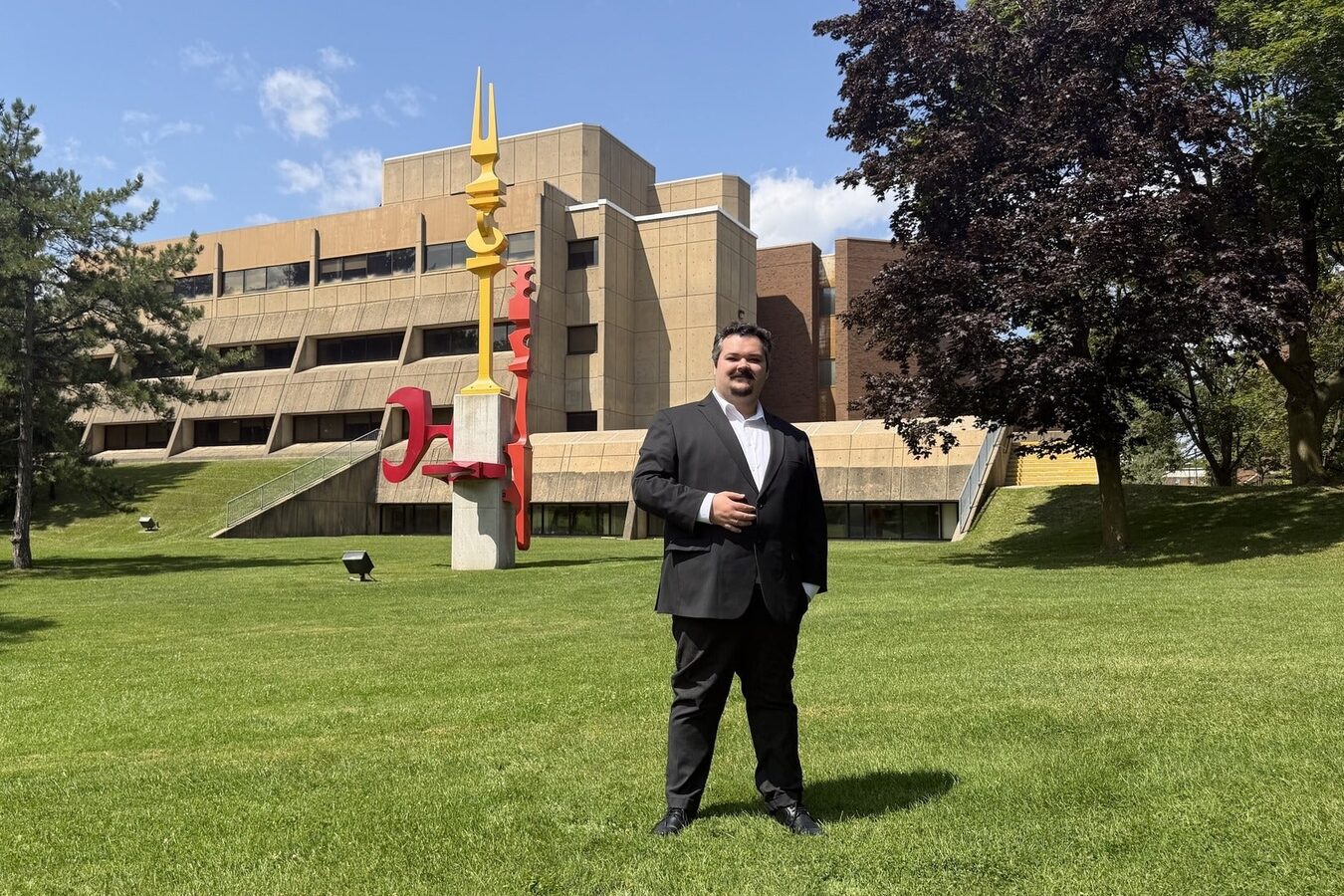
Shahrzad Tofighi models how salt changes antimicrobial peptides’ attack on bacteria
The Waterloo physics master’s student, supervised by Bae-Yeun Ha, applies mathematical modelling to antimicrobial resistance.
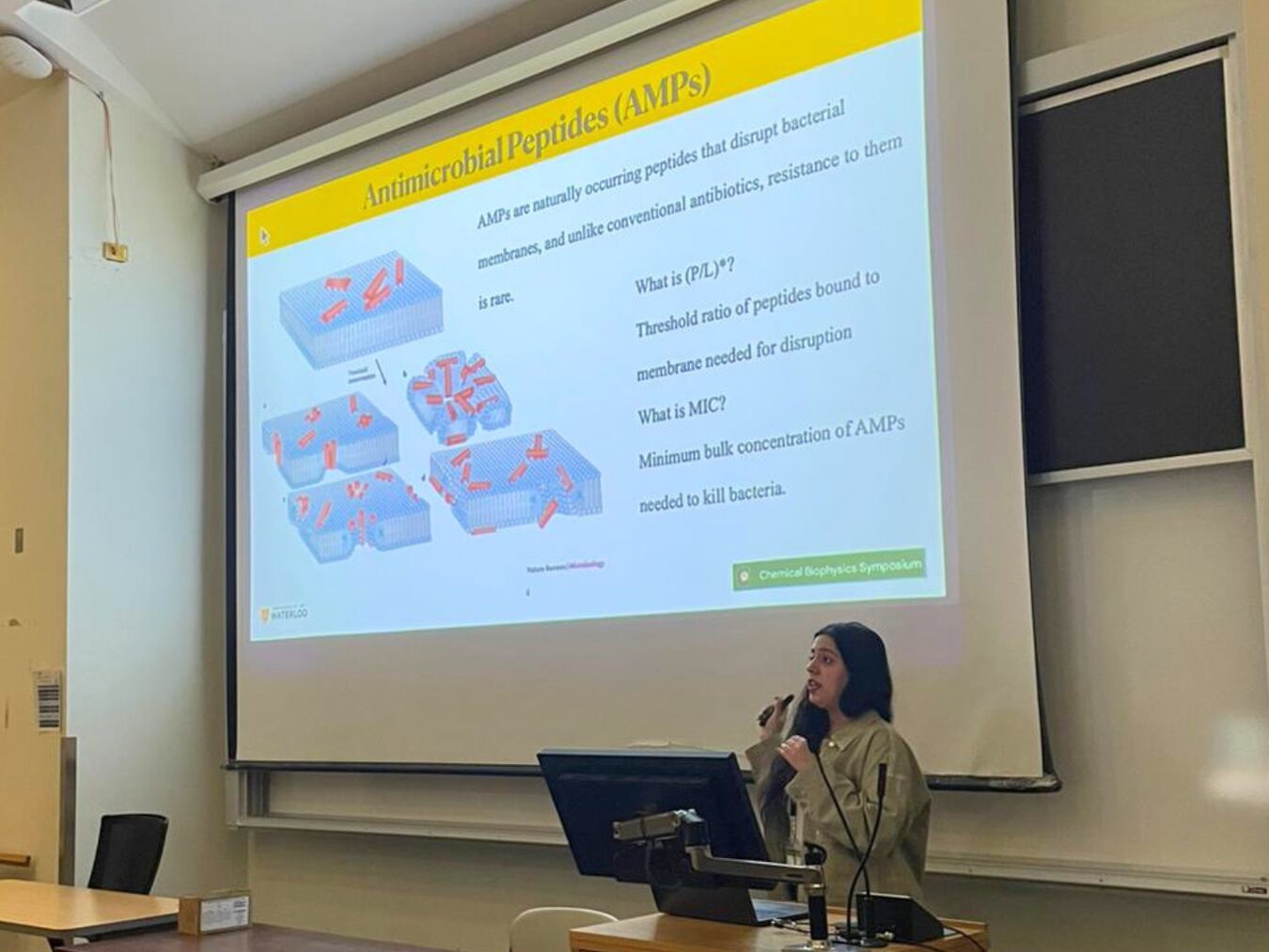
Shahrzad Tofighi, a Master of Science in Physics student at Waterloo, applies physics to antimicrobial resistance (AMR), which occurs when bacteria, viruses, fungi and parasites stop responding to medicines such as antibiotics. The World Health Organization estimates that bacterial AMR caused 1.27 million deaths in 2019.

She builds mathematical models of how antimicrobial peptides interact with bacterial membranes. The peptides attack bacteria through the membrane, which makes resistance harder to develop. Tofighi does not alter the peptides themselves. She studies how conditions such as salt concentration change how well they work.
Her supervisor is Dr. Bae-Yeun Ha, whom she credits with teaching her to question assumptions and work through uncertainty, a change from the course-based thinking of her undergraduate years. The long-term hope is that such theory can guide experiments, reduce costly lab work and inform dose studies for peptide-based antibiotics.
Sources 1
Chapter 02 · Science & TechnologyRead it in the issue →