The practice
Make the next question visible
Hafsa Murtaza's route through art history was built from small, physical habits. She wrote by hand, drew what she was studying and used colour to give difficult ideas a shape she could return to later.
Drawing did more than decorate her notes. It gave an abstract argument a surface, a sequence and a place to begin again. That is a useful distinction for anyone whose work feels too large to hold in one sitting.
The turn
Build a practice around real constraints
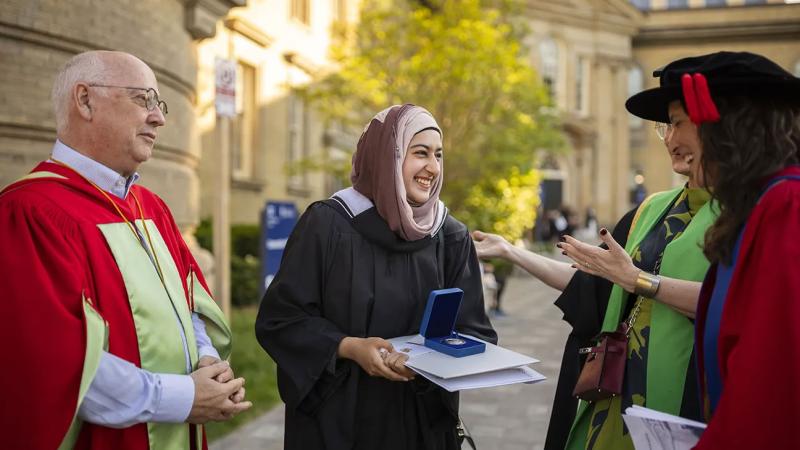
That approach carried her from U of T Mississauga to a Governor General's Silver Medal as the university's top humanities graduate. When research, leadership and coursework crowded the same week, she broke the work into one next task, used office hours and made room for embroidery as a reset.
The story is less about finding a perfect routine than about making a routine adjustable. A small reset can protect attention; a conversation with a professor can turn a stuck page into a live question.
The takeaway
Keep curiosity moving
The lesson is practical rather than prescriptive: a study method can be tactile, social and adjustable. Murtaza's story gives alumni a useful reminder that the right system is often the one that makes the next question easier to ask.
That idea travels well beyond campus. In a new job, a community project or a second degree, the work gets lighter when the next useful move is visible and the tools around it can change.
Keep reading
Get the next story in your inbox.
One considered email when a new issue is ready. No spam. Unsubscribe anytime.