Alumni Digest: uOttawa Edition is an independent, source-verified monthly digest covering 8 discoveries, bilingual legal-tech frameworks, and health breakthroughs from the University of Ottawa.
Across quantum photonics, bilingual public policy, health innovation, and Sandy Hill enterprise, University of Ottawa alumni and scholars turn capital access into global impact.
8 stories2 data features
Quantum & Photonics / Quantique
Light Over Copper: Sub-Micron Switching at ARC
Dr. Robert Boyd’s team proves low-loss photonic switching for next-generation quantum computing interconnects.
Law & Public Policy / Droit et politiques
Two Legal Traditions, One Automated State
uOttawa legal scholars create a bilingual model for ensuring administrative fairness in automated decision engines.
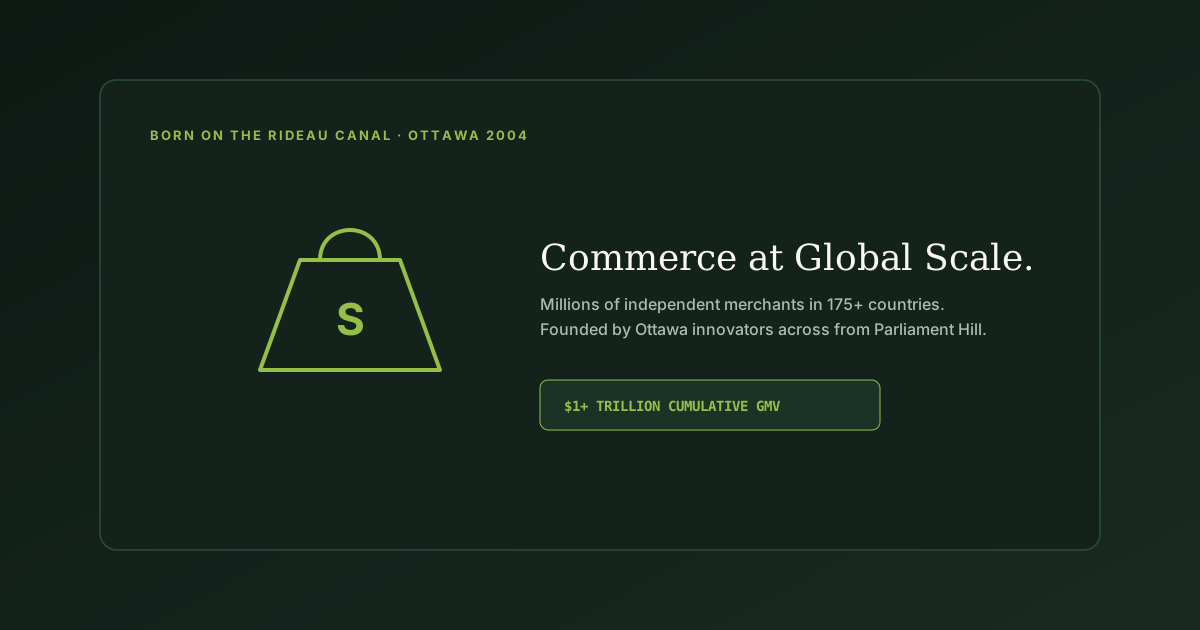
From a snowboard store on Elgin Street to the operating system powering global commerce. Explore agentic engineering roles in the National Capital Region.
An independent University of Ottawa alumni digest. Source window: October 1–25, 2026. Not an official university publication. Each brief keeps its source provenance in the editorial record. Scroll, search or open the contents rail.
Brand Partners / 2 placements
A place for useful partners.
Tools, clothing, travel and services selected for student and alumni life. Browse the issue’s Brand Partners:
012026-10-08Quantum & Photonics / Quantique
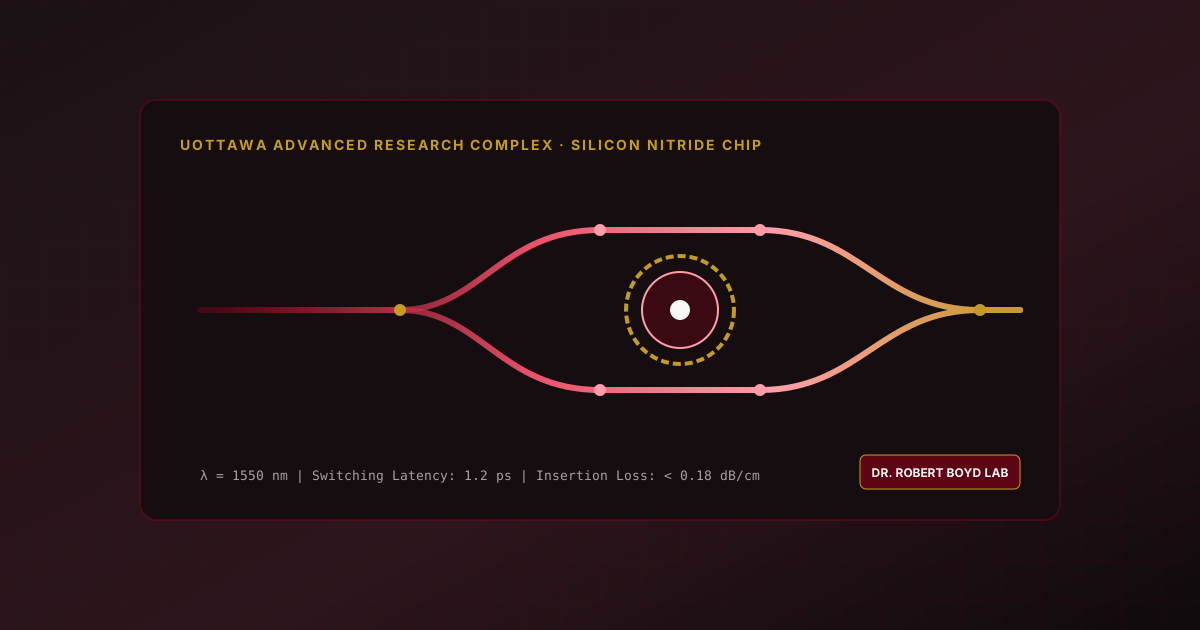
Silicon photonics resonator under microscopic laser alignment at the Advanced Research Complex. Credit: Source: University of Ottawa Faculty of Engineering.
Quantum & Photonics / Quantique
Light Over Copper: Sub-Micron Switching at ARC
Dr. Robert Boyd’s team proves low-loss photonic switching for next-generation quantum computing interconnects.
Reported by Faculty of Engineering / Advanced Research Complex
In laboratories inside the Advanced Research Complex (ARC), researchers have demonstrated sub-picosecond optical routing using custom-etched silicon nitride waveguides. The milestone bypasses the electrical impedance bottlenecks that throttle current high-density AI clusters.
For alumni in hardware engineering and telecommunications, this proves that Canada’s National Capital remains a global heavyweight in optical physics. The technology is already being licensed for pilot deployment in Kanata North testbeds.
022026-10-11Law & Public Policy / Droit et politiques
Faculty of Law jurists review regulatory drafts at Fauteux Hall. Credit: Source: uOttawa Centre for Law, Technology and Society.
Law & Public Policy / Droit et politiques
Two Legal Traditions, One Automated State
uOttawa legal scholars create a bilingual model for ensuring administrative fairness in automated decision engines.
Reported by Faculty of Law (Civil Law & Common Law Sections)
Canada’s federal administration relies increasingly on automated algorithms for immigration triage, taxation assessments, and regulatory audits. Scholars at the Centre for Law, Technology and Society have published the country’s first harmonized framework reconciling Quebec Civil Law principles of good faith with Common Law procedural fairness.
The bilingual guidelines mandate human-auditable reasoning logs and provide a constitutional safeguard against black-box automated denials. As governments worldwide scramble to govern agentic software, uOttawa’s dual-jurisdictional lens offers an international benchmark.
032026-10-14Health & Neuroscience / Santé et neurosciences
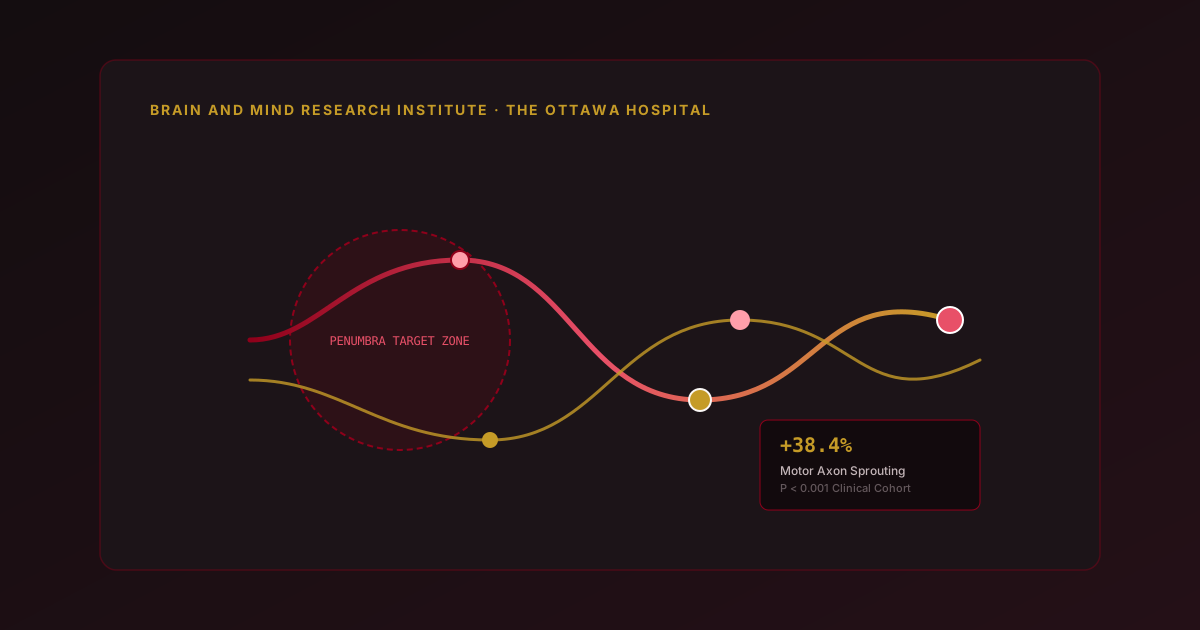
Microscopy of neural synaptic regeneration at the Brain and Mind Research Institute. Credit: Source: University of Ottawa Faculty of Medicine.
Health & Neuroscience / Santé et neurosciences
Repairing the Neural Circuit After Stroke
Brain and Mind Research Institute researchers identify molecular cues that restore motor pathways.
Reported by Faculty of Medicine / Brain and Mind Institute
A multi-year clinical trial at The Ottawa Hospital and the Brain and Mind Research Institute has identified specific micro-vascular growth factors that stimulate synaptic plasticity in stroke patients months after the initial event.
The discovery challenges the medical consensus that post-stroke neuro-recovery plateaus within 90 days. Ongoing Phase II trials combine targeted localized infusion with virtual reality physical rehabilitation to restore fine motor control.
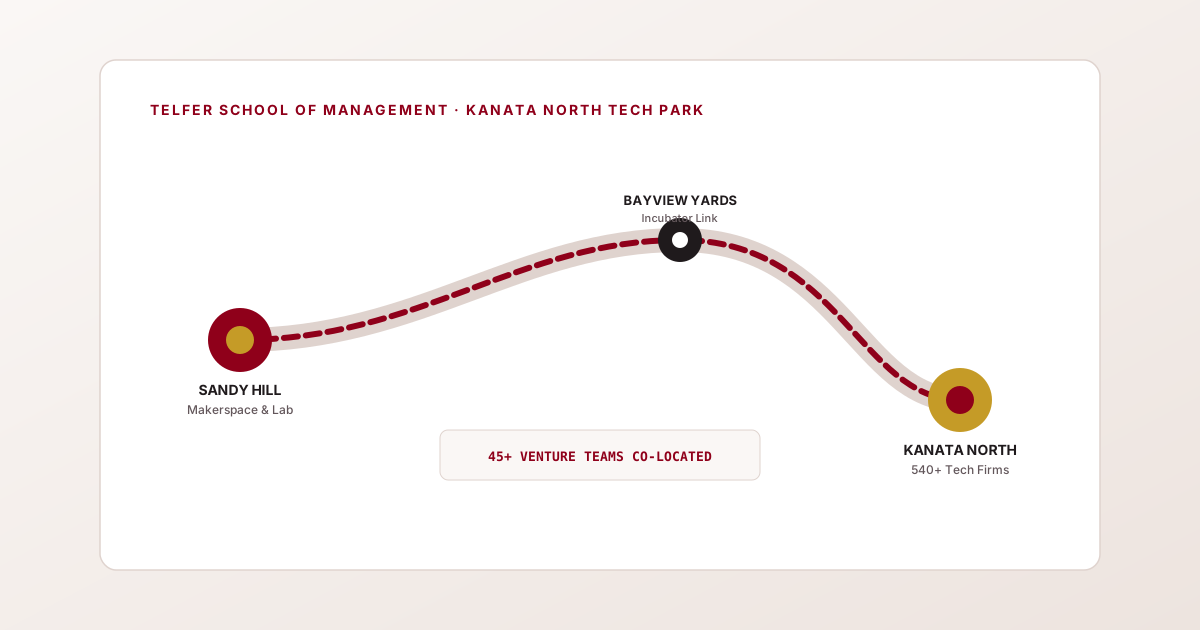
Student venture fellows present to Kanata North industry partners. Credit: Source: Telfer School of Management.
Enterprise & Ventures / Entreprise
The Corridor from Sandy Hill to Kanata North
Telfer School deepens venture co-op with Canada’s largest technology park.
Reported by Telfer School of Management
The physical distance between the downtown campus and the Kanata North technology corridor used to be a commuter barrier. Today, Telfer School’s decentralized innovation node operates inside the Hub350 facility, placing graduate students directly inside autonomous systems and cybersecurity companies.
Over 45 venture teams this term are co-developing software with Ericsson, Nokia, and BlackBerry QNX. The program ensures students graduate not merely with credentials, but with equity stakes and established enterprise client relationships.
In a fractured world, the discipline of working across two legal systems, two official languages, and the federal boundary produces exceptional leaders.
Walking along the Rideau Canal from Sandy Hill toward Parliament Hill, one observes the unique cadence of the University of Ottawa. Unlike isolated campus bubbles, uOttawa is deeply embedded in the civic machinery of the G7 capital.
Here, students in computer science test quantum protocols across town in Kanata North, while law students walk across the canal to observe Supreme Court hearings in both official languages. That dual immersion—civil law and common law, francophone and anglophone, academic discovery and public policy—is not merely institutional tradition; it is an unmatched competitive advantage.
As alumni worldwide address the compounding challenges of automated intelligence, biomedical ethics, and climate transition, the habit of listening across boundaries is precisely what our society requires.
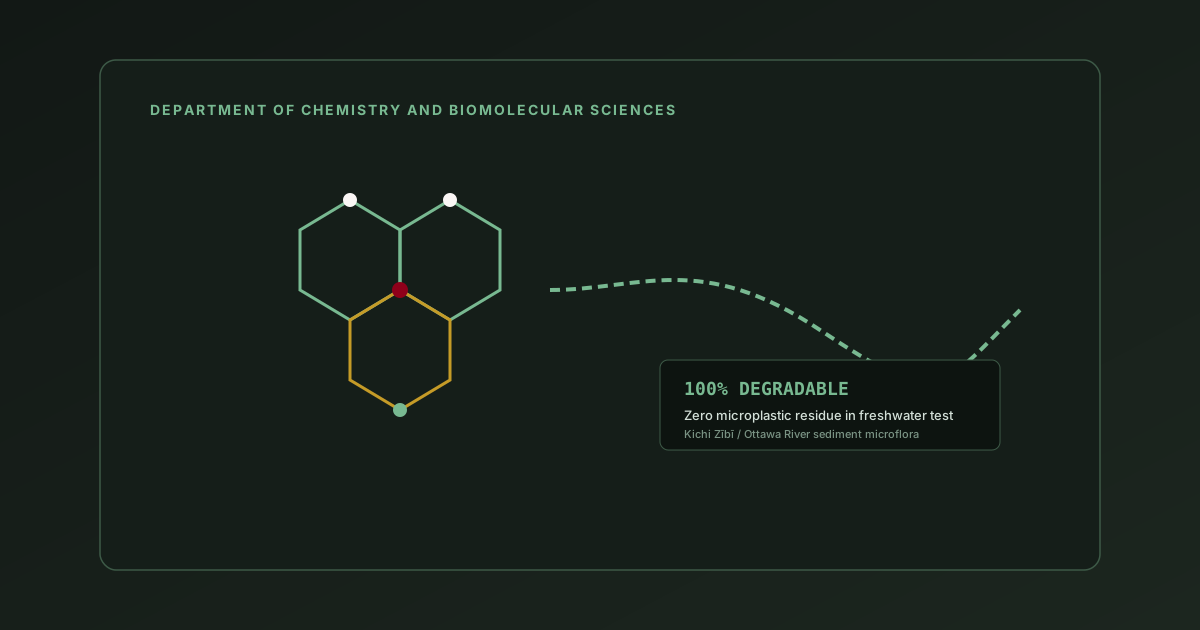
Dr. Audrey Moores inspects crystallized biopolymer samples at D’Iorio Hall. Credit: Source: Department of Chemistry and Biomolecular Sciences.
Sustainability & Science / Durabilité
Harvesting Plastics from River Sediments
A research team led by Dr. Audrey Moores transforms biological river waste into industrial polymers.
Reported by Faculty of Science / Department of Chemistry and Biomolecular Sciences
Municipal water treatment facilities along the Ottawa River face costly disposal requirements for organic sediment sludges. Chemistry researchers have isolated bacterial strains capable of fermenting this sludge into polyhydroxyalkanoates (PHAs)—biodegradable polymers that degrade in marine waters within six months.
Unlike first-generation corn-based bioplastics that compete with food agriculture, this circular process uses existing waste streams to produce packaging materials indistinguishable from polyethylene.
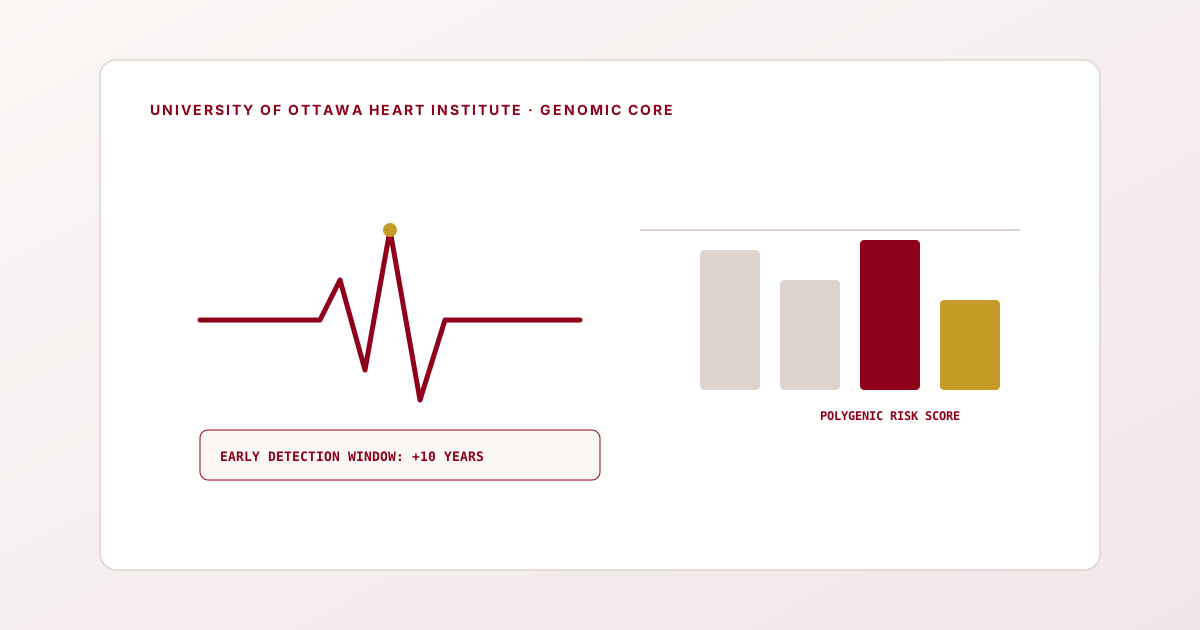
Heart Institute cardiologists examine multi-spectral vascular scans. Credit: Source: University of Ottawa Heart Institute.
Cardiovascular Health / Cardiologie
Genomic Clocks of Early Heart Disease
Groundbreaking genomic algorithms predict early arterial calcification up to 10 years before clinical onset.
Reported by University of Ottawa Heart Institute
Traditional cardiovascular risk scores rely on blood pressure, age, and cholesterol measurements that often miss early disease in younger demographics. Researchers at the University of Ottawa Heart Institute have validated a polygenic risk scoring engine evaluated across diverse ancestry cohorts.
By identifying high-risk genetic signatures before arterial plaques form, preventative therapies can be administered years before any clinical event occurs, transforming preventive medicine across the province.
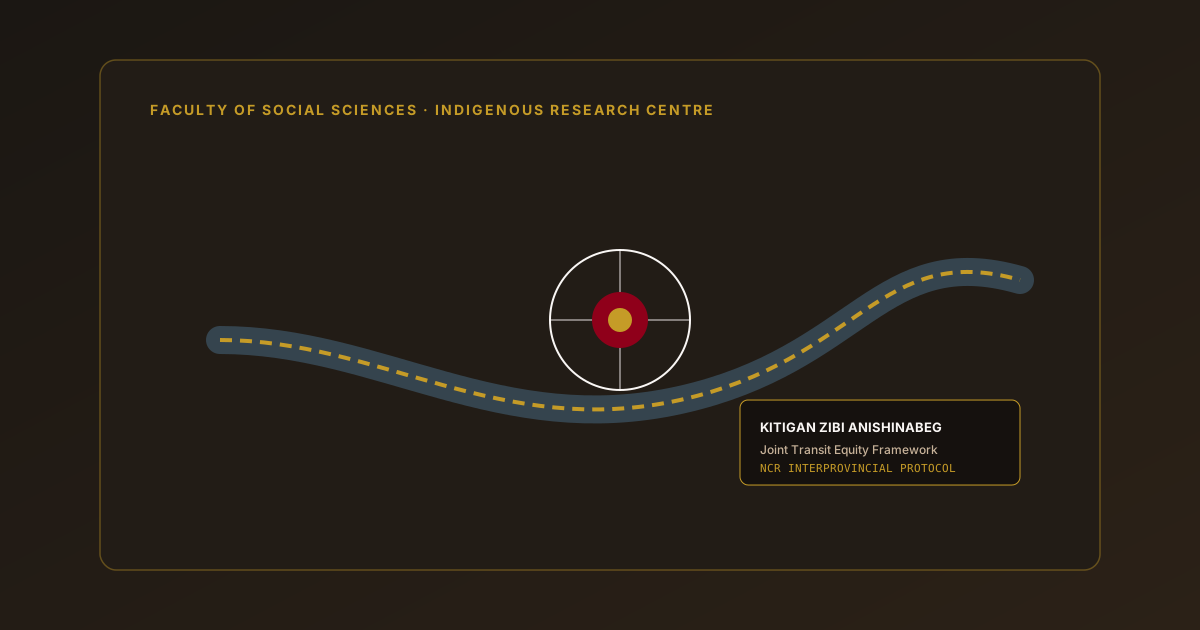
Research co-created with Kitigan Zibi Anishinabeg community frames infrastructure corridors along the Ottawa River.
Reported by Faculty of Social Sciences / Indigenous Research Center
As the National Capital Commission plans long-term interprovincial bridges and light-rail extensions, Faculty of Social Sciences researchers partnered with elder knowledge keepers from the Kitigan Zibi Anishinabeg First Nation to map ancestral portage routes and ecological sanctuaries.
The resulting framework provides binding guidelines for transit authorities to protect shoreline wetlands and integrate traditional ecological stewardship into urban transit corridors.
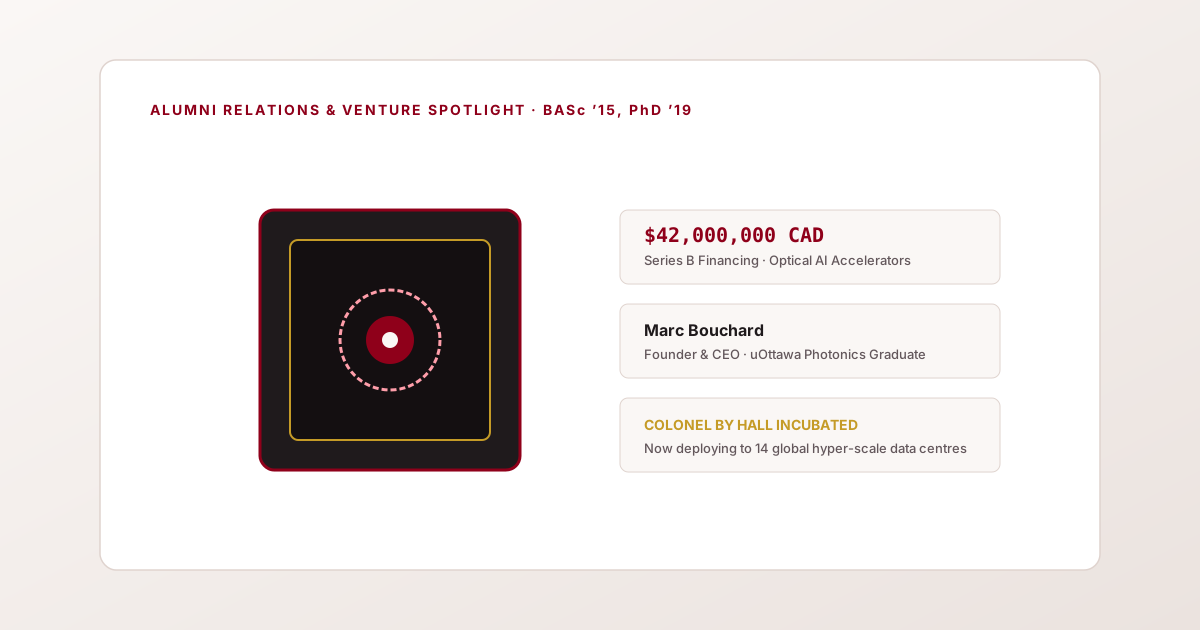
Marc Bouchard with optical wafer prototypes at LuminaWave headquarters. Credit: Source: Alumni Relations & Innovation Digest.
Alumni Ventures / Entrepreneuriat
From Makerspace Bench to $42M Scaleup
A journey that started in the uOttawa Makerspace now powers low-latency data centres worldwide.
Reported by Alumni Relations & Venture Spotlight
Alum Marc Bouchard (BASc ’15, PhD ’19) began soldering photonic prototypes in the Richard L’Abbé Makerspace in Colonel By Hall. This month, his optical switching startup LuminaWave closed a $42M Series B round to deploy micro-ring resonators into hyperscale data centres.
The company retains its primary R&D facility in downtown Ottawa, hiring uOttawa co-op engineers every term. His journey proves that capital-intensive deep tech can scale successfully within the Canadian capital ecosystem.
Over 540 companies, 33,000 skilled workers, and uOttawa’s permanent innovation portal collaborating on telecommunications, photonics, and autonomous systems.
Fill each row, column and 3 × 3 box with the digits 1–9, once each. Given numbers are fixed. Use Tab or arrow keys to move between cells. Check marks incorrect entries; reset clears your entries; reveal shows the solution.