Wataru Inoue’s lab finds a brain circuit that helps switch the body into stress mode
The Cell Reports study in mice points to a local feedback circuit that acts like a brake on the neurons driving the hormonal stress response.
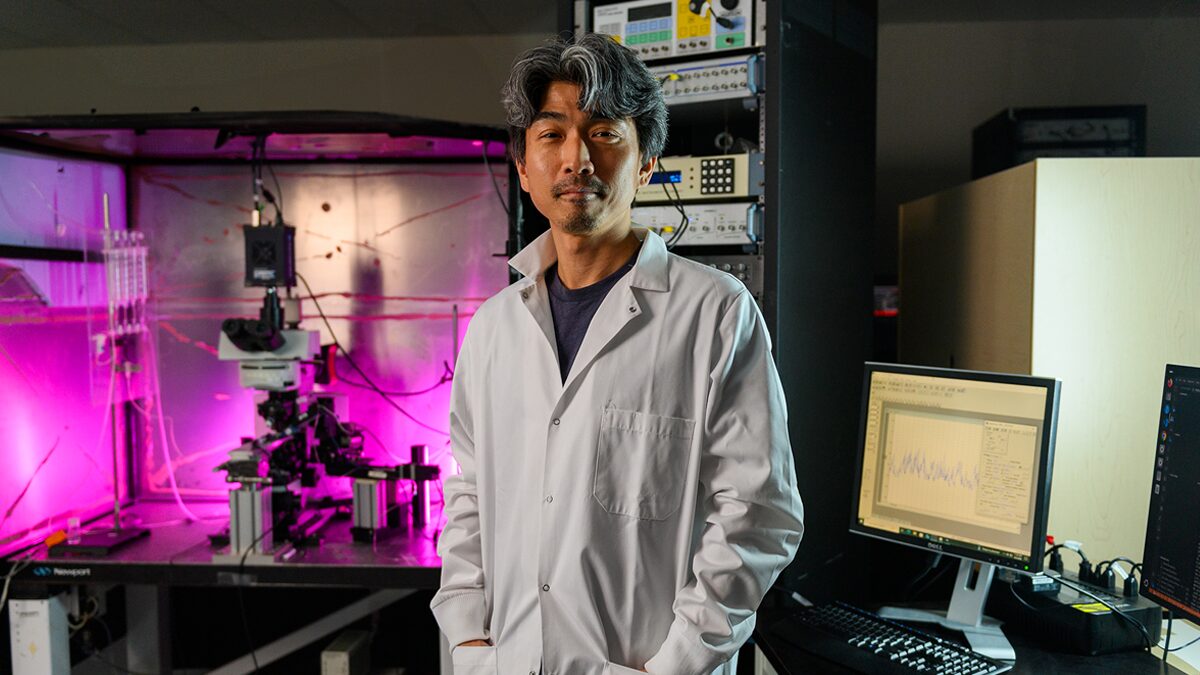
Wataru Inoue, PhD, an associate professor of physiology and pharmacology at Schulich, is senior author of a Cell Reports study on how the brain shifts the body from its everyday state into emergency readiness. The team studied corticotropin-releasing hormone neurons in the hypothalamus, which play a central role in the hormonal stress response.
By combining recordings of neural activity in mice with computational modelling, they found a local feedback circuit that keeps those neurons in a low-activity state under normal conditions. They predict it may also act as a gatekeeper for how sensitive the neurons are to stressful signals from other parts of the brain. Lyle Muller, an adjunct professor of mathematics at Western, joined the work, along with researchers from the Krembil Institute and the University of Calgary.
The team is now studying what happens to the circuit under chronic stress, including whether changes are linked to dysregulation of the stress response seen in disorders such as major depression and post-traumatic stress disorder.
Sources 1
Chapter 02 · Health & MedicineRead it in the issue →