Electric fields offer new hope against aggressive brain cancer
Western researchers report that rotating electric fields slowed glioblastoma growth in rats, a step toward a first-in-human trial of a therapy that began in a Schulich lab.
Dr. Matthew Hebb, a neurosurgery professor at Schulich Medicine & Dentistry, began this work more than a decade ago. He wondered whether the electrodes used for deep brain stimulation in Parkinson’s disease could act on brain cancer, and tumour samples he stimulated in his lab responded. That led to Intratumoral Modulation Therapy, or IMT.
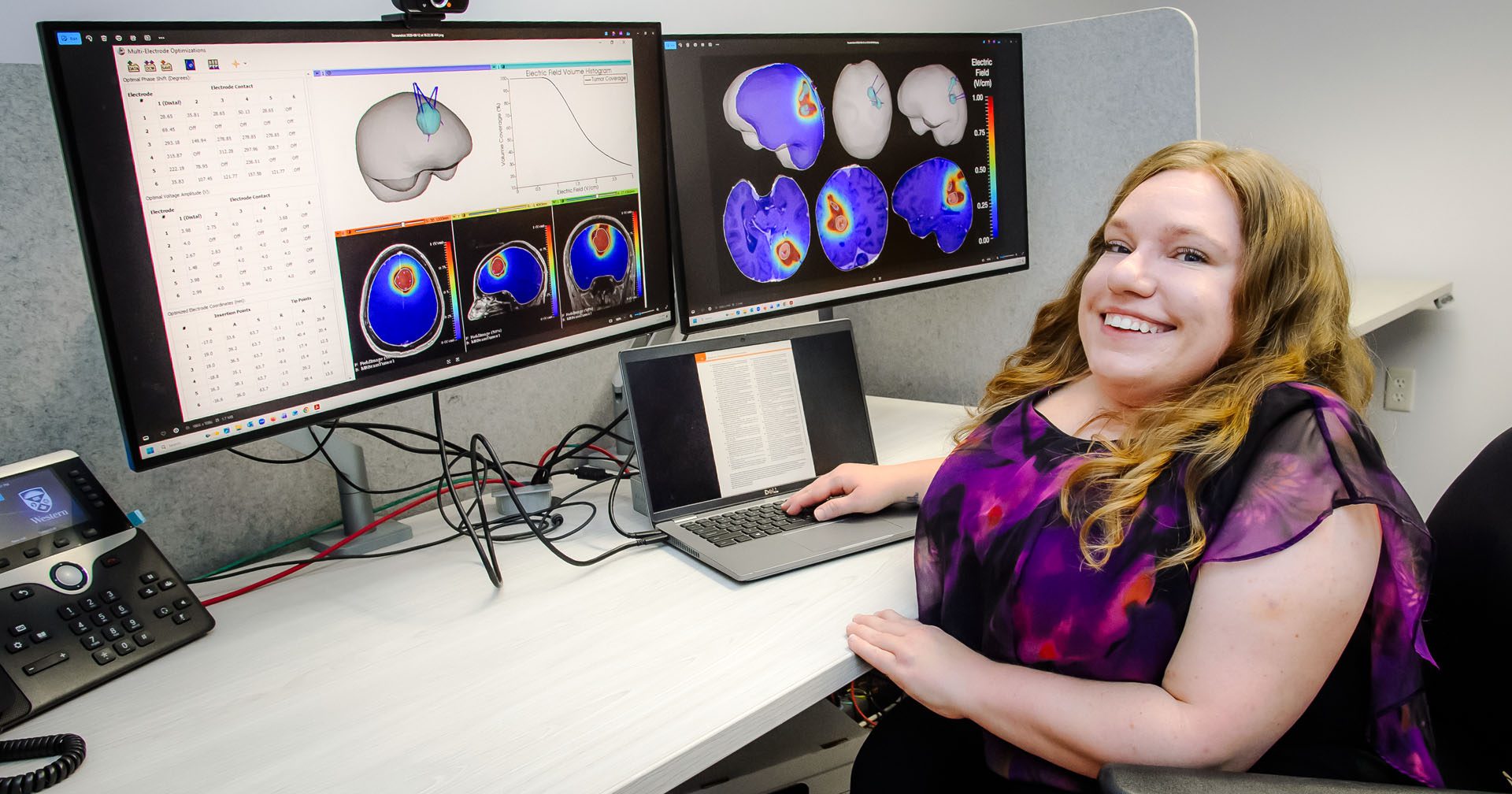
A new study in Neuro-Oncology Advances, first authored by postdoctoral researcher Erin Iredale, tested the approach in rats. Three electrodes around a glioblastoma tumour shifted their signal phase to create an electric field that rotates over time. After seven days, the team measured an eight-fold reduction in tumour growth by bioluminescence and a five-fold reduction in volume on MRI, with no neurological adverse effects.
Iredale joined the project in 2016 as an undergraduate. She built a treatment-planning system meant to help physicians decide where electrodes should go for each patient. With current treatments, glioblastoma patients have a median survival of just over a year.
The team is developing a prototype aimed at a first-in-human clinical trial. Iredale hopes an initial trial could happen in five to 10 years.
Chapter 02 · Health & MedicineRead it in the issue →