Alumni Digest.

People · Alumni Digest original

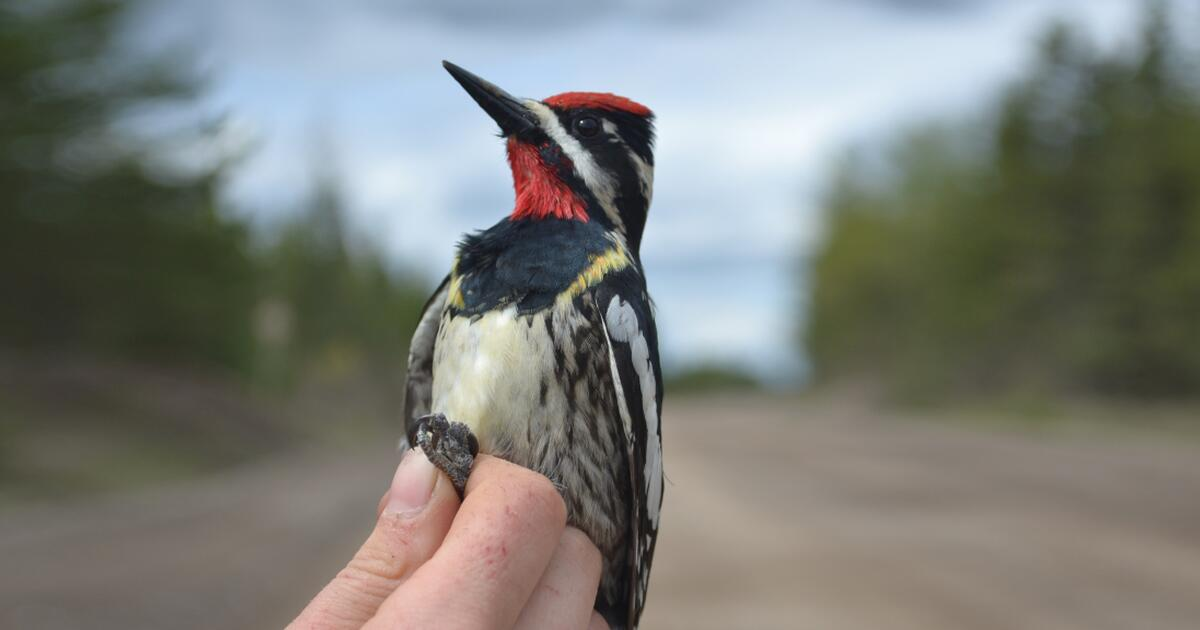
How to Catch a Woodpecker

A UBC undergraduate heads for the wilderness armed with a giant net, a plumbing camera, and gallons of bug spray. Published in Alumni Digest as verified reporting from the University of British Columbia.

A UBC undergraduate heads for the wilderness armed with a giant net, a plumbing camera, and gallons of bug spray.

In the September issue
How to Catch a Woodpecker
Anyone rummaging through Jamie Clarke’s kitchen in search of a snack might encounter a crunchy surprise: there are insects in the freezer. The 22-year-old biology major began collecting bugs after an entomology course at UBC -- not to eat them, but to examine and identify them. Clarke finds the prized samples around her family’s Vancouver apartment, which (to the mild chagrin of her parents) often doubles as both home and lab storage. Like the freezer, the patio has been commandeered for science: lounge chairs vie for space with bags of seaweed for a project and the carcass of a beached bird carried home to identify for a survey. Clarke’s scientific inclinations admittedly present some challenges to the creeds of Martha Stewart Living, but her intrepid love for biology is a lifestyle in its own right. “I have a lot of questions about the natural world,” says Clarke. “I want to know the names of the living things I see, how they came to be, how they’re related to one another, how they depend on one another, how they work. Biology is just really cool; I think I’ve always wanted to study it.” Taking her curiosity beyond the classroom, Clarke looks for jobs that feed her fascination. Photo: Reporting: Richard Littlemore. Source image retained for editorial review; rights clearance is still required before any broader reuse.

The context

Where the work begins

The pelt, held by the Smithsonian since 1859, is returning to the region connected to its history. Woolly dogs were bred by Salish and Makah peoples for hair used in weaving blankets, robes and clothing; the animals disappeared by the end of the nineteenth century.

The work

In the field

The loan runs from September 2026 to August 2027. The source emphasizes that the object’s return is being shaped by community request and knowledge, including time for Elders, knowledge keepers and weavers before exhibition.

The takeaway

What follows

That sequence matters. A museum loan is not simply a transfer of an object. It can also be a chance to reconnect material, memory, territory and living practice.

Keep reading

Get the next story in your inbox.

One considered email when a new issue is ready. No spam. Unsubscribe anytime.

Continue reading

You might also like

See all stories
Ideas · 2 min read

Where study meets the summer job

UBC co-op turns paid work terms into a bridge between coursework and BC’s innovation economy.

Read story
Ideas · 2 min read

The science of a bad dynamic

A UBC Okanagan researcher offers evidence-based ways to notice and respond to harmful patterns.

Read story
People · 2 min read

After the walk across the stage

A practical career map for the weeks after graduation.

Read story