The hidden world that can make you feel seen: how cataloguing creates community
Faculty of Information and Media Studies professor Bri Watson explains how cataloguing labels help people find community, and how their LGBTQ+ vocabulary work is expanding at Western.
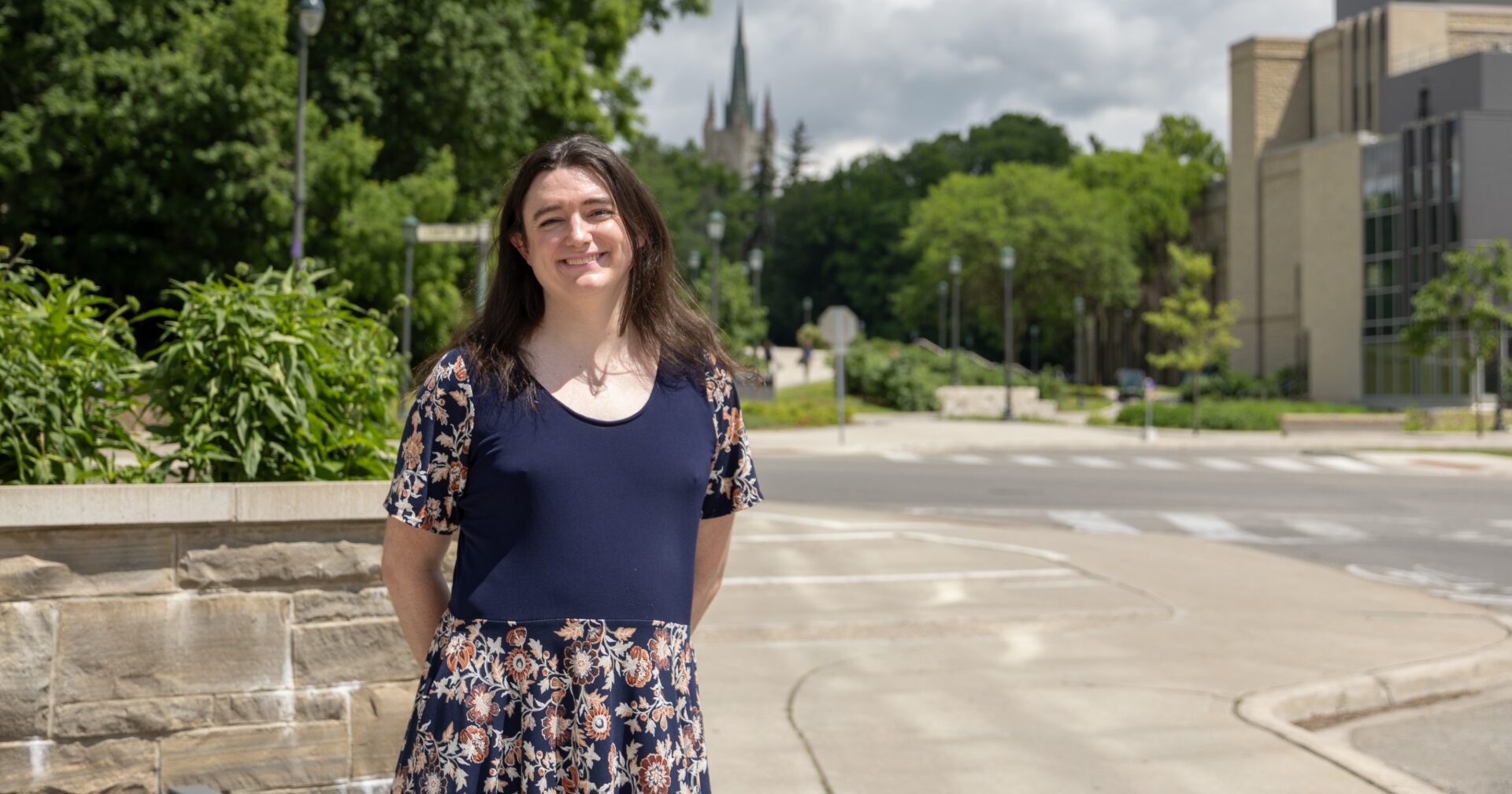
B. M. Watson, who goes by Bri and uses they/them pronouns, joined Western’s Faculty of Information and Media Studies last July. Watson researches how cataloguing and metadata shape who can be found in libraries, archives and museums. Their own labels include polyamorous, disabled, queer and non-binary.
Their work includes the Name Change Policy Working Group, which pushes journals to let authors retroactively change names in published work. It also includes the Homosaurus, a vocabulary of LGBTQ+ terms for cultural institutions, and the Trans Metadata Collective, which aims to improve how trans and gender diverse people are described and classified.
Watson traces this to growing up deaf in New Hampshire, where a teacher took them to the library to find people like them, starting with Beethoven. They later trained in library science in Indiana, worked as a student archivist at the Kinsey Institute and completed a PhD at UBC.
At Western, Watson has secured two grants to build on the Homosaurus, focusing on translation to bring it to Quebec and Europe.
Chapter 03 · Science & TechnologyRead it in the issue →