Nuclear waste storage safety studied in field research
Western chemistry PhD student Jessie McDonald helped retrieve copper and clay test modules from 300 metres underground at the proposed Ignace nuclear waste repository site.
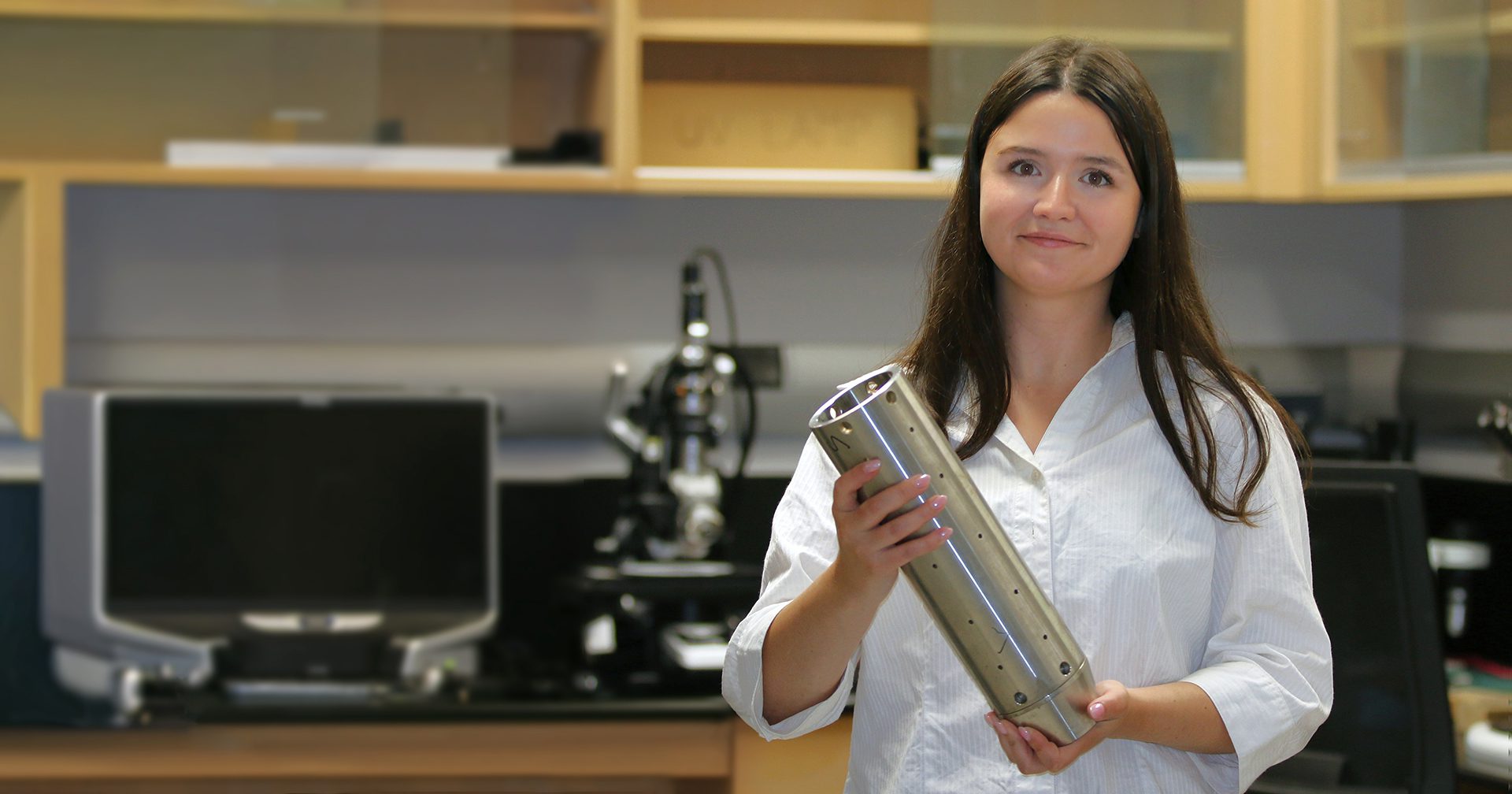
Jessie McDonald, a Western chemistry PhD student, travelled in May to the proposed deep geological repository site near Ignace, Ont., with Nuclear Waste Management Organization staff and other collaborators. The team retrieved two modules from a borehole 300 metres underground. Each is a steel canister of bentonite clay with embedded copper specimens, and a Western team had deployed them in 2021.
Her supervisor, chemistry professor James Noël, says the goal is containers that last a million years. The main threat is sulfide-producing bacteria, and the bentonite clay suppresses them. After five years, the copper samples show the suppression is working largely as predicted. McDonald is analyzing them at Surface Science Western.
Noël’s team is testing how loosely the clay can be packed and still inhibit microbes. McDonald prepared two new modules that were deployed for future students to analyze. She also has six modules on the Pacific seafloor near Vancouver Island, 2.5 kilometres deep, as a saltwater comparison.
Noël says the materials already pass the bar and the work now fills in by how much.
Chapter 03 · Science & TechnologyRead it in the issue →