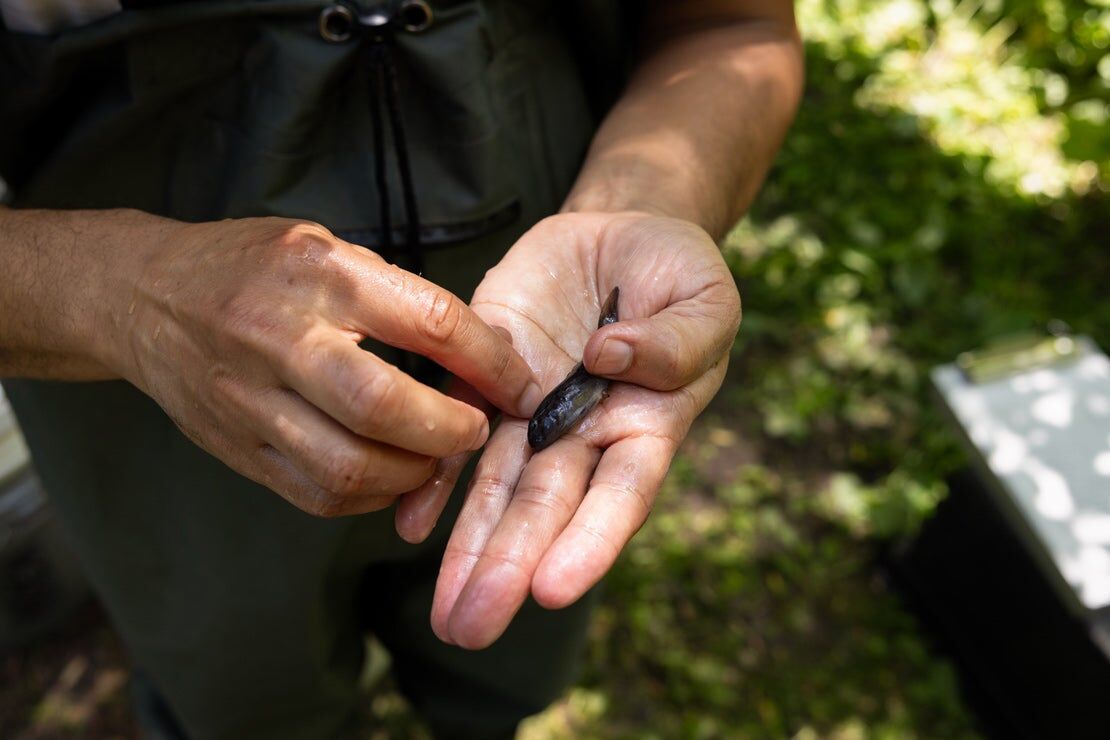
The round goby arrived in the Great Lakes in the early 1990s in the ballasts of cargo ships, and scientists estimate its population in the billions. Piatã Marques, a postdoctoral researcher, and Nick Mandrak, a professor in U of T Scarborough’s department of biological sciences, say the invasion has entered a new phase as the fish moves into inland waters.
Using more than two decades of river monitoring data, they found the fish advance only a fraction of a kilometre to about two kilometres a year. Their study in the Journal of Great Lakes Research suggests trapping, electrofishing, physical barriers and rapid-response programs could contain local populations.
The redside dace, an endangered fish in streams across the Greater Toronto Area, is among the species at risk. The team is also testing environmental DNA to find invasions early. Mandrak says the Great Lakes are essentially lost to the fish.
Reported from It’s not too late to save Ontario’s rivers, streams and ponds from the invasive round goby, researchers say (U of T News, September 4, 2026).
More from the original reporting: www.utoronto.ca/news/it-s-not-too-late-save-ontario-s-rivers-streams-and-ponds-invasive-round-goby-researchers-say