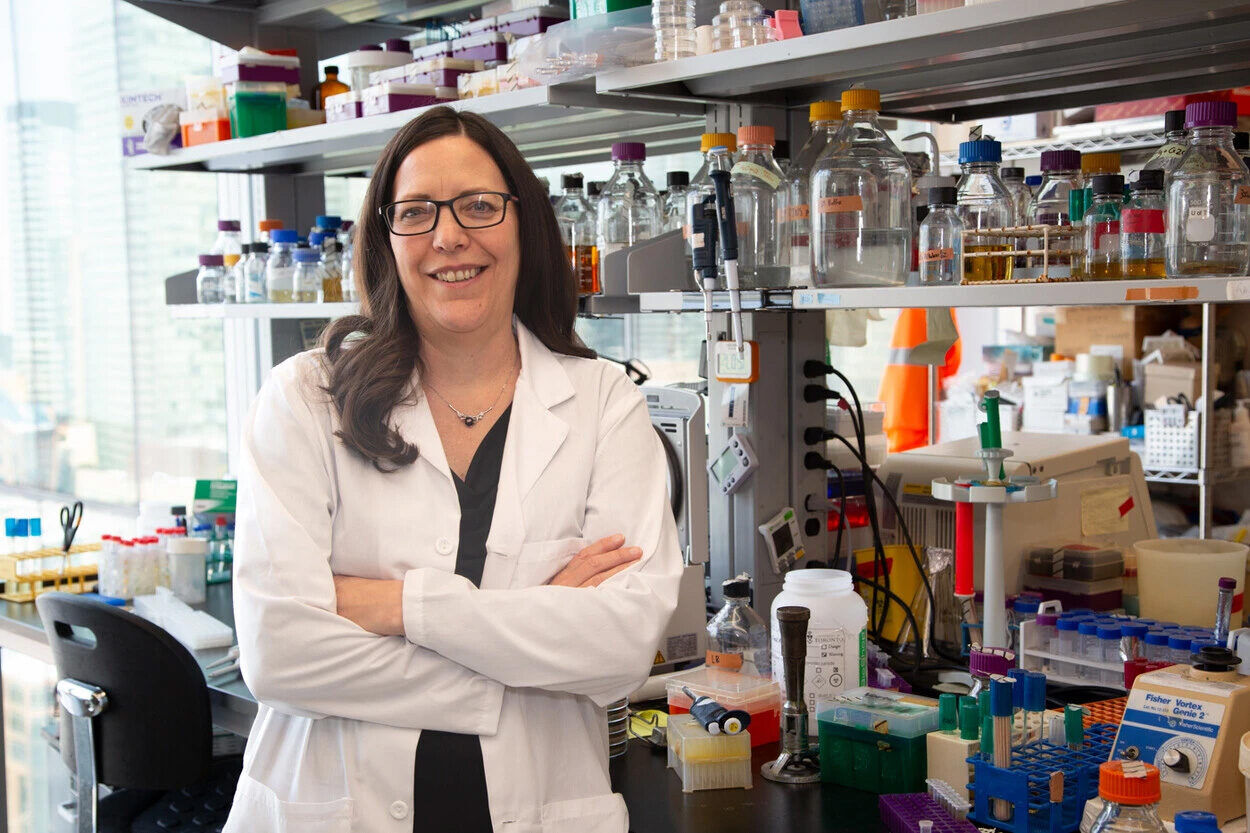
Karen Maxwell earned her master's and PhD in molecular genetics at U of T and attended Gairdner week as a student, long before she held the Canada Research Chair in Bacteriophage Biology and Therapeutics at Temerty Medicine. Her lab has found that some bacteria make small chemical compounds that block viral replication — a form of 'chemical immunity' — and helped discover the first inhibitors of CRISPR-Cas9 systems.
The findings could help control phage infections that spoil cheese and yogurt starter cultures. Maxwell won NSERC's John C. Polanyi Award in 2020 and a Temerty Medicine Research Excellence Award last year.
This year she is one of two Peter Gilgan Canada Gairdner Momentum Award laureates, recognizing mid-career investigators; the Canada Gairdner Awards, established in 1957, have gone to 434 laureates from more than 40 countries, and nearly a quarter of past recipients later won Nobel Prizes. "I share this honour with my trainees and lab staff," she says.
Reported from U of T’s Karen Maxwell named Peter Gilgan Canada Gairdner Momentum Award Laureate, by Erin Howe (U of T Alumni News, April 17, 2026).
More from the original reporting: alumni.utoronto.ca/news/karen-maxwell-named-peter-gilgan-canada-gairdner-momentum-award-laureate