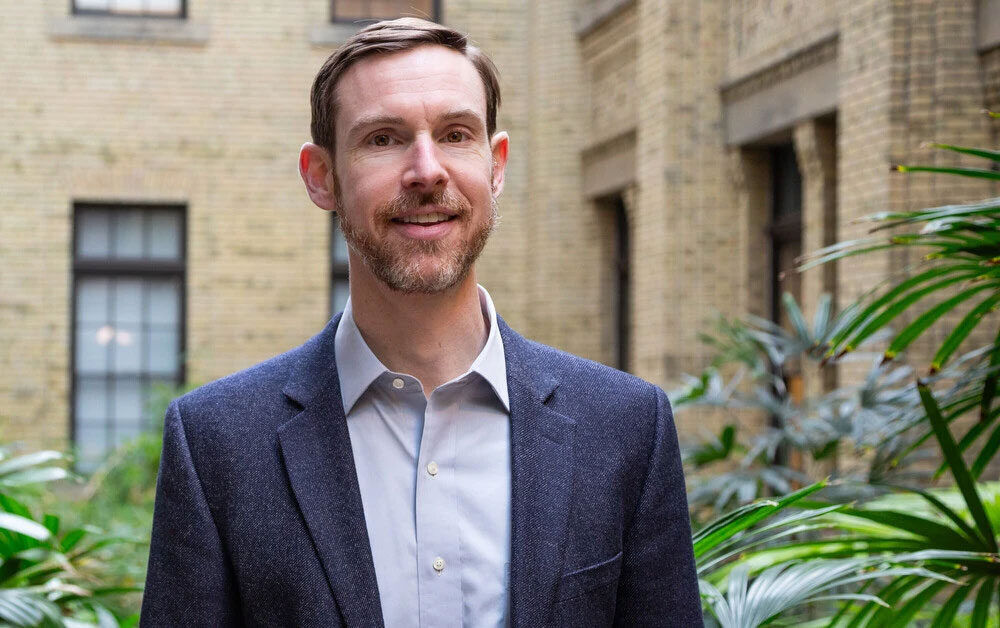
As a child, Liam Kaufman shovelled neighbours' driveways for money and sold crafts at his father's birthday party. After a psychology degree from Western and work as an MRI technician and research assistant at BC Children's Hospital, he earned a master's in medical science at U of T's Institute of Medical Science in 2008, studying eye movements in Alzheimer's and mild cognitive impairment under Dr. Sandra Black.
Doubting a PhD path, he crammed years of high school math into a few months and retrained in computer science, earning a second U of T degree in 2011. His first startup drew CTV, Toronto Star and TechCrunch coverage before being acqui-hired by EventMobi.
if I’m going to say something, I need evidence.Liam Kaufman
In 2015 he met Frank Rudzicz, then a U of T researcher at UHN's Toronto Rehabilitation Institute, whose work suggested Alzheimer's could probably be detected from about a minute of speech. That fall Kaufman co-founded Winterlight Labs with two of Rudzicz's graduate students.
From Lab to Acquisition
Winterlight passed through Rotman's Creative Destruction Lab and Temerty Medicine's Health Innovation Hub before Cambridge Cognition acquired it in 2023. Its technology now works in nine or 10 languages and, since 2019, extends beyond Alzheimer's to schizophrenia and depression.
Reported from Liam Kaufman's path from U of T to neuroscience entrepreneurship, by Not stated (originally published by Temerty Faculty of Medicine) (U of T Alumni News, March 30, 2026).
More from the original reporting: alumni.utoronto.ca/news/liam-kaufmans-path-u-t-neuroscience-entrepreneurship