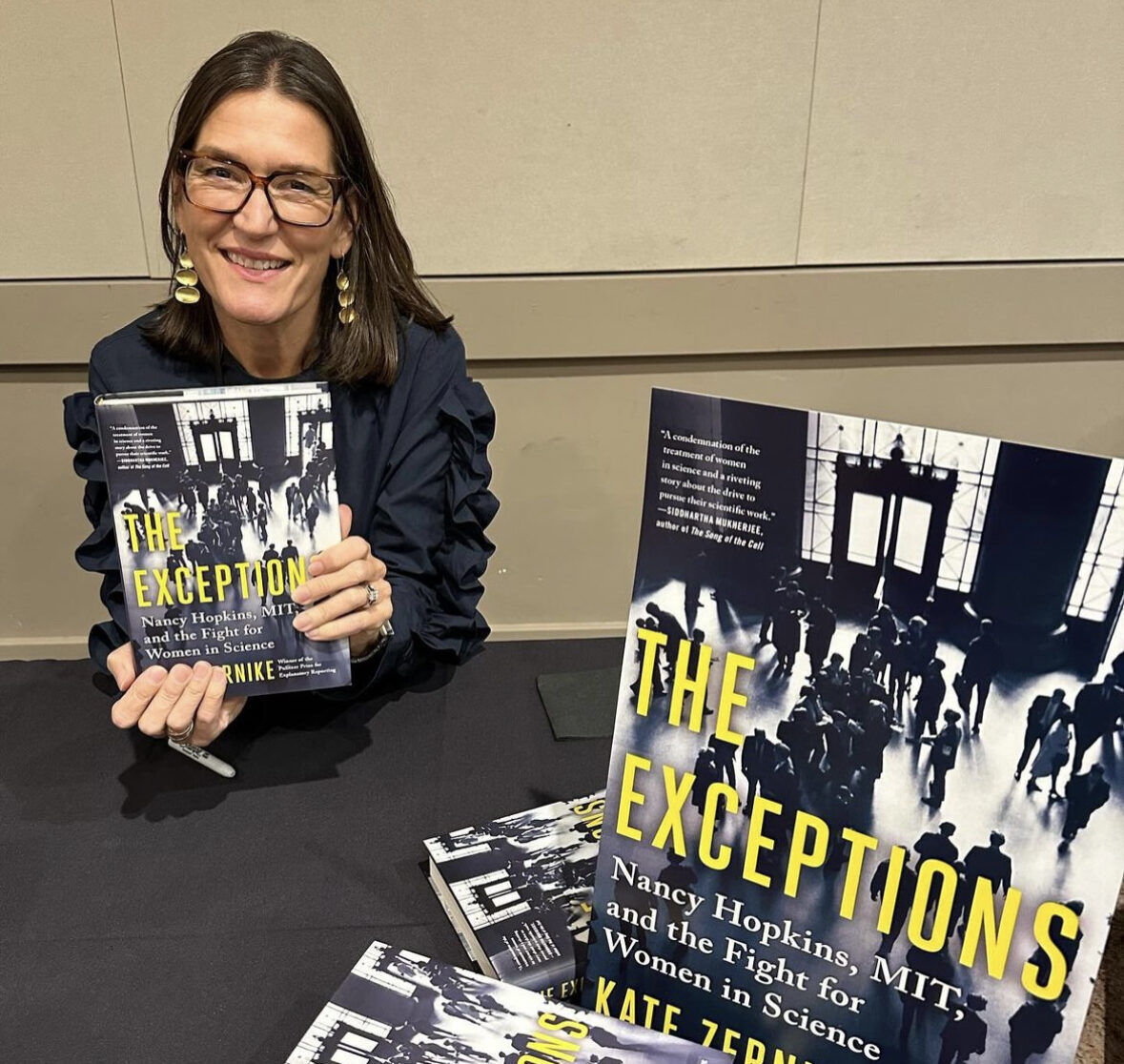
Kate Zernike arrived at Trinity College's St. Hilda's residence in early September 1986, coming from Connecticut to study English and history — and to follow her mother, Barbara (Backus) Zernike, a proud Trinity alumna of the class of 1954.
She found her calling at The Newspaper, working as an editor and staying on as one of three editors for a year after graduating, before completing a master's at Columbia's Graduate School of Journalism in 1992.
At The Boston Globe in 1999, Zernike broke the front-page story of MIT's own admission that it had discriminated against women faculty — a story she initially thought was confined to one field.
I thought it was a problem just in physics,Kate Zernike
She joined The New York Times in 2000, was part of the team that won the 2002 Pulitzer Prize for Explanatory Reporting on al-Qaeda, and co-wrote Osama bin Laden's 4,000-word obituary in November 2001 — nearly a decade before it ran in May 2011. During a six-week leave, she wrote her first book, Boiling Mad, on the rise of the Tea Party. Her grandfather, Frits Zernike, won the 1953 Nobel Prize in Physics for inventing the phase-contrast microscope.
Her book The Exceptions, published in February 2023, returned to that MIT story through the career of molecular biologist Nancy Hopkins, the subject of the landmark 1999 report. Zernike returns to Trinity on May 27 for an Anne Steacy Science Conversations talk.
Reported from Award-winning journalist, author and U of T alum Kate Zernike on breaking barriers for women, by Jennifer Matthews (U of T Alumni News, April 16, 2026).
More from the original reporting: alumni.utoronto.ca/news/journalist-author-and-u-t-alum-kate-zernike-breaking-barriers-women