SymBL (symbiosis biolabs) Innovations grew out of the Microbiome Engineering Laboratory led by Christopher Lawson, an assistant professor in chemical engineering and applied chemistry. He founded it with graduate students Ethan Agena and Joel Howard and with Connor Bowers (ChemE MASc 2T5).
The company converts organic waste from compost bins and dairy processing plants into a palm kernel oil alternative for agriculture, pharmaceutical and personal care uses. Palm oil production, concentrated in Indonesia and Malaysia, is linked to deforestation and habitat loss.
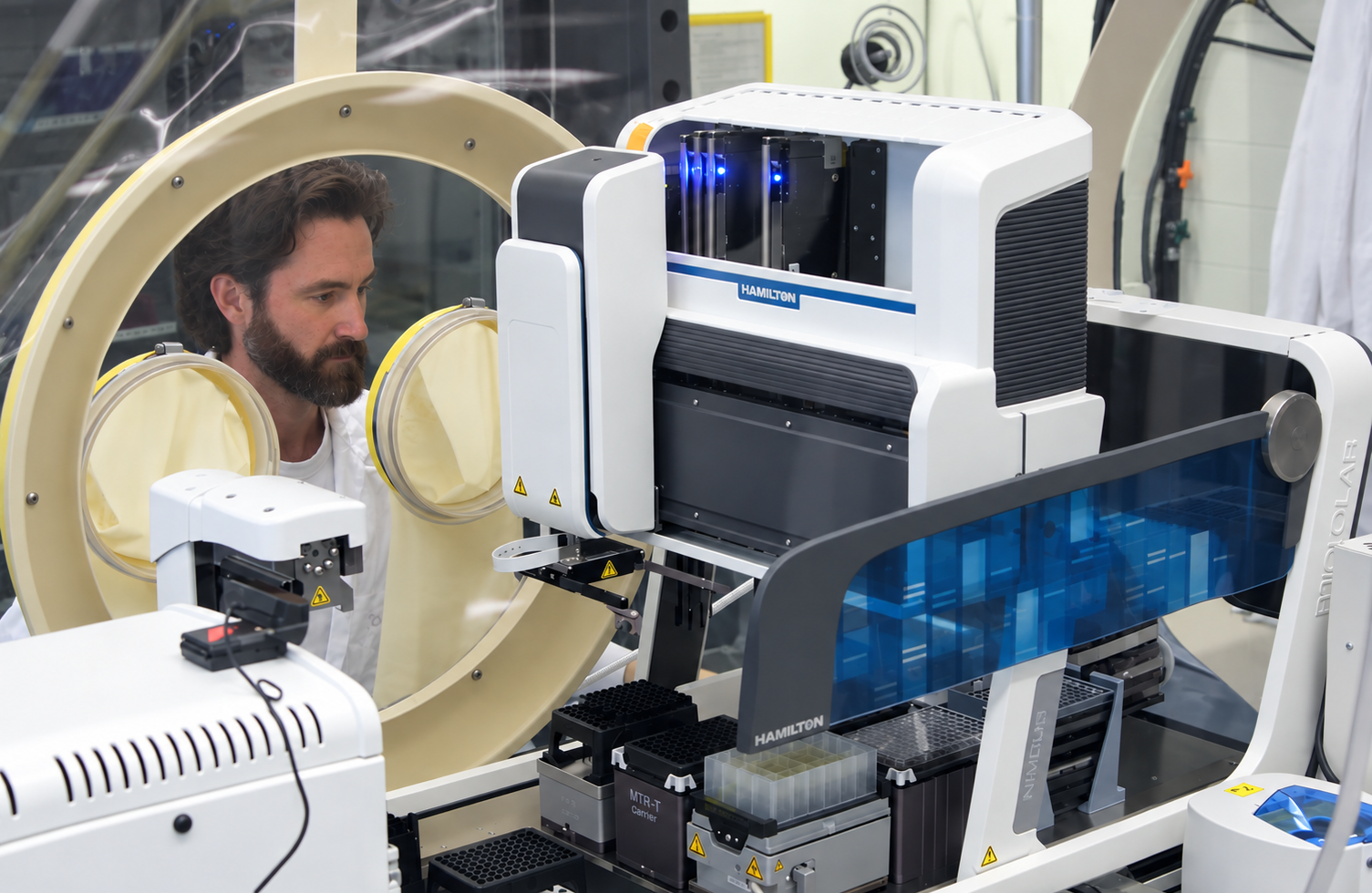
Agena says most industrial biotechnology focuses on a single microbe, while the team takes a different approach by harnessing a team of microbes. The startup used a self-driving lab to pick the best combination, and the Acceleration Consortium awarded Lawson’s group a $350,000 Accelerate Moonshot Grant.
Reported from AC-U of T startup converts organic waste into high-value bioproducts (U of T Engineering News, September 21, 2026).
More from the original reporting: news.engineering.utoronto.ca/ac-u-of-t-startup-converts-organic-waste-into-high-value-bioproducts/